Indoor Plant Light Explained: Direct, Bright Indirect and Low Light
Plain definitions of direct sun, bright indirect, medium and low light, plus two simple ways to judge how much light a spot in your home really gets.
Plant labels describe light in three or four short phrases, and none of them come with a definition. “Bright indirect light” causes the most confusion, because it describes a position in a room rather than anything you can read off a tag.
Indoor plant light is much easier to judge once you know what each term means in a real room and have a simple way to test a spot. Light is also the one condition you cannot make up for with extra water or fertilizer, so it is worth understanding before you decide where a plant will live.
What the light terms mean
The terms describe how much sun reaches the leaves, not how bright the room looks to you. Human eyes adjust so well that a dim corner can seem perfectly well lit.
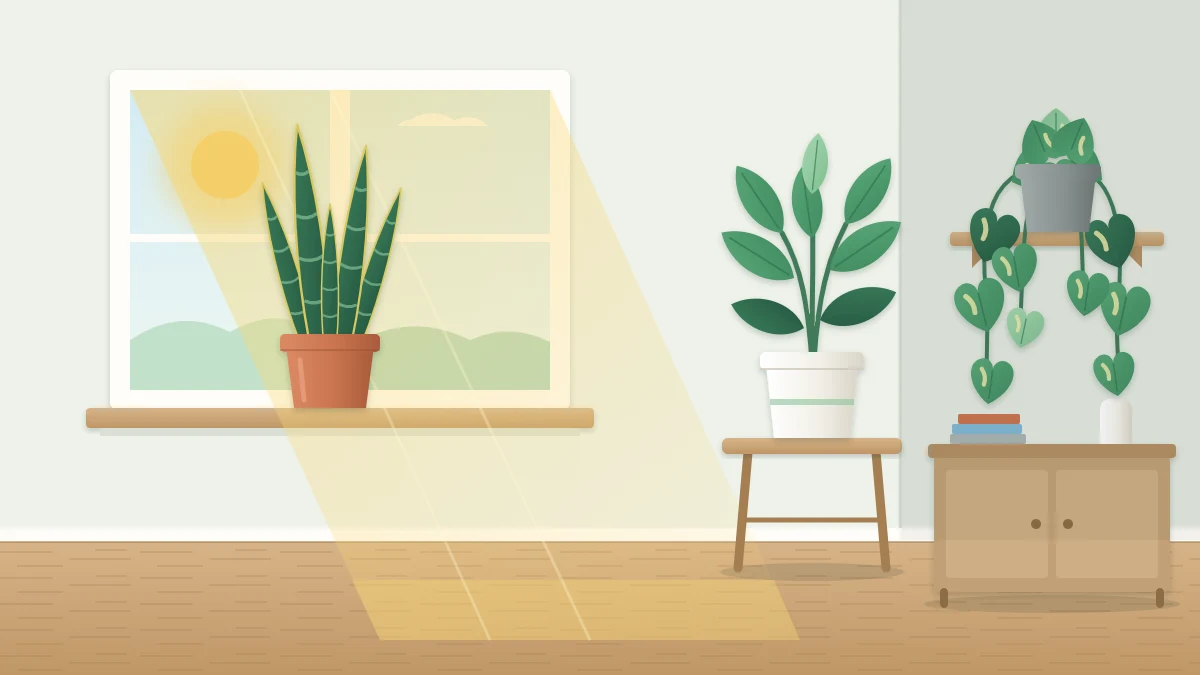
- Direct sun: sunbeams land on the leaves. You can see a sharp patch of sunlight on the plant, the windowsill or the floor around it.
- Bright indirect light: a bright spot with a wide view of the sky where the sun does not strike the leaves, or where it is filtered first, for example through a sheer curtain. This is usually close to a window, just beside or behind the path of the sunbeams.
- Medium light: farther back in the room, or near a window that gets little or no direct sun. You can read comfortably there during the day, but shadows are faint.
- Low light: well away from windows, or beside a small or heavily shaded one. There is enough daylight to see by and not much more.
These are loose categories rather than measured bands, and different labels and guides draw the lines in slightly different places. Treat them as a way to compare spots in your own home.
Low light means tolerates, not prefers
A plant sold for low light is one that can get by on less than most. It is not a plant that wants dimness. Many of them grow faster and look fuller when moved somewhere brighter, as long as harsh sun stays off the leaves.
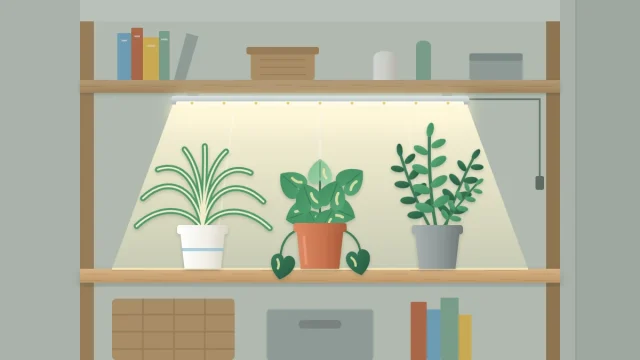
No plant grows in the dark. A windowless bathroom, a hallway lit only by a ceiling lamp or a shelf at the back of a deep room does not offer low light in the label sense. In places like these a plant slowly uses up its reserves, unless you add a grow light sized for the spot.
How quickly light falls off inside a room
Light drops away from a window far faster than most people expect. A plant on the windowsill may receive several times as much as the same plant a few feet (about a meter) into the room, and the far wall receives a small fraction of that. The room still looks evenly lit because your eyes compensate.
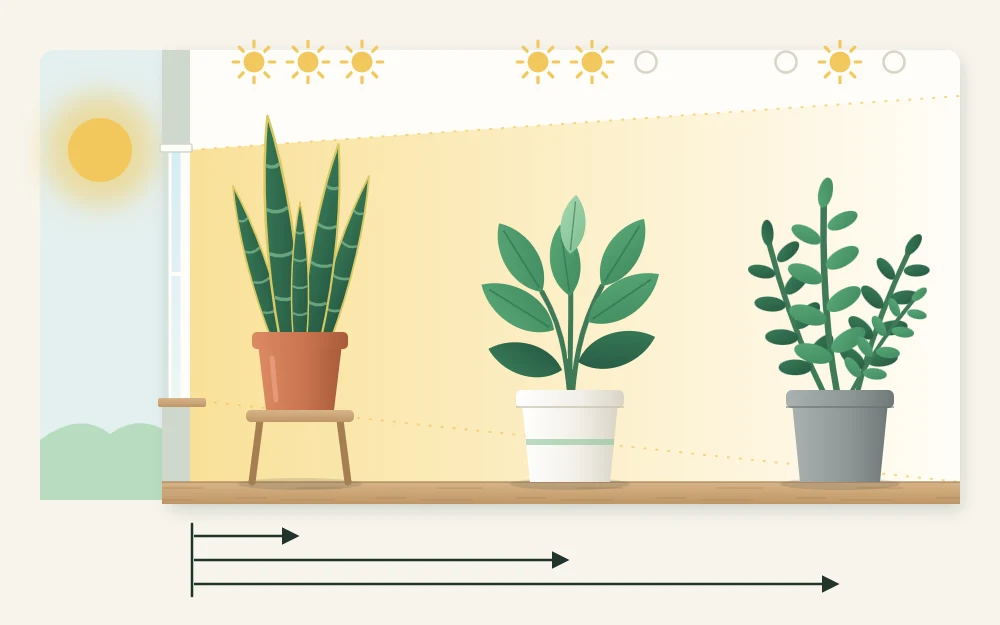
Position sideways matters too. A plant on the wall next to a window sees only a thin slice of sky, even when it is close to the glass. The more open sky a plant can “see” from where it sits, the more light it gets.
Two simple ways to judge a spot
You do not need a meter to get a useful answer. Two quick observations will tell you most of what you need.
The shadow test
Around midday on a clear day, hold your hand about 12 in (30 cm) above the place where the plant would sit and look at the shadow it casts.
- A dark shadow with crisp edges points to direct sun or very bright light.
- A softer shadow whose outline you can still clearly make out suggests bright indirect to medium light.
- A faint, blurry shadow, or none at all, means low light.
Repeat the test on an overcast day and in another season if you can. One reading is a snapshot, not a verdict.
Watching where the sunbeams land
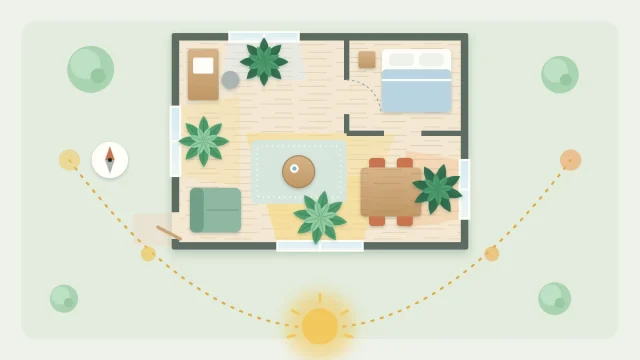
On a sunny day when you are home, check the spot in the morning, around noon and in the late afternoon. Note whether sunbeams reach it, at what time of day and for roughly how long. An hour of gentle early sun is a very different thing from several hours of strong afternoon sun through bare glass.
Why the same spot changes
The light in a fixed spot is not constant. Several things shift it, some of them slowly enough that you may not notice:
- Season: in winter the sun sits lower, days are shorter and the light is weaker, though low sun can also reach deeper into a room. In summer the reverse applies, and how strong the effect is depends on your climate and latitude.
- Window direction: each side of a building receives sun at different times of day. The guide to what each window direction typically offers covers this.
- Obstructions: trees, neighboring buildings, roof overhangs and balconies can turn a sunny window into a shaded one. Deciduous trees change the picture between summer and winter.
- Curtains, screens and glass: sheer curtains, insect screens, tinted or dusty glass all take away some light.
Tip
Recheck your plant spots when the seasons turn. A position that suited a plant in winter may get scorching sun in summer, and a good summer spot may be too dim a few months later.
Match the plant to the spot
It is tempting to choose a plant first and then find it a place. Working the other way round tends to go better: decide where you want greenery, judge the light there honestly, then pick a plant whose needs fit. Look up the plant by name, because needs vary by species and sometimes by cultivar. For a fuller explanation of light levels, see the University of Maryland Extension’s guide to lighting for indoor plants.
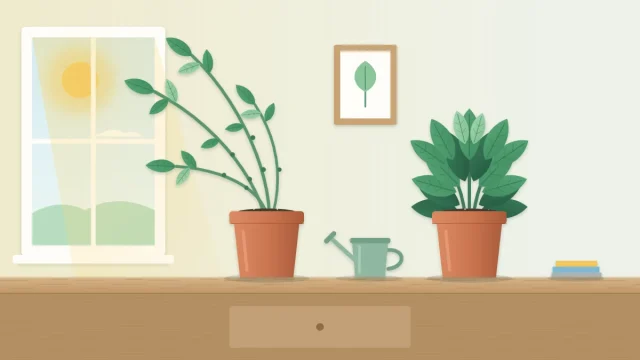
If the plant is already in your home, it will tell you over the following weeks whether the spot works. Stretched stems, pale new leaves or dry bleached patches are among the signs that a plant is getting too little or too much light, although they can have other causes as well.
When you do move a plant to a brighter position, do it in stages. Leaves that formed in dim conditions can scorch if they go straight into strong sun.
Frequently asked questions
What does bright indirect light actually mean?
It means a bright position with a wide view of the sky where sunbeams do not land on the leaves, or reach them only after being filtered, for example by a sheer curtain. In most homes that is close to a window, just outside the path of the direct sun.
Can a houseplant live in a room with no window?
Not on room lighting alone for long. Plants described as low light tolerate dim daylight, but none of them grow in the dark. In a windowless room a plant gradually declines unless it gets a suitable grow light for enough hours each day, or is swapped regularly with a plant from a brighter place.
Is light through a window the same as direct sun outdoors?
No. Glass, screens and curtains remove some light, and a window lets sun in for only part of the day. Sun through a window is usually weaker than full sun outside, but it can still scorch leaves that are not used to it, especially close to hot glass in summer.