Which Window Is Best for Houseplants? A Direction Guide
What south, east, west and north windows typically offer in the Northern Hemisphere, which kinds of plants often suit each, and how to adjust for your own home.
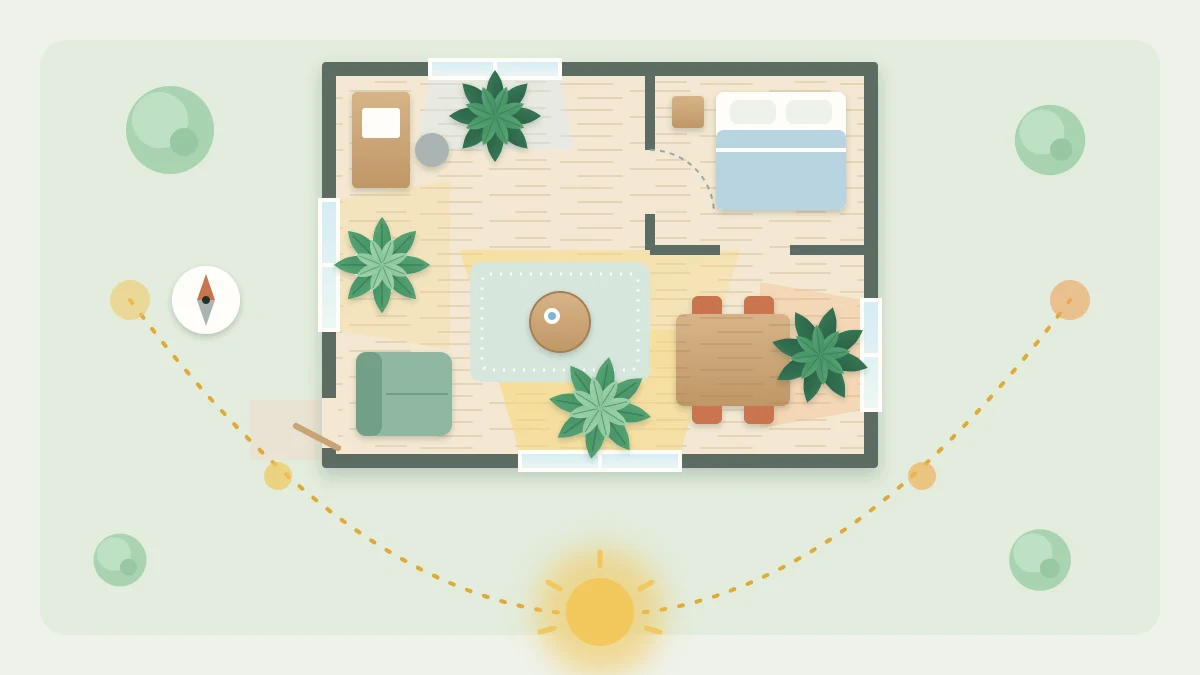
The direction a window faces decides when the sun reaches it, for how long and how strong it is when it arrives. That is why the same plant can do well on one sill and struggle on another a few rooms away.
There is no single best window for houseplants. The right one depends on what the plant needs and on what your particular window really receives. A direction guide gives you a sensible first guess, which you then check against the room in front of you.
What each direction typically gives
The descriptions below apply to the Northern Hemisphere. In the Southern Hemisphere, north and south are reversed: the north-facing window is the sunniest and the south-facing one gets the soft light. East and west behave the same way in both.
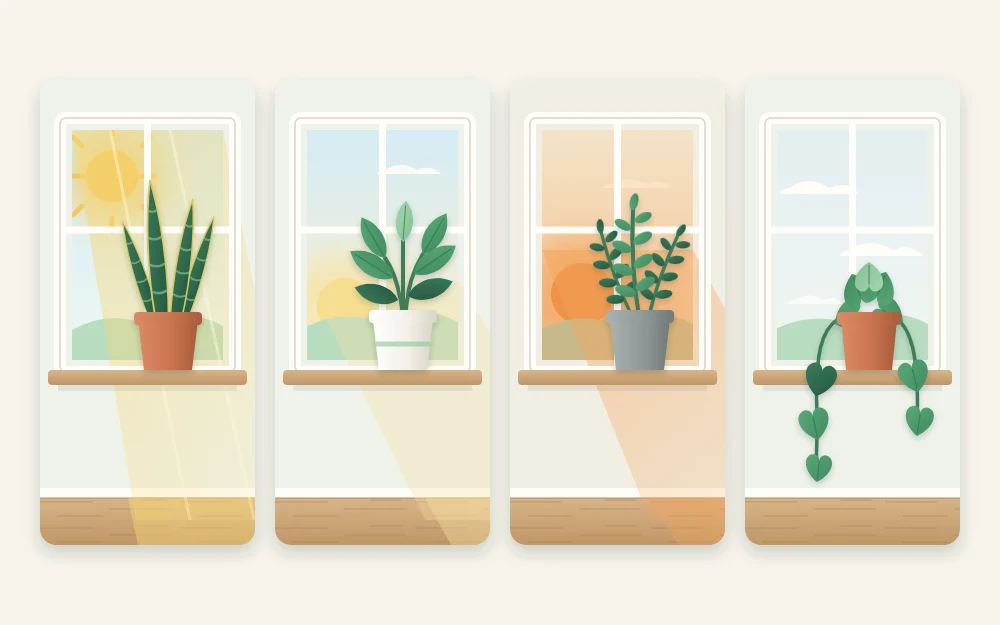
- South-facing: the most direct sun, often for much of the day, and especially deep into the room in winter when the sun is low.
- East-facing: gentle morning sun for a few hours, then bright indirect light for the rest of the day.
- West-facing: bright indirect light in the morning, then hot afternoon sun. Afternoon sun arrives when the room and the glass are already warm, so it is harder on leaves than morning sun.
- North-facing: soft, even light with little or no direct sun. It is the dimmest of the four, and the light falls away quickly as you move back from the glass.
If the terms direct sun, bright indirect light and low light are unclear, the guide to how indoor light levels are defined explains them and shows how to test a spot.
Direction and plant types at a glance
Use this table as a starting point only. Look up each plant by name, since needs differ between species and even between cultivars.
| Window direction | Typical light | Plants that often suit it |
|---|---|---|
| South | Strong direct sun for many hours | Cacti, many succulents and other sun-loving plants on the windowsill; many foliage plants set back from the glass or behind a sheer curtain |
| East | Gentle morning sun, then bright indirect light | A wide range of foliage plants that like bright light without harsh sun |
| West | Bright indirect light, then hot afternoon sun | Plants that take some direct sun; more delicate foliage plants set back or screened in summer |
| North | Soft light, little or no direct sun | Plants that tolerate medium to low light, placed close to the glass |
Why your window may not match the guide
Compass direction describes what a window could receive with nothing in the way. What actually arrives depends on several other things:
- Trees and buildings. A south-facing window shaded by a neighboring building may be dimmer than an open north-facing one. Deciduous trees shade heavily in summer and let much more light through in winter.
- Overhangs and balconies. A deep roof overhang or the balcony above can block high summer sun almost completely while still admitting low winter sun.
- Window size and height. A large window or glass door lights a room far more than a small one facing the same way. A high sill puts floor-level plants in shadow.
- Latitude and season. The farther you are from the equator, the bigger the gap between long, bright summer days and short, weak winter ones.
- What is on the glass. Insect screens, tinted glass, films and plain dirt all reduce the light that gets through.
Windows that face in-between directions, such as southeast or northwest, blend the character of their two neighbors. So rather than trusting the compass alone, watch the window on a clear day and note when sunbeams come in and how long they stay.
Adjusting the light a window gives
You rarely have to accept a window exactly as it is. A few small changes widen the range of plants a single window can support.
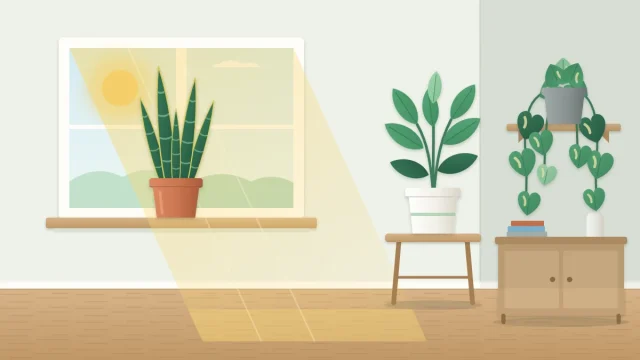
- Move the plant back. Shifting a pot 2 to 3 ft (60 to 90 cm) from a sunny window often takes it out of the direct beams while keeping it in bright light. The right distance depends on the window, so watch where the sun actually lands.
- Step to the side. A spot just beside the path of the sunbeams is bright without being harsh.
- Hang a sheer curtain. Thin fabric turns direct sun into bright filtered light. It is a useful fix for south and west windows in summer.
- Get closer at a dim window. At a north-facing or shaded window, the windowsill itself is usually the only place with enough light.
- Clean the glass and the foliage. Dust on either side cuts down the light a plant can use, so it helps to wipe dusty leaves and turn the pot now and then.
Tip
When you move a plant to a sunnier window, do it in stages over a couple of weeks. Leaves grown in dimmer light can scorch if they are put straight into strong sun.
Cold glass in winter, hot glass in summer
A windowsill is the brightest place in the room and also the one with the most extreme temperatures. In winter the air beside the glass can be much colder than the rest of the room, particularly at night and behind a closed curtain. Leaves pressed against a cold pane may be damaged.
In summer the opposite happens. Glass in full sun gets hot, and the air trapped between a pane and a blind can be far warmer than the room. Leaves touching the glass may develop dry, pale patches.
Leave a small gap between foliage and the pane in every season, and feel the windowsill with your hand on a very cold night and on a hot afternoon. If plants struggle in the cold months, the adjustments for winter light and warmth are worth a look.
Picking a window for a particular plant
Start with the plant’s stated light needs, then choose the window whose real conditions come closest. If you only have one or two windows, begin with the plants that suit them instead of trying to force a sun lover into a shaded room.
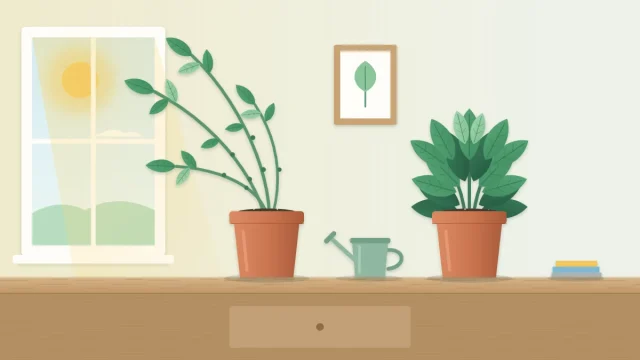
Then watch the plant for a few weeks. Compact new growth in a good color suggests the placement works. Stretching toward the glass or scorched patches suggest a move, although both can have other causes too.
Frequently asked questions
Is a south-facing window too strong for houseplants?
In the Northern Hemisphere it gives the most direct sun, which suits cacti, many succulents and other sun lovers. Many foliage plants do better set back from the glass or behind a sheer curtain. It also depends on shading from trees, buildings and overhangs, so watch how long the sunbeams actually stay.
Can plants grow in a north-facing window?
Often yes, if you choose plants that tolerate medium to low light and keep them close to the glass. In the Northern Hemisphere a north window gives soft light with little or no direct sun, so growth is usually slower there and the potting mix tends to stay moist for longer.
Does window direction work the same way in the Southern Hemisphere?
East and west behave the same, with morning sun in the east and afternoon sun in the west. North and south are reversed: in the Southern Hemisphere the north-facing window receives the most direct sun, and the south-facing one gets soft light with little direct sun.