Signs Your Houseplant Needs More Light (or Less)
How to recognize the common signs of too little light and too much direct sun, what else to rule out first, and how to correct the light gradually.
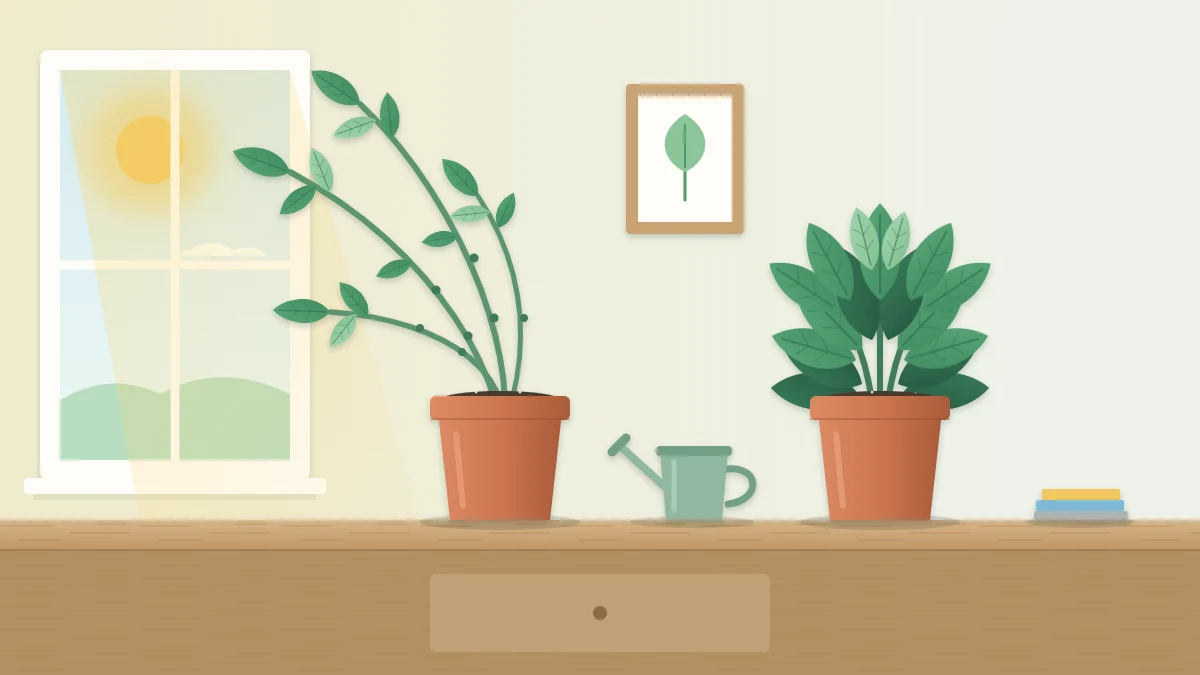
Plants cannot move to a better spot, so they change shape and color instead. Stems lengthen, leaves shrink or fade, and growth slows or tilts to one side. Those changes are readable once you know what to look for.
The difficulty is that the signs a houseplant needs more light overlap with the signs of watering and root trouble. This guide covers what too little and too much light commonly look like, what else to rule out, and how to correct the light without shocking the plant.
Common signs of too little light
Low light rarely harms a plant quickly. The changes build up over weeks or months, which makes them easy to miss until you compare the plant with an old picture or with a fresh one of the same kind.
- Long gaps between leaves. New stems stretch, with more bare stem between one leaf and the next than on older growth.
- Leaning. The whole plant tilts or reaches toward the window.
- Smaller new leaves. Each new leaf comes in smaller or paler than the ones before it.
- Fading variegation. On patterned plants, new leaves may come in with less of their white, cream or yellow marking and more plain green.
- Little or no growth. During a season when the plant would normally be in active growth, nothing much happens.
- Potting mix that stays wet. A plant in dim light uses water slowly, so the mix can stay moist for a long time after watering.
That last point matters more than it seems. A plant in a dim corner that is watered as if it stood in a bright window is at higher risk of root problems, so light and watering have to be judged together.
Common signs of too much direct sun
Too much sun tends to show faster, sometimes within days of a move or a change of season.
- Bleached or tan dry patches. Pale, papery areas appear on the leaves that face the glass, usually on the most exposed parts.
- Washed-out color. Foliage on the sunny side looks faded or yellowish compared with the shaded side.
- Curling or crisping. Leaves nearest the window curl, or their edges dry out.
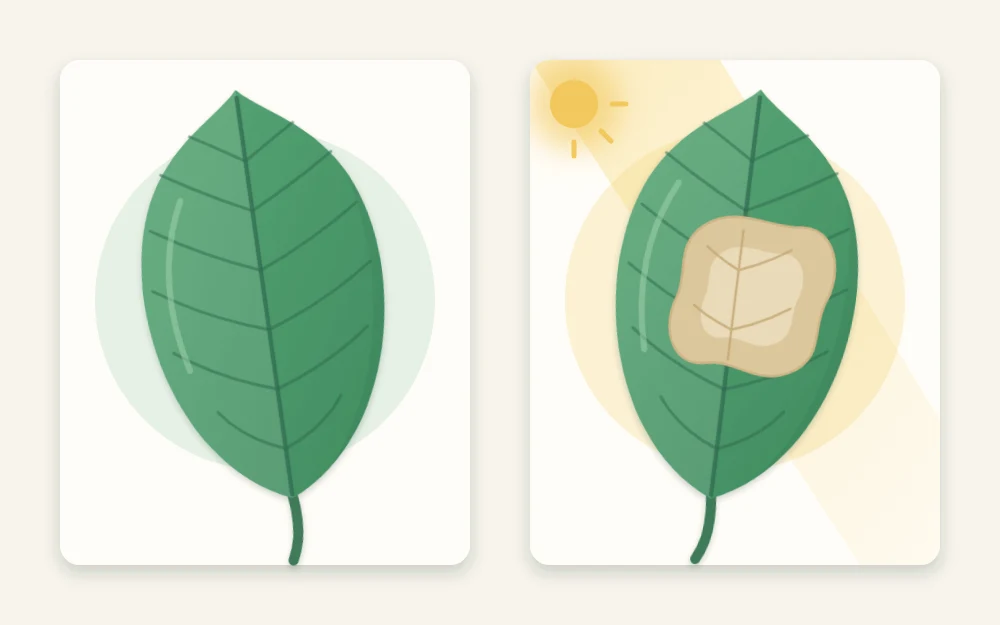
Scorched areas do not turn green again. What you are watching for is whether the damage stops spreading and whether new leaves come in clean.
Scorch is especially common after a sudden change: a plant carried from a dim shop to a sunny sill, a sheer curtain taken down, or the sun’s path shifting with the season.
These signs overlap with other causes
None of the signs above proves that light is the problem. Pale or yellowing leaves, slow growth and dry patches can also come from too much or too little water, damaged roots, a pot the plant has outgrown, cold drafts, hot air from a vent, pests or low nutrition. Often two factors act together.
Before you move the plant, run through a few checks in this order:
- Feel the potting mix at depth. Is it wet, moist or dry, and how long has it stayed that way since you last watered?
- Look at drainage and roots. Check that the pot has drainage holes and that no water is sitting in the saucer or cachepot (the decorative outer pot without a hole). If the mix has been wet for a long time, slide the plant out and look at the roots.
- Judge the light in the spot. Note whether sunbeams reach the leaves, and for how long.
- Think about recent changes. A move, a repot, a new season or a heater switched on can all show up in the leaves a little later.
- Inspect the leaf undersides and stem joints for pests.
Good to know
Yellowing in particular has many possible causes. If that is the main symptom, work through the checklist for yellow leaves and what to check first before you decide the light is to blame.
How to judge whether the spot is the issue
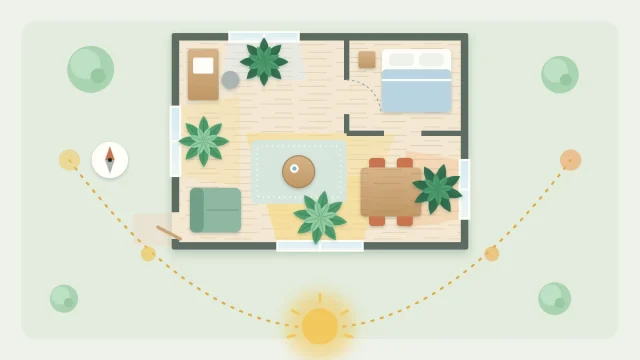
Compare what the plant is said to need with what the spot delivers. Look the plant up by name, then assess the position at midday on a clear day. The guide to direct, bright indirect and low light explains the terms and a simple shadow test.
A plant that needs bright indirect light and sits several feet from a small shaded window is very likely short of light. A plant sold for lower light that sits in hours of afternoon sun is very likely getting too much.
Fixing too little light
- Move it closer to a window. Even a short move toward the glass can make a large difference, because light fades quickly with distance.
- Choose a different window. If the current one is shaded or faces away from the sun, see which window direction tends to suit which plants.
- Go in stages. Shift the plant toward brighter light over a couple of weeks instead of taking it from shade to full sun in a day.
- Rotate the pot. A quarter turn each time you check the plant evens out leaning growth.
- Clean the window and the leaves. Dust on either one blocks light.
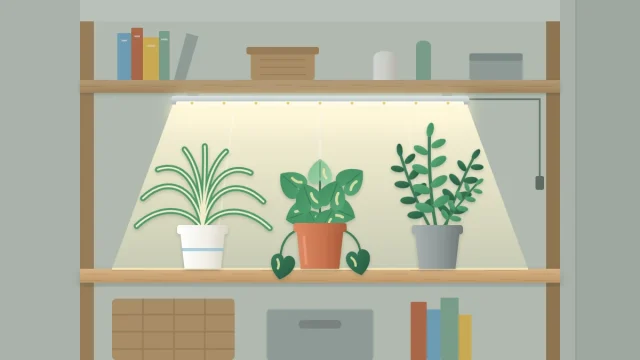
- Add artificial light. Where no window is bright enough, a grow light can supplement or replace daylight.
As light increases, the plant will use water faster. Keep checking the mix before you water instead of assuming the old pattern still holds.
Fixing too much sun
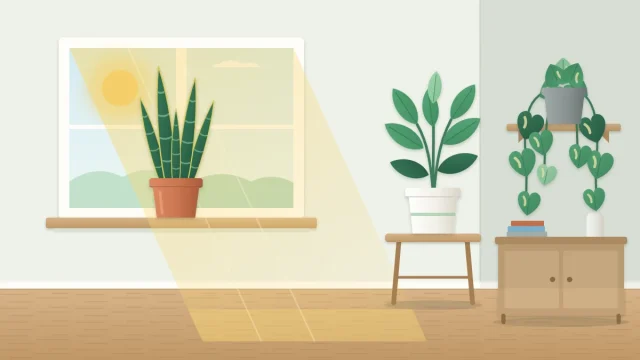
Move the plant back from the glass, shift it to the side of the sunbeams, or hang a sheer curtain to filter the light. In summer, check that leaves are not touching hot glass.
There is no need to remove every marked leaf at once. A leaf that is still mostly green goes on working for the plant, so trim only what is fully dry or what bothers you.
What recovery looks like
Old growth does not rewind. Stretched stems stay stretched and faded leaves usually keep their look. Judge the fix by what the plant produces next: shorter gaps between leaves, fuller size and stronger color on new growth.
That takes time, often several weeks during active growth and longer in winter. Change one thing, keep everything else steady, and give the plant a fair chance to respond before you change something else. Once new growth is coming in well, long bare stems can be pruned back on many plants if you want a more compact shape.
Frequently asked questions
Will a leggy plant fill out again if I give it more light?
The stretched stems stay as they are, but new growth usually comes in more compact once the light improves. On many plants you can prune long bare stems back during active growth to encourage a bushier shape. Look up your particular plant first, because not every species responds to cutting the same way.
Can sunburned leaves recover?
No. Bleached or tan dry patches are permanent, although the rest of the leaf can keep working. Move the plant out of the harsh sun or filter the light, then watch the new leaves. If they come in clean, the change worked. Trim badly damaged leaves when you like; it is cosmetic.
How long does a plant take to respond to better light?
It varies with the species, the season and how the plant is doing otherwise. In active growth you may see sturdier new leaves within several weeks. In winter, or with slow-growing plants, it can take much longer. Judge by new growth, and avoid changing several things at once.