When to Repot Houseplants: Signs to Look For
The signs that a houseplant has outgrown its pot or worn out its mix, how to check the roots in a minute, and why a calendar or a sick-looking plant is not a reason to repot.
Repotting is one of those jobs that is easy to do too often or put off for too long. Knowing when to repot houseplants comes down to reading a handful of signs from the roots, the potting mix and the way the pot behaves when you water it.
None of these signs is proof by itself, and several of them have other explanations. Taken together, and confirmed with a quick look at the root ball, they give you a much better answer than the calendar does.
Signs a plant may need more room or fresh mix
A plant that has filled its pot usually shows it in more than one way. Look for a combination of the following.
- Roots growing out of the drainage holes or appearing on the soil surface. A single root poking out is not urgent; a thick tangle suggests the pot is full.
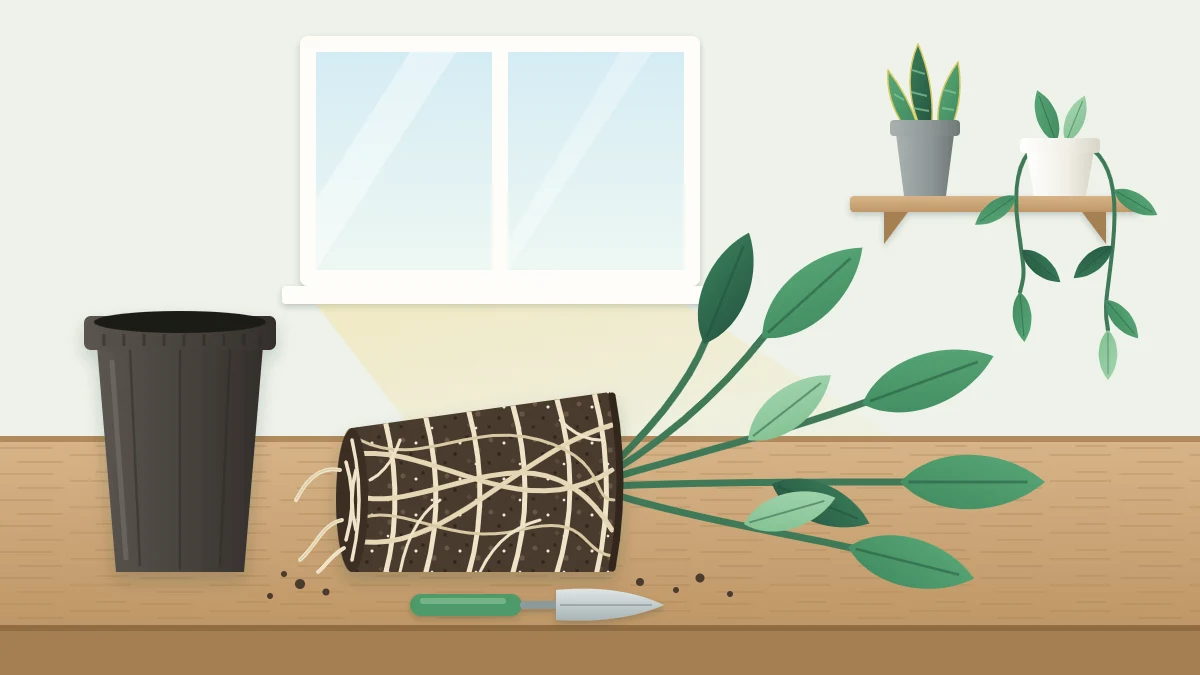
- Roots circling the inside of the pot. You see this when you slide the plant out: roots wrapped around the outside of the root ball in the shape of the container.
- Water running straight through. When a pot holds more root than mix, or the mix has dried hard and pulled away from the sides, water can pour out of the bottom almost at once without soaking in.
- The mix drying much faster than it used to in the same spot and the same season. More roots and less mix mean less stored water.
- A top-heavy plant that tips over easily because the growth above has outgrown the weight below.
- Growth stalling during active growth even though light, watering and feeding have not changed.
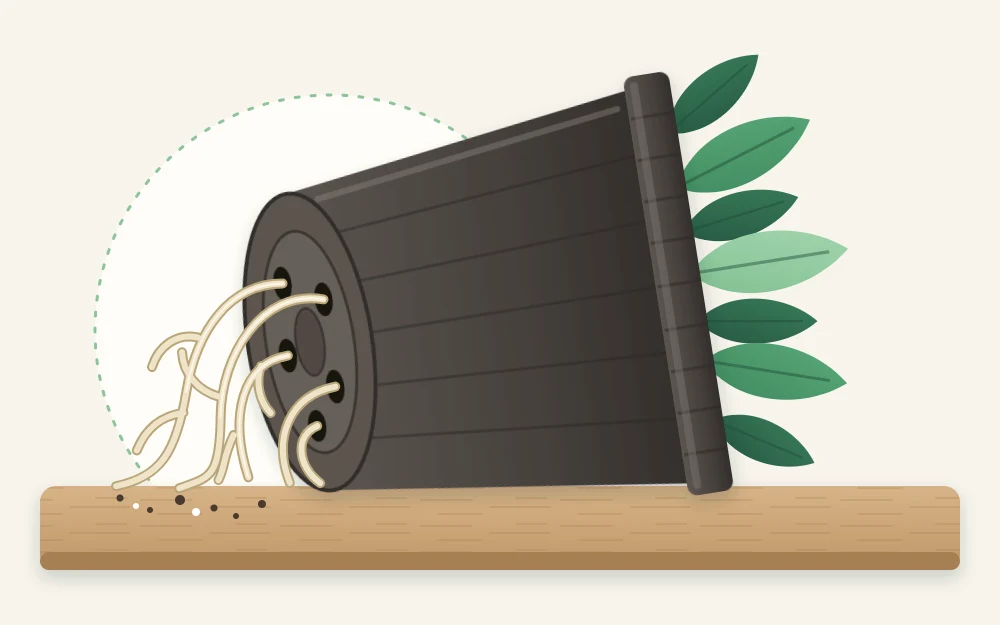
Several of these overlap with other issues. Fast drying can come from a warmer room or stronger summer light. Stalled growth can come from low light or the time of year. That is why the next step is to look.
How to check the roots
Sliding a plant out of its pot for a moment does it no harm, and it settles the question quickly.
- Choose a time when the mix is lightly moist, not soaked and not bone dry. The root ball holds together best then.
- Spread your fingers over the soil surface with the stems between them, and turn the pot on its side or upside down.
- Squeeze the sides of a plastic nursery pot, or tap the rim of a rigid pot against the edge of a table, and ease the pot away.
- Look at the outside of the root ball, then slide it back in and set the pot upright.
If you see mostly mix with some roots running through it, the plant has room and can go back as it is. If roots form a dense mat around the sides and base and very little mix is visible, the plant is root-bound and will usually benefit from a slightly larger pot.
If the roots look dark and soft and the mix smells sour, the issue is not space. Read about root rot in houseplants before you do anything else.
Why the calendar is a poor guide
Advice to repot every year, or every two years, treats all plants as if they grow at the same rate. They do not. A fast grower in bright light may fill a pot within a season, while a slow one in a dim corner can sit comfortably in the same container for several years.
Repotting without a reason also has a cost. Roots are disturbed, and a plant moved into more mix than it can use sits in soil that stays wet for longer. Check the plant about once a year if you like a reminder, but let what you find decide.
Do not repot as a reflex when a plant looks unwell
When leaves yellow or droop, a new pot can feel like doing something useful. Often it adds stress to a plant that is already struggling with something else, such as too little light or mix that stays wet too long.
Check the basics first: how moist the mix is at depth, whether water drains freely, how much light the spot really gets, and whether anything changed recently. Repot when the roots or the mix are the actual problem, not as a general cure.
Good to know
Some plants tolerate a snug pot well, and a few are said to flower more readily when slightly crowded. Look up your plant by name before assuming that tight roots are a problem.
A newly bought plant can usually wait
A plant that has just come home is adjusting to different light, temperature and humidity. Adding root disturbance on top is rarely necessary. In most cases it can stay in its nursery pot for a few weeks or longer while you learn how quickly it dries out.
If you want it to look better in the meantime, stand the nursery pot inside a cachepot, a decorative outer pot without a drainage hole, and tip out any water that collects in it. Repot sooner only if the check above shows a badly packed root ball or a mix that is clearly failing.
The best time of year
Plants generally recover from repotting more easily during active growth, when new roots form quickly. For many houseplants that is spring and summer, though timing depends on your climate and on conditions indoors; a plant under a grow light or in a warm, bright room may grow through much of the year.
In winter, when growth is slow for many plants, a healthy plant that is merely a little tight can usually wait. A struggling root system should not. If the roots are rotting, or the mix has broken down so far that it no longer drains, deal with it whatever the season.
Fresh mix without a bigger pot
Needing new mix and needing more room are not the same thing. Old mix compacts and holds water differently, which the guide to potting mix for houseplants explains. A plant that is not root-bound but sits in tired mix can go back into the same pot, or one of the same size, with fresh mix around it.
When the signs do point to a move, go up only one pot size. The full method is in the guide on how to repot a houseplant step by step, and Clemson Cooperative Extension’s factsheet on transplanting and repotting indoor plants has more detail.
Frequently asked questions
How do I know if my houseplant is root-bound?
Slide the plant out of its pot and look at the root ball. If roots form a dense mat around the sides and base and you can see very little potting mix, it is root-bound. Roots through the drainage holes, water rushing straight through and unusually fast drying are supporting signs.
Should I repot a houseplant as soon as I buy it?
Usually not. A new plant is already adjusting to different light and air, so it can normally stay in its nursery pot for a few weeks or longer. Repot sooner only if the roots are packed solid, the mix does not drain, or you find signs of root trouble.
Can I repot houseplants in winter?
You can, but many plants grow slowly then and recover more gradually, so a healthy plant that is only slightly tight can often wait until active growth resumes. If the roots are rotting or the mix no longer drains, repot regardless of the season. Timing depends on your climate and indoor conditions.