Root Rot in Houseplants: Signs, Causes and What You Can Do
What root rot is, how to check the roots instead of guessing from the leaves, the steps worth trying, and an honest view of when a plant is unlikely to recover.
Root rot in houseplants is what happens when roots die in potting mix that stays waterlogged. Roots need air as well as water. When the spaces in the mix remain full of water for too long, the roots are starved of oxygen, begin to die, and decay organisms that live in wet conditions often take hold in the damaged tissue.
It is a common way to lose an indoor plant, and it is hard to spot from above. The only reliable check is to look at the roots themselves, and the outcome depends mostly on how many of them are still alive when you do.
Signs above the soil are not specific
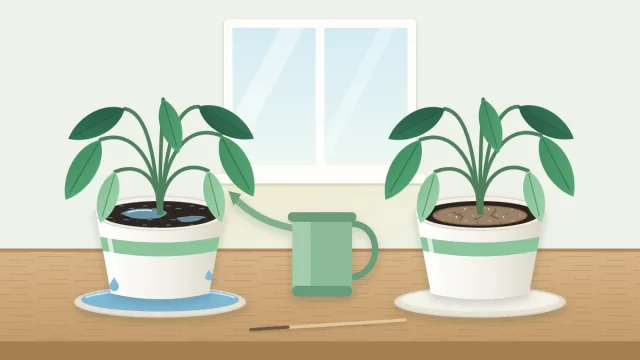
A plant with failing roots cannot take up water, so it often looks thirsty. The typical picture is a plant that wilts even though the mix is wet, and does not perk up after watering.
Other signs may include yellowing leaves, leaf drop, soft or darkened stem bases, a sour or swampy smell from the pot, and mix that stays wet for a very long time. Every one of these can have another cause, from low light to a cold draft. If you cannot tell whether the plant is too wet or too dry, the comparison in overwatering vs underwatering walks through the evidence.
What the signs tell you is that it is time to look inside the pot.
How to check the roots
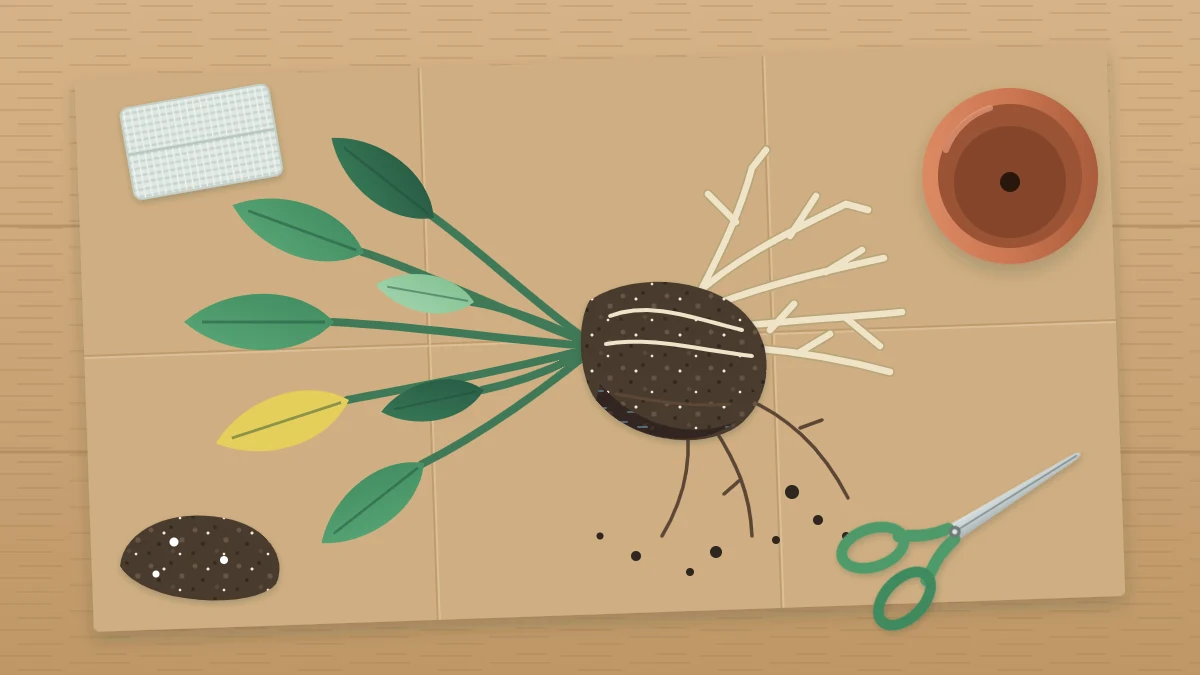
Support the plant with a hand over the soil, tip the pot and slide the root ball out onto newspaper. Then look, feel and smell.
- Healthy roots are usually firm and pale, often white, cream or tan. Color varies by species, and some plants have naturally darker or orange-tinted roots, so firmness is the better guide.
- Rotted roots are soft and dark, brown to black. They may feel slimy, smell unpleasant, and the outer layer can slide off between your fingers, leaving a thin thread behind.
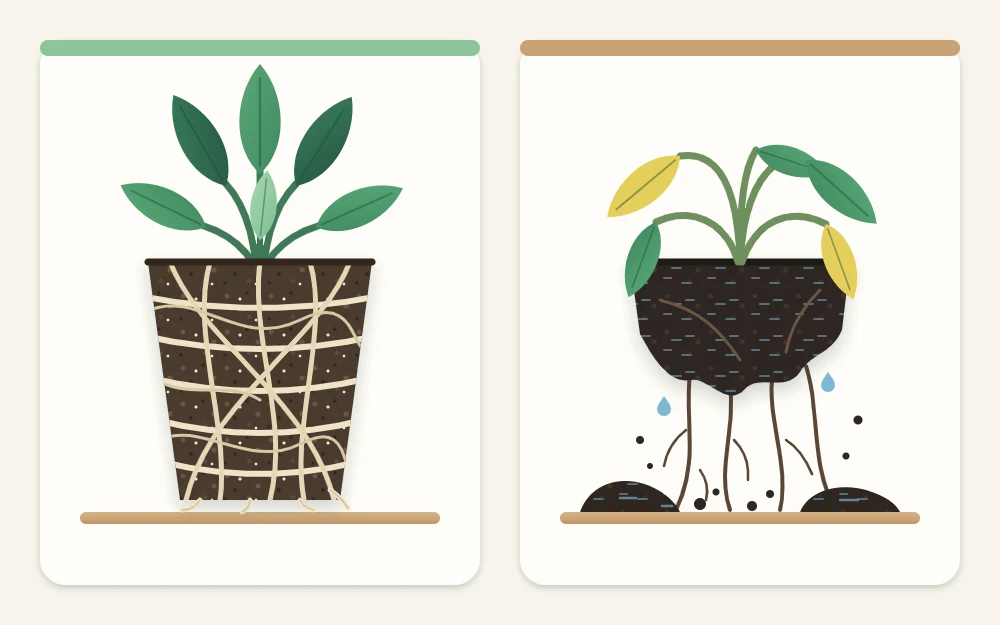
Roots stained dark by the potting mix but still firm are not rotten. If most of the roots are firm, the plant probably has a watering or drainage problem rather than advanced rot, and it can go back in its pot while you correct the conditions.
What you can try
If part of the root system is soft and dark, the aim is to remove what is dead and give what is left a fresh, airy place to regrow.
- Remove the wet mix. Gently work the old mix away from the roots with your fingers. Rinsing the roots under lukewarm water can help you see what you have.
- Trim the clearly dead roots. Use clean scissors and cut back to firm tissue. Leave anything that is firm, even if it looks a little discolored.
- Choose a pot that fits what remains. After trimming, the root system is smaller, so the plant often needs a smaller pot than before. Use a clean one with drainage holes; the guide to pots and drainage explains why both size and holes matter here.
- Repot into fresh mix. Throw the old mix away rather than reusing it, and follow the usual method for repotting a houseplant, keeping the plant at its original depth.
- Water sparingly. Settle the mix with a light watering, then wait until it has dried to the depth that suits the plant before watering again. A reduced root system uses water slowly.
- Give good light and steady warmth. Bright indirect light helps the plant use water and grow new roots. Keep it out of harsh direct sun while it is weak, and do not fertilize until you see new growth.
If many leaves remain on very few roots, removing some of the older or damaged foliage can reduce the demand on what is left. Then give it time. Recovery, when it happens, is slow.
Good to know
Skip home-remedy soaks, powders and household products poured onto the roots or into the pot. They do not bring dead roots back and can harm the living ones. Removing dead tissue and correcting the growing conditions is what gives the plant a chance.
Be realistic about the chances
A plant that still has a good share of firm roots has a fair chance once the conditions improve. A badly affected plant, with most of its roots gone or with decay that has reached the base of the stem, often does not recover whatever you do.
That is not a failure of effort. By the time the leaves show a problem, the damage below is frequently well advanced. Give the plant a few weeks in good conditions, and if it keeps declining, it is reasonable to let it go and discard the mix.
Cuttings as a fallback
When the roots are beyond saving but some stems are still firm and healthy, taking cuttings may be the best way to keep the plant. Many vining and cane-type houseplants root from a piece of stem that includes a node, the point on a stem where a leaf and roots emerge. Others can be regrown from divisions or leaves.
Whether this works, and how, depends on the species, so look up the method for your plant by name. Use only firm, healthy-looking growth, and start the cuttings in fresh material, not in the old mix.
Preventing root rot
Prevention is far more dependable than rescue, and it comes down to keeping air in the root zone.
- Check the mix before watering instead of following a set day, and water according to what the plant type prefers.
- Use pots with drainage holes, and empty saucers and outer pots after watering.
- Match the pot to the root ball. An oversized pot holds wet mix the roots cannot use.
- Use a mix that drains well for the plant, and replace it when it has broken down and compacted; see the guide to potting mix for houseplants.
- Remember that plants in low light, cool rooms or winter conditions use water more slowly, so the mix stays wet longer.
For more on how excess water damages indoor plants, see the University of Maryland Extension’s page on overwatered indoor plants.
Frequently asked questions
Can a houseplant recover from root rot?
Sometimes. A plant that still has a good share of firm roots may recover after the dead roots are trimmed and it is repotted into fresh, well-draining mix. A plant that has lost most of its roots, or has decay at the stem base, often does not. Healthy cuttings may be the fallback.
What do rotted roots look like?
Rotted roots are usually soft and dark brown or black, may smell sour, and the outer layer can slide off when touched. Healthy roots are generally firm and pale, though color varies by species, so firmness is the more dependable sign. Roots stained by the mix but still firm are not rotten.
Should I reuse the potting mix after root rot?
No. Discard the old mix, because it has usually broken down, holds too much water and may carry the organisms involved in the decay. Repot into fresh mix in a clean pot with drainage holes, sized to the roots that remain rather than to the size of the plant above.