Potting Mix for Houseplants: What Is in It and Why It Matters
What the ingredients in a bag of potting mix do, why garden soil fails in a pot, and how to pick or adjust a mix for the kind of plant you are growing.
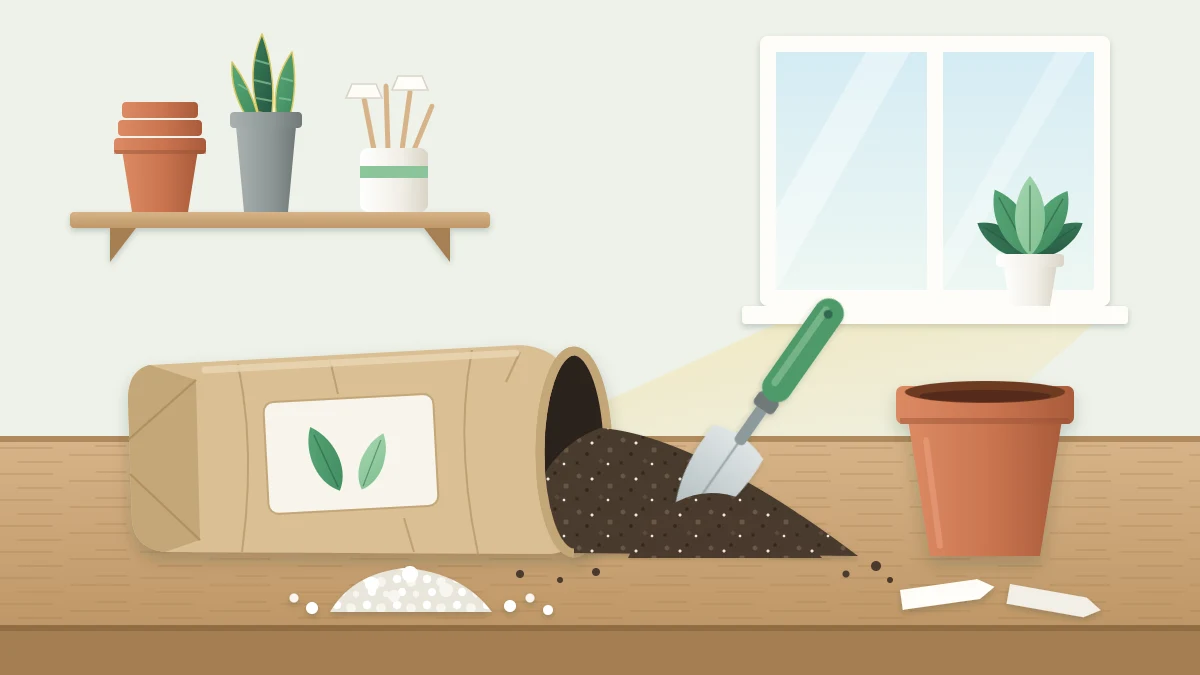
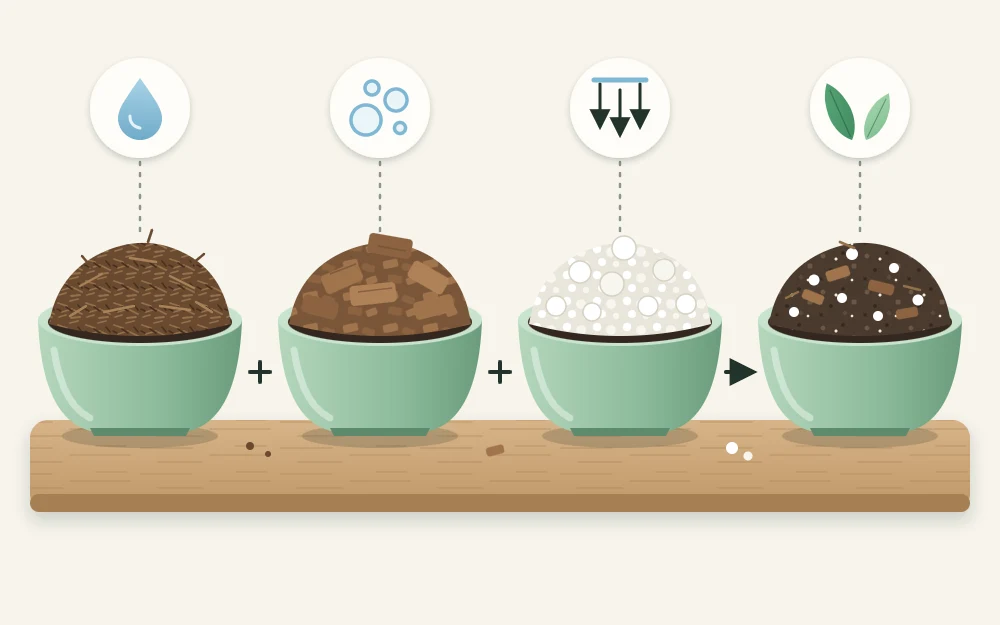
A bag of potting mix looks like dark soil, but most of it is not soil at all. Potting mix for houseplants is a blend of lightweight materials chosen to hold moisture, let extra water drain away and keep air around the roots, all inside the small space of a pot.
Knowing what the ingredients do makes a shelf of bags less confusing. It also explains why one plant stays wet for a long time while another dries out quickly, and what you can change about it.
Why garden soil does not work in a pot
Soil from a yard behaves differently once it is confined in a container. In the ground, water keeps moving down and away through a deep layer of earth. In a pot, fine soil particles settle together, the spaces between them fill with water, and the lower part of the pot can stay saturated for a long time.
Roots need air as well as water, and dense, wet soil leaves little room for it. Garden soil is also heavy, tends to set hard as it dries, and can bring weed seeds, insects and disease organisms indoors. A potting mix is built to avoid these problems: coarse enough to drain, spongy enough to hold some moisture, and light enough to lift.
The mix cannot do the whole job alone. It works together with the container, so even a good mix needs a way for water to leave; the guide to plant pots and drainage holes covers that side of the picture.
What is in the bag
Most mixes combine a few of the same ingredients in different proportions. The ingredient list on the back of the bag, when there is one, tells you more than the name on the front.
| Ingredient | What it is | Main job in the mix |
|---|---|---|
| Peat moss | Partly decomposed bog moss | Holds water and some nutrients; can be slow to re-wet once it dries out completely |
| Coir | Fiber from coconut husks | Holds water in a similar way and usually re-wets more easily |
| Bark | Chipped or composted tree bark | Adds structure and larger air spaces |
| Perlite | White, puffed volcanic glass | Opens up the mix for drainage and air; very light |
| Pumice | Porous volcanic rock | Drainage and air, with more weight than perlite |
| Compost or starter fertilizer | Decomposed plant material or added nutrients | Supplies some nutrients for a limited time |
Peat or coir usually makes up the bulk of a general-purpose mix. The coarser ingredients decide how quickly water passes through and how much air stays behind afterward. Clemson Cooperative Extension’s factsheet on soil mixes for indoor plants goes into more detail on the components.
Good to know
If the bag says the mix contains fertilizer, read the label to see roughly how long it is meant to last, and hold off adding more until then.
Three broad types of mix
Bags are sold under many names, but most fall into one of three groups.
- General-purpose indoor potting mix. Mostly peat or coir with some perlite and often a little bark. It holds a moderate amount of water and suits many common leafy houseplants.
- Cactus and succulent mix. A larger share of gritty material such as pumice, perlite or coarse sand, so water runs through quickly and the mix dries sooner. Plants that store water in thick leaves, stems or roots often do better in it.
- Chunky mixes. Based on orchid bark and other large pieces, with wide air gaps. These suit epiphytes, plants that grow attached to trees in nature rather than in the ground, such as many orchids. Some growers also use a partly chunky blend for climbing tropical plants with thick roots.
These are starting points, not rules. Look up your plant by name to see which group it usually belongs to, and expect variation between bags of the same type.
Adjusting a mix to suit the plant and the room
You do not need a different bag for every plant. A general-purpose mix can be nudged in either direction with one extra ingredient.
- Stir in extra perlite or pumice if a mix stays wet for a long time, if the plant prefers to dry out between waterings, or if the room is cool or dim.
- Add bark for plants with thick roots that like air around them.
- Leave the mix as it is, or choose one with more peat or coir, for thin-leaved plants that dislike drying out, or for small pots in warm, bright rooms.
There is no single correct recipe. Change the mix modestly, then watch how long the pot takes to dry. Whatever blend you use, checking the soil moisture before you water matters more than the exact proportions.
Tip
When you change a plant’s mix, treat it as a new pot to learn. A faster-draining blend will usually need water sooner than the old one did.
How potting mix changes with age
Potting mix does not stay the same. Over months and years the organic parts break down into finer particles, the mix settles, and the air spaces shrink. An old mix often holds more water near the bottom of the pot and less air around the roots than it did when fresh.
Signs of a worn-out mix include a sunken soil level, a crusted surface, water that pools on top or rushes straight through, and a pot that behaves very differently from how it used to. Fresh mix is one of the main reasons to repot; the step-by-step method is in the guide on how to repot a houseplant.
Handling and storing potting mix
Dry mix straight from the bag can be dusty and can repel water at first. Tip what you need into a tub, add a little water and work it through with your hands or a trowel until it is evenly damp but not dripping. Damp mix is easier to settle around roots and takes up water more evenly afterward.
Open bags gently and away from your face, and wash your hands when you finish. Fold the top of a part-used bag over, clip it shut and keep it somewhere dry and out of the sun, so it does not dry out completely, get soaked by rain or attract insects.
Choosing at the shelf
Pick a bag labeled for indoor or container plants rather than garden soil or topsoil, match the type to the kind of plant, and check whether fertilizer is included. After that, the plant and the pot will tell you whether the choice was right.
Frequently asked questions
Can I use garden soil for houseplants?
It is not a good choice. In a container, garden soil packs down, drains slowly and leaves little air for roots, and it can carry weed seeds, insects and disease organisms indoors. A potting mix made for containers is lighter and coarser, so extra water can drain out and air can get back in.
Do I need a special mix for every kind of plant?
Usually not. A general-purpose indoor potting mix suits many common leafy houseplants. Plants that store water, such as cacti and succulents, often do better in a faster-draining gritty mix, and epiphytes such as many orchids need a chunky bark-based one. You can also adjust a general mix with extra perlite or bark.
Does potting mix go bad?
It changes rather than spoils. In a pot, the organic parts slowly break down and settle, so an old mix tends to hold more water and less air than when it was fresh. An unopened or well-closed bag stored somewhere dry usually stays usable, though any added fertilizer may fade over time.