Yellow Leaves on Houseplants: Common Causes and What to Check
Yellowing is a general stress signal with many possible causes. This checklist shows how to read the pattern and what to check, in order, before you change anything.
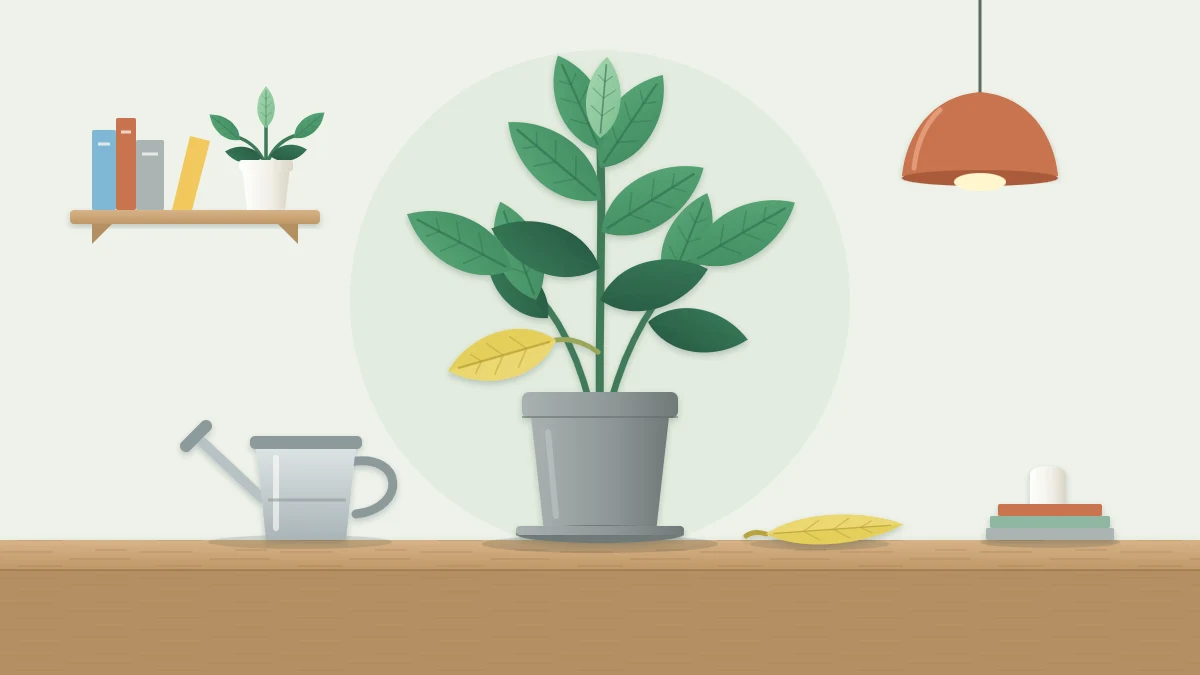
Few things worry a plant owner faster than yellow leaves on houseplants. One day the plant looks fine; the next, a leaf near the base has gone pale, and it is tempting to reach for the watering can, the fertilizer and a new pot all at once.
Hold off for a moment. Yellowing is a general stress signal, not a diagnosis. Many different problems end with the same faded leaf, and some yellowing is not a problem at all. What helps is a checking order: read the pattern, then work through the likely causes one at a time.
Read the pattern first
Before you change anything, look at where the yellowing is and how quickly it appeared. The pattern does not name the cause, but it tells you where to look first.
- One or two old lower leaves. Often normal aging, particularly when the rest of the plant is growing well.
- Many lower leaves at once. May point toward the roots, the moisture in the pot or a drop in light.
- New growth coming in pale. Can be linked to light, root health or nutrition.
- Yellowing all over. Often follows something that affects the whole plant, such as a move, a draft or root trouble.
- Sudden or gradual. A sudden change often follows an event you can name. A slow fade usually reflects conditions that have been slightly off for a while.
When a yellow leaf is normal
Leaves do not last forever. Most common houseplants shed an older lower leaf now and then as new ones form, and the old leaf typically turns yellow before it drops. If that is all you see, and the new growth looks healthy, there is nothing to fix.
A newly bought plant may also lose a few leaves while it adjusts to a home that is dimmer and drier than the greenhouse it came from. Keep its care steady and watch what the new growth does.
The checking order
Work down this list from the top. The early items are the most frequent causes and the quickest to check, so skipping ahead rarely saves time.
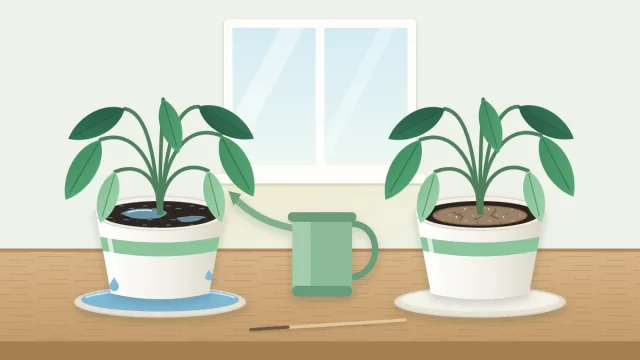
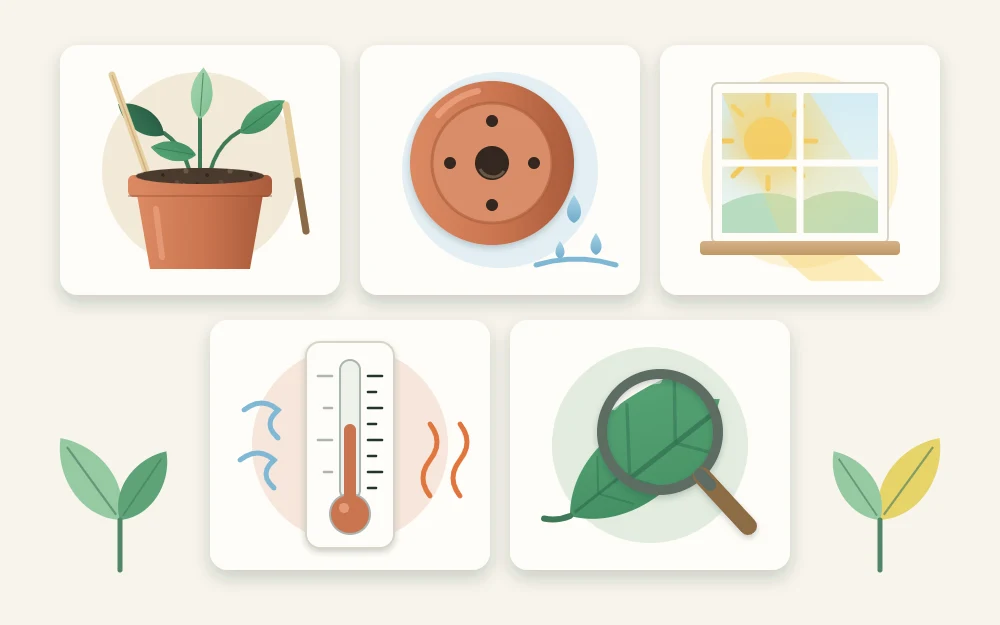
- Soil moisture. Push a finger or a plain wooden skewer into the potting mix, well below the surface. Is it wet, lightly moist or dry? Then think about how long it has been that way. Mix that stays wet for a long time and mix that dries out completely can both lead to yellowing. The guide to telling overwatering from underwatering explains how to read what you find.
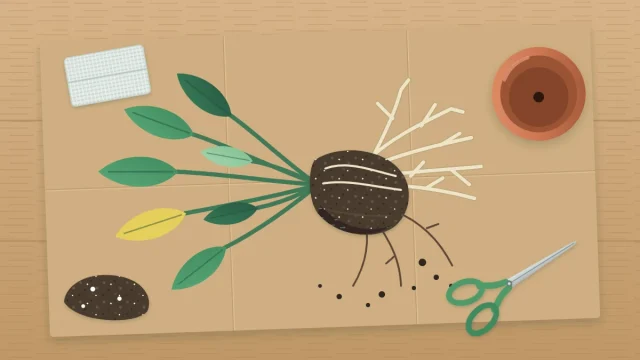
- Drainage and roots. Confirm that the pot has drainage holes and that no water is sitting in the saucer or in the bottom of a cachepot (a decorative outer pot without a hole). If the mix is wet and smells sour, slide the plant out and look at the root ball.
- Light. Ask whether the spot is bright enough for this plant, and whether the light has changed with the season, a new curtain or rearranged furniture. Too little light and too much direct sun can both discolor leaves. Compare what you see with the signs that a plant needs more or less light.
- Recent changes. A move to another room, a repot or the trip home from the shop may be followed by a few yellow leaves a week or two later.
- Temperature and drafts. Look for cold air from a door or window, leaves touching cold glass, or hot air from a heating vent or radiator.
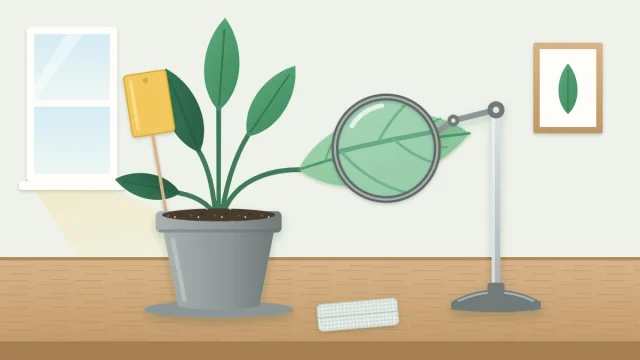
- Pests. Turn several leaves over and look along the undersides and at the stem joints. If you find insects, fine webbing or sticky residue, follow the step-by-step plan for dealing with houseplant pests.
- Nutrition. Consider this only when everything above checks out.
Why moisture comes first
How long the mix stays wet is the most common thread behind yellow leaves indoors, and it is easy to misjudge from the surface, which dries first. Roots need air as well as water. When the mix stays saturated, roots can be damaged, and damaged roots cannot supply the leaves even though water is plentiful.
The opposite also happens. A plant left dry for too long may give up its oldest leaves to protect the rest. Both situations look similar from above, which is why the evidence has to come from the pot, not from the leaves.
Why nutrition comes last
Fertilizer is the fix many people reach for first, and it is rarely the right first move. A plant with struggling roots or too little light cannot make use of extra nutrients, and adding them to a stressed root system can make matters worse.
Nutrition becomes a reasonable suspect when the other checks come back clean, the plant has been in the same mix for a long time, and it has had no fertilizer during active growth. In that case, read the basics of fertilizing houseplants and follow the product label for the amount.
Change one thing at a time
Once you have a likely cause, make a single adjustment and then wait. Plants respond slowly, and a leaf that was already on its way out may still yellow after you have fixed the cause. Give each change a few weeks and judge it by the new growth, not by the old leaves.
Tip
Write down what you changed and the date. If you move the plant, repot it and fertilize it in the same weekend, you will not know which step helped or which one caused the next problem.
What to do with the yellow leaves
A leaf that has turned fully yellow does not turn green again. The plant is drawing what it can back out of that leaf, so there is no rush to remove it. Wait until it comes away with a gentle tug, or snip it off close to the stem with clean scissors once it is mostly yellow or brown.
When the yellowing keeps spreading
If leaves continue to yellow after a few weeks of steadier care, go back to the roots. Slide the plant out of its pot and look: roots that are soft, dark and falling apart need attention more urgently than anything happening above the soil.
Spots, rings, distorted growth or anything that does not fit the checks above deserve a closer look. For a wider range of symptoms and what may be behind them, see the University of California Statewide IPM Program’s guide to houseplant problems.
Frequently asked questions
Can yellow leaves turn green again?
No. Once a leaf has turned fully yellow it will not regain its color, even after the cause is fixed. Judge your changes by the new growth instead. You can leave the yellow leaf until it comes away with a gentle tug, or snip it off with clean scissors when it is mostly yellow or brown.
Should I fertilize a houseplant with yellow leaves?
Not as a first step. Yellowing is more often linked to moisture, drainage, roots or light than to a shortage of nutrients, and fertilizer can add stress to struggling roots. Rule those out first. If nutrition still seems likely and the plant is in active growth, use a houseplant fertilizer and follow the product label.
Is it normal for the bottom leaves to turn yellow?
An occasional old lower leaf yellowing and dropping is normal aging for most common houseplants, particularly when the plant is producing healthy new leaves. It is worth checking the soil moisture, drainage and light when several lower leaves yellow together or the pattern keeps moving up the plant.