Plant Pots and Drainage: Why Drainage Holes Matter
Why roots need air as well as water, how drainage holes and saucers work together, what to do with a decorative pot that has no hole, and how pot material and size change drying time.
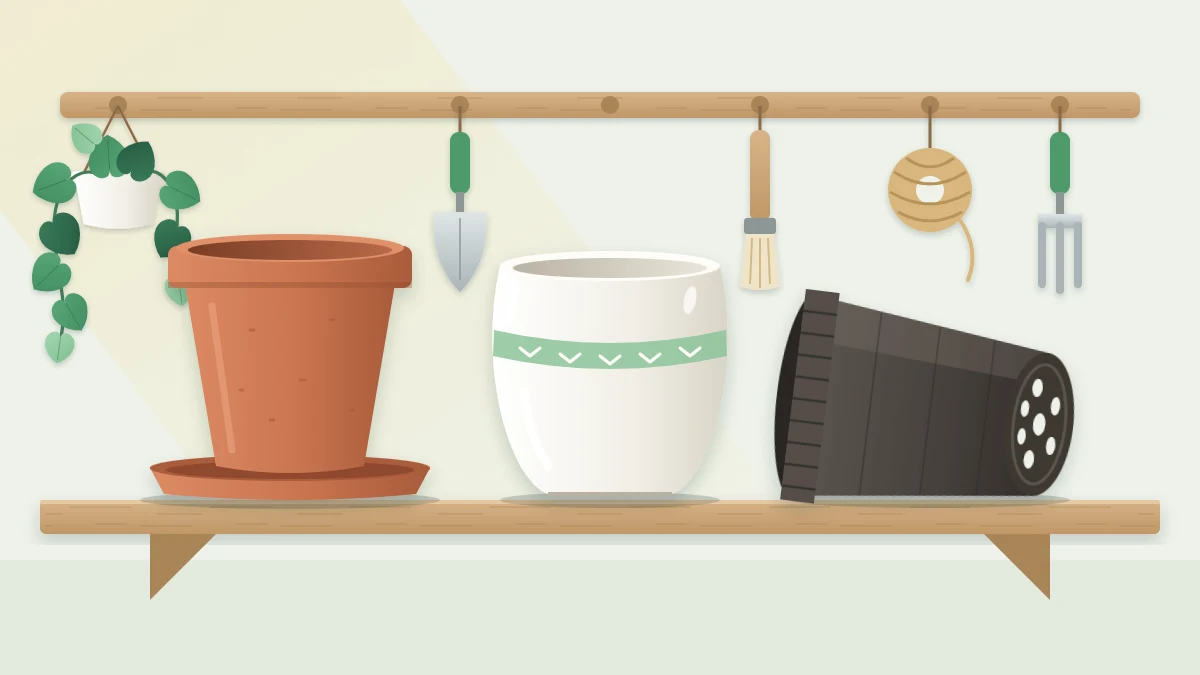
A pot is more than a container that looks good on a shelf. Its shape, its material and above all its drainage decide how long the potting mix stays wet, and that affects the roots more than almost anything else you do.
Good plant pot drainage comes down to one simple idea: water that the mix cannot hold needs a way out. This guide explains why, and what to do with a pot you like that has no hole.
Why roots need air as well as water
Roots are living tissue, and they need oxygen. In a healthy pot, the potting mix is full of small spaces. After watering, those spaces fill with water for a short time. As the extra drains away, air is drawn back in behind it.
When water has nowhere to go, it collects at the bottom of the pot and the spaces stay full. Roots sitting in that saturated layer are short of air. Over time they can weaken and die back, and a plant with damaged roots cannot take up water even though it is surrounded by it. That is why a plant in waterlogged mix often wilts as if it were dry. The article on root rot in houseplants describes what this looks like and what you can try.
Drainage holes and saucers
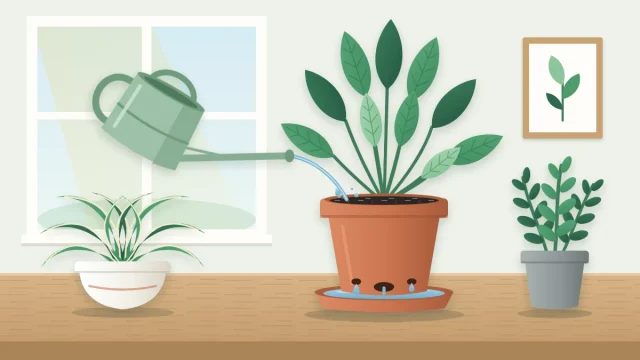
Drainage holes are the simple answer. They let you water thoroughly, so the whole root ball is moistened, without leaving a pool at the bottom. They also show you when you have given enough, because water starts to run out. The full method is in the guide on how to water houseplants.
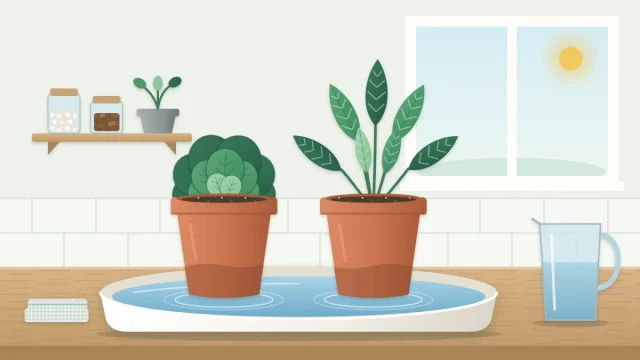
A saucer under the pot protects your furniture and catches what drains through. It only does its job if you empty it. A pot left standing in a full saucer is drawing that water back up, which brings back the problem the holes were meant to solve. Tip the saucer out a few minutes after watering.
One hole is enough for a small pot. Several holes drain a wide pot more evenly. If a hole seems blocked, check that roots or compacted mix have not plugged it.
Using a pot without a hole as a cachepot
Many attractive pots are sold without holes. You do not have to give them up. Use one as a cachepot, which is a decorative outer pot that holds a plain pot inside it.
- Keep the plant in its nursery pot, the plain plastic pot with drainage holes that it was sold in, or move it into a similar one.
- Choose a cachepot slightly wider and taller than the nursery pot, so the inner pot lifts out easily.
- To water, lift the nursery pot out, water it over a sink and let it drain. Then put it back.
- If you water in place, come back after a few minutes, lift the inner pot and tip out any water that has collected in the cachepot.
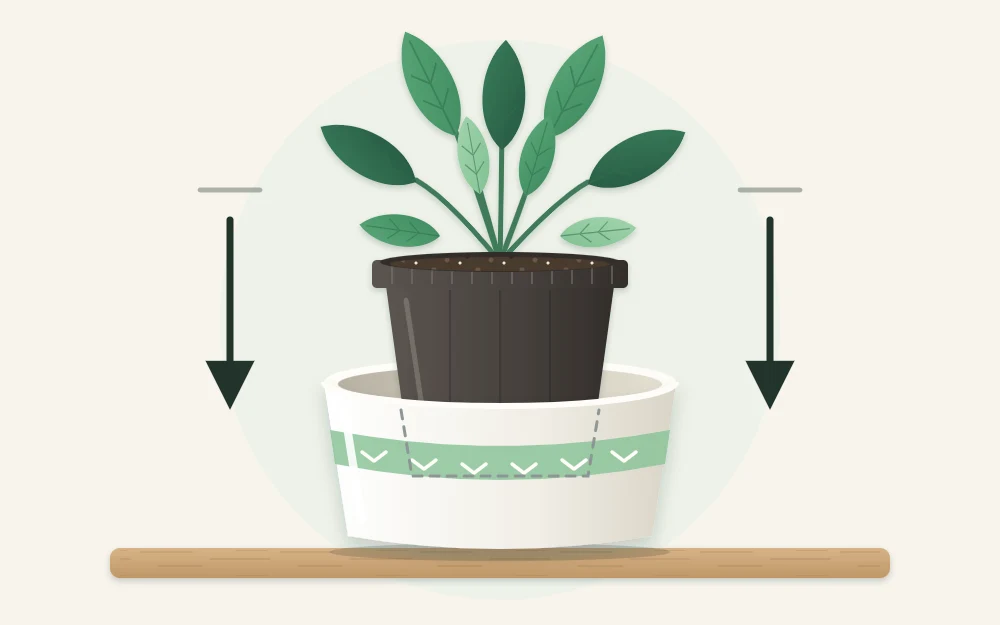
Look inside the cachepot now and then. Water that sits unseen at the bottom is the one weakness of this arrangement.
Why gravel in the bottom does not replace a hole
A layer of gravel or pot shards at the bottom of a pot without holes is a long-standing piece of advice, but it does not create drainage. The water still cannot leave the pot. It simply collects among the stones, just below the roots.
Water also does not move readily from fine potting mix into a coarse layer below it. The mix tends to stay saturated above the gravel until it can hold no more. The gravel takes up room that could have held potting mix, so the wet zone sits higher and closer to the roots.
In a pot that does have holes, a gravel layer is not needed either. A suitable potting mix for houseplants drains well by itself.
Pot materials compared
The material changes how fast the mix dries, which changes how soon you need to look at it again.
| Material | How fast the mix dries | What that means for checking |
|---|---|---|
| Unglazed terracotta | Fastest. The clay is porous, so moisture also leaves through the walls. | Check sooner. Often suits plants that prefer to dry out between waterings. |
| Glazed ceramic | Slower. The glaze seals the walls, so water leaves only from the surface and the hole. | Mix stays moist longer. Check at depth before watering. |
| Plastic | Slower, similar to glazed ceramic. Light in weight. | Mix stays moist longer. Changes in weight are easy to feel when you lift the pot. |
None of these is the right choice for every plant. A plant that likes steady moisture may dry out quickly in terracotta in a warm, bright room, while a succulent in glazed ceramic in a dim spot can stay wet for a long time. Match the pot to the plant and the room, and let your soil checks tell you how the combination behaves. Clemson Cooperative Extension’s factsheet on indoor plant containers and care has more on choosing containers.
Why pot size matters
A pot much larger than the root ball holds a large volume of mix with no roots in it. That mix takes up water each time you water, and with no roots to draw on it, it stays wet for a long time. The roots in the middle are then surrounded by damp mix that dries slowly.
A pot that fits the root ball, with a little room to grow, dries at a pace the plant can keep up with. When a plant does need more room, moving up by a small step is generally easier on it than a big jump. The guide on how to repot a houseplant walks through choosing the next size and doing the move.
Choosing a pot: a short checklist
- Does it have at least one drainage hole? If not, plan to use it as a cachepot.
- Is it close to the size of the root ball, not much larger?
- Does the material suit how fast this plant likes to dry?
- Is there a saucer, and will you be able to empty it easily?
- Is it stable enough that a tall or top-heavy plant will not tip over?
Good to know
How fast a pot dries varies with the plant, the mix, the light and the season. Use the comparisons here as a guide, and rely on checking the mix to decide when to water.
Frequently asked questions
Do all plant pots need drainage holes?
The pot that holds the roots and the mix should have them, so that extra water can leave. A decorative pot without a hole can still be used as an outer cover: keep the plant in a plain pot with holes inside it, and tip out any water that collects.
Can I put rocks in the bottom of a pot instead of having a hole?
Rocks do not give the water anywhere to go. It collects among the stones just below the roots, and the mix above tends to stay saturated. The layer also takes up space that could hold potting mix. A drainage hole, or a nursery pot inside the decorative one, works better.
Is terracotta or plastic better for houseplants?
It depends on the plant and the room. Unglazed terracotta is porous and dries faster, which often suits plants that like to dry out. Plastic holds moisture longer and is light to lift. Either works if it has drainage holes and you check the mix before watering.