Watering Plants While on Vacation: How to Prepare Your Houseplants
How to prepare houseplants for a trip, by length: what to do for a week or so away, and which options to test first for longer absences, with the limits of each.
At a glance
What you need
- Watering can
- Absorbent cotton cord for wicks
- Jar or other water container
- Capillary mat and tray
- Paper and pen for plant sitter notes
Watering plants while on vacation is mostly a matter of preparation. What you do in the days before you leave counts for more than any gadget, and for a short trip a few sensible steps are often all that is needed.
How much to do depends on how long you will be away, the time of year, and what you grow. A thick-leaved succulent in a cool room and a thin-leaved tropical plant in a sunny window are in very different positions after ten days alone. Sort your plants by need first, then prepare each group.
Work out which plants need the most help
Walk around a week or two before you leave and note how quickly each pot dries at the moment. That tells you more than any general rule.
- Least help: cacti, succulents and plants with thick roots or underground storage organs, which hold water in reserve.
- Moderate help: established foliage plants in pots that suit their size.
- Most help: thin-leaved tropical plants, small pots, unglazed terracotta pots, seedlings, recent cuttings and anything in a hot, bright spot.
Season matters too. Plants use much less water in the low light of winter than during active growth in a warm, bright summer.
A trip of a week or so
Most established plants in suitable pots manage a week or so without special equipment, provided you prepare them.
- Check each plant shortly before you go. Water thoroughly only those that are due, until water runs from the drainage holes, then let them drain. Plants whose mix is still moist, and those that prefer to dry out, should be left alone. The method is in the guide on how to water houseplants.
- Empty the saucers. Roots left standing in water for days are at more risk than roots that go a little dry.
- Move plants back from hot, sunny windows. A position with bright indirect light slows drying. Avoid moving them somewhere dark.
- Group them together. Plants standing close to one another lose moisture a little more slowly than plants standing alone.
- Keep the room moderate. Leave indoor temperatures in a normal range where you can, away from heating vents and air-conditioning streams.
Longer trips: test before you trust
For two or three weeks, the plants that need the most help will usually require a water supply or a person. Whichever you choose, try it while you are still at home. Set it up at least a week or two ahead and watch: does the mix stay evenly moist, become soggy, or dry out anyway? A method that works for one pot may over-water or under-supply another.
Tip
During the trial, note how much the water level in the reservoir drops over several days. That gives you a realistic idea of how large a container you need for the length of your trip.
Options, with their limits
A wick from a reservoir
A length of absorbent cord runs from a container of water into the potting mix, and moisture travels along it. Push one end a few inches (several centimeters) into the mix near the roots and let the other end rest at the bottom of the container. Wet the cord first so that it starts drawing.
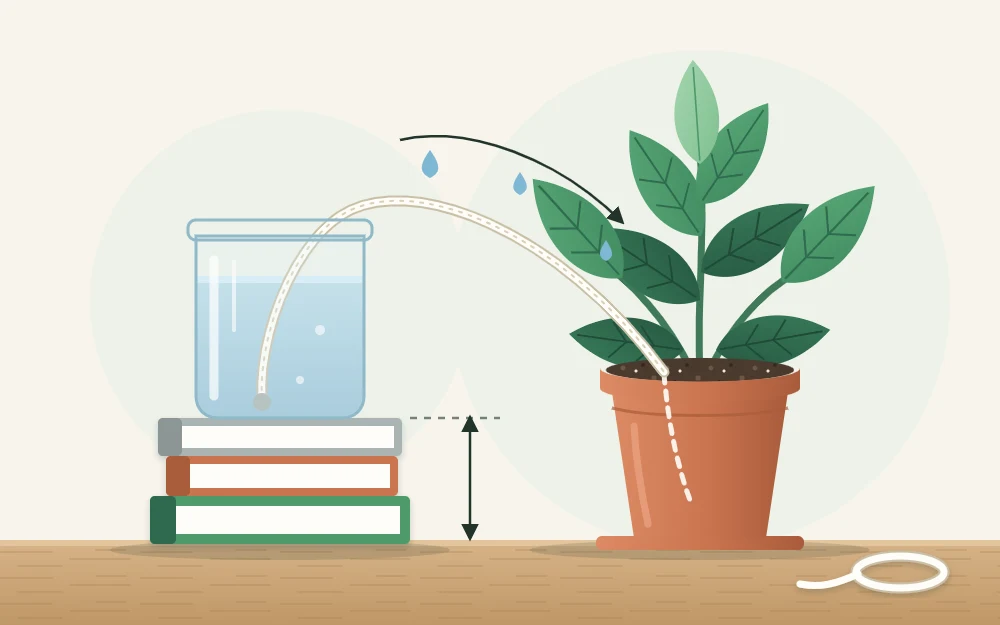
Limits: the rate depends on the cord, the mix and the height of the reservoir, so results vary from pot to pot. Wicks suit small and medium pots better than large ones, and plants that like to dry out should not be on one.
A capillary mat
A capillary mat is an absorbent fabric laid on a tray, with one end hanging into a container of water. Pots stand on the damp mat and draw moisture up through their drainage holes, in much the same way as described in the guide to bottom watering houseplants.
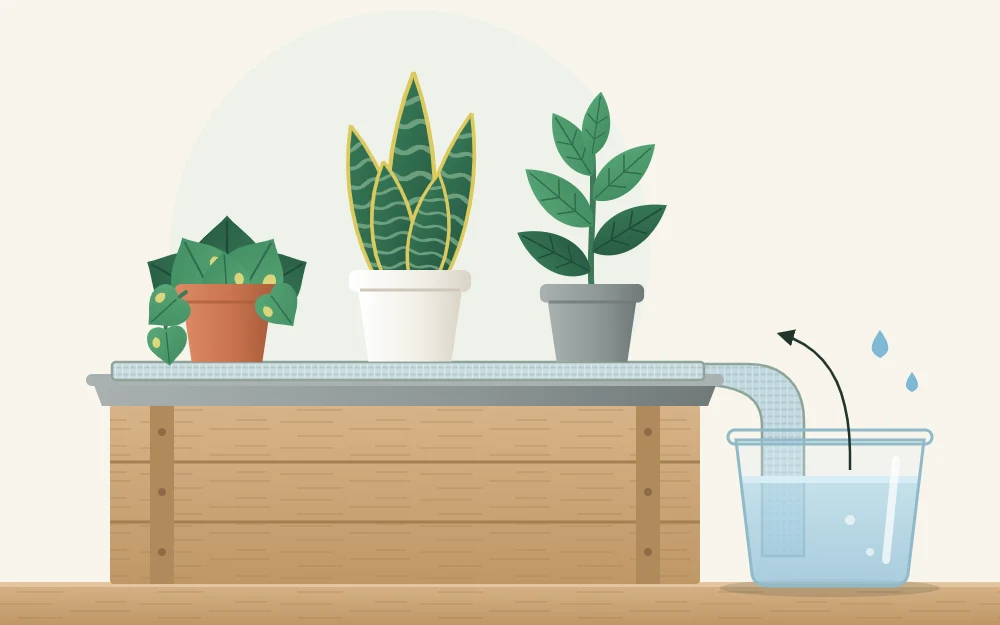
Limits: it works only for pots with drainage holes and a flat base that sits directly on the mat, and best for small, lightweight pots. Water the pots from the top first so that the mix is moist enough to begin wicking.
Self-watering pots
These pots have a built-in reservoir below the mix. They are useful for plants that like steady moisture, but a plant should be settled into one well before your trip, not moved the day before. They are a poor match for plants that need to dry out between waterings.
A plant sitter
A friend or neighbor is the most flexible option, and also the one most likely to overwater out of kindness. Make it easy for them:
- Group plants by need so there is less to remember.
- Leave a short written note for each plant or group, describing how to check the mix and when to leave it alone.
- Set out the watering can and say what to do with water in the saucers.
- Mark the plants that should not be watered at all.
For further ideas, see the Royal Horticultural Society’s advice on houseplant care while you are away.
What not to do before you leave
- Do not leave pots standing in deep water. Days in a filled sink or deep tray can deprive roots of air.
- Do not water plants that are not due on the theory that extra will carry them through. Mix that is already wet stays wet for longer.
- Do not fertilize. You want slower growth while you are away, not a push.
- Do not repot. A newly repotted plant needs watching.
- Do not shut plants in a dark room. Lower light is fine for a while; no light is not.
When you come home
Resist watering everything on sight. Check each plant first, since some will be dry and others may still be moist. Water the dry ones thoroughly; a pot that has dried out completely may need a slow second pass or a soak from below before the mix takes up water again.
Trim leaves that are fully yellow or dry, move the plants back to their usual places and return to your normal houseplant care routine. A few lost leaves are common and most plants grow past them. Hold off on fertilizer and repotting until you see steady new growth.
Frequently asked questions
How long can houseplants go without water?
It depends on the plant, the pot, the potting mix, the light and the season. Cacti, succulents and thick-rooted plants hold water in reserve and cope far longer than thin-leaved tropical plants in small pots. Watching how quickly each pot dries in the weeks before a trip gives the most reliable answer for your home.
Should I leave my plants sitting in water while I am away?
No. Pots left standing in deep water for days can leave the roots short of air, which often does more harm than a dry spell. If a plant needs a supply, use a wick or a capillary mat that delivers moisture gradually, and test it at home first.
What should I do with my houseplants when I get back?
Check each plant before watering, because some will be dry and others still moist. Water the dry ones thoroughly, remove leaves that are fully yellow or dry, and return the plants to their usual spots. Wait for steady new growth before fertilizing or repotting.