How to Water Houseplants Without a Fixed Schedule
Why a fixed watering schedule lets plants down, and the method to use instead: check the soil, water thoroughly until it drains, and empty the saucer.
If you were told to water your plants once a week, you were given a guess, not a method. Learning how to water houseplants properly means dropping the fixed interval and replacing it with two things: a quick check of the soil, and a thorough way of watering when the check says it is time.
The method below works for most common houseplants in pots with drainage holes. What changes from plant to plant is how dry the potting mix should get before you water again.
Why a fixed schedule fails
A plant does not use the same amount of water from one week to the next. How quickly the mix dries depends on several things at once:
- Species. Thin-leaved tropical plants generally use water faster than succulents and other plants that store it.
- Light. A plant in a bright spot is more active and drinks more than the same plant in a dim corner.
- Temperature. Warm rooms dry the mix sooner than cool ones.
- Pot size and material. Small pots dry faster than large ones, and unglazed terracotta dries faster than plastic or glazed ceramic.
- Potting mix. A chunky, open mix drains and dries faster than a dense one.
- Season. Many plants slow down in the dimmer months and use less water, although this depends on your climate and on conditions indoors.
A schedule ignores all of these. It may suit a plant in July and keep the same plant too wet in January. Clemson Cooperative Extension’s factsheet on watering indoor plants is a useful reference if you want more detail on what affects water use.
Check the soil first
Before you pick up the watering can, find out how moist the mix is below the surface. The top layer dries first and can look parched while the mix around the roots is still damp.
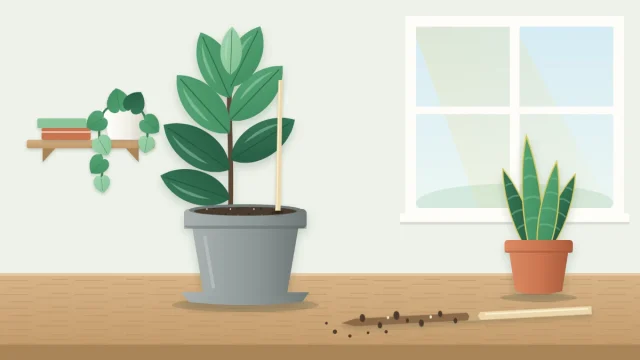
The simplest test is to push a finger into the mix. For many common houseplants in medium-sized pots, dryness in the top inch or two (2.5 to 5 cm) is a reasonable starting cue. That depth is only a starting point: it depends on the size of the pot and the type of plant. Lifting the pot to feel its weight is another quick check. The guide on how to check soil moisture explains each method and what the result means.
Water thoroughly, then let it drain
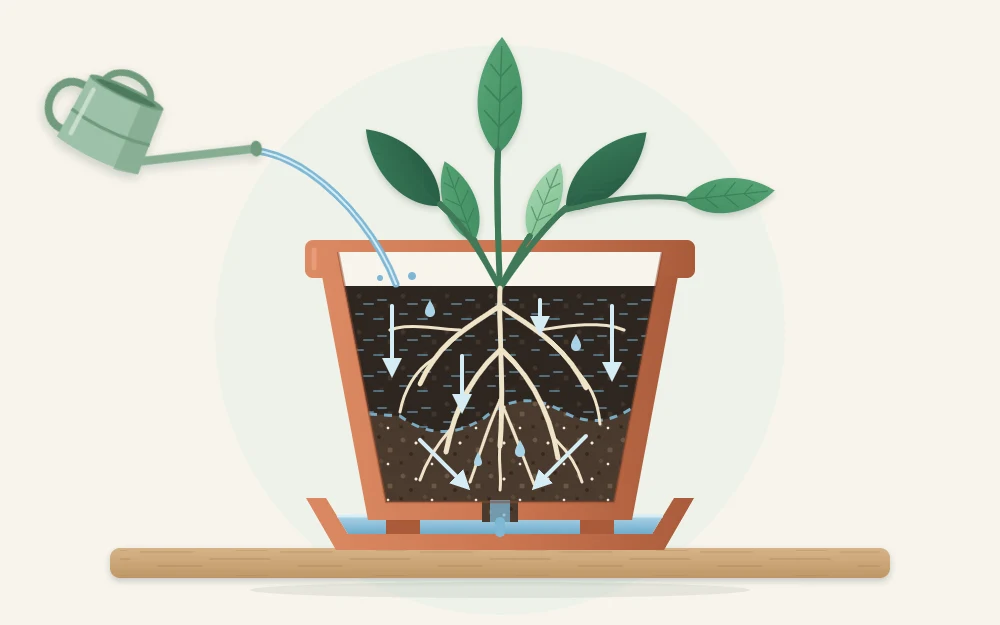
When the plant does need water, give it a proper drink. Small sips wet only the top of the pot and leave the lower roots dry.
- Pour water slowly onto the soil, moving around the pot so the whole surface is wetted.
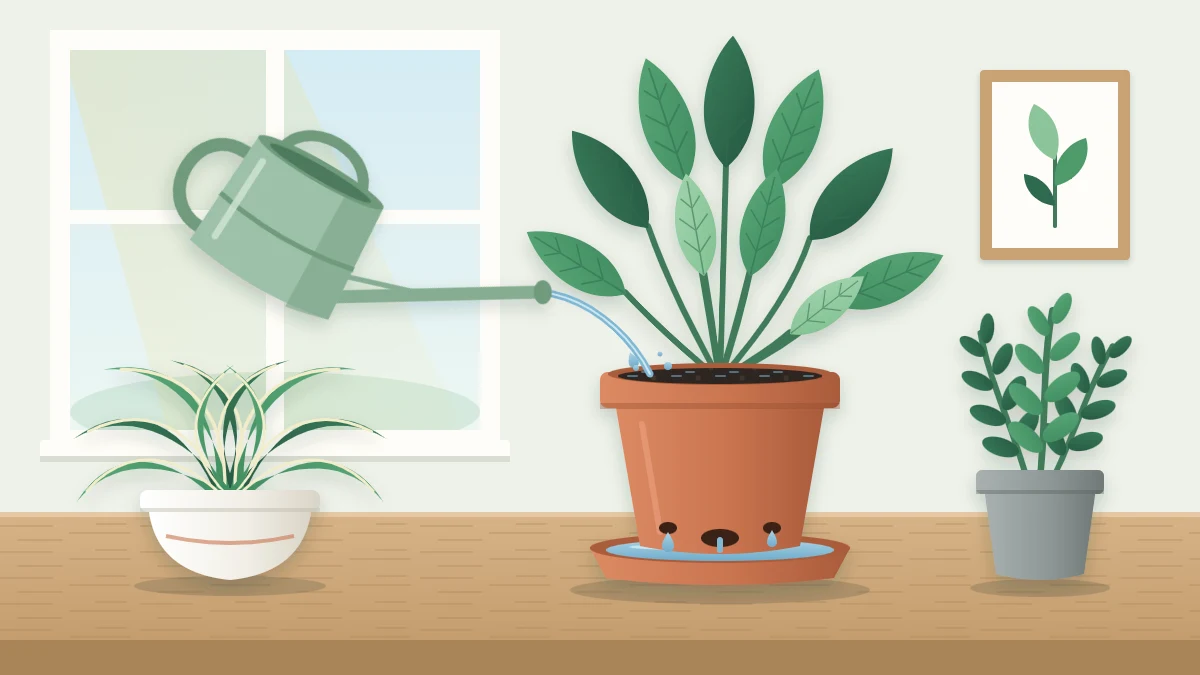
- Keep going until water runs from the drainage holes. This shows the mix is moist all the way down.
- Let the pot drain. A sink, a bathtub or a saucer all work.
- After a few minutes, empty the saucer. Do not leave the pot standing in the water that has collected.
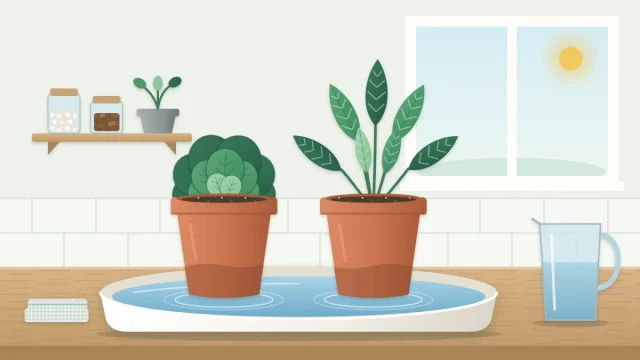
If water rushes straight through and the pot still feels light, the mix may have dried out so far that it repels water. Water slowly in two or three passes a few minutes apart, or try bottom watering, which lets very dry mix soak water up gradually.
How dry is dry enough? It depends on the plant
The check tells you how moist the mix is. What to do with that information depends on the kind of plant you have.
| Plant type | General starting point |
|---|---|
| Thin-leaved tropical foliage plants | Often prefer water when the upper part of the mix has dried, while it is still slightly moist deeper down |
| Succulents, cacti and plants with thick roots or rhizomes | Usually prefer the mix to dry out most or all of the way before a thorough watering |
| Plants described as liking evenly moist soil | Often need water as soon as the surface begins to dry, and should not be left sitting in water |
These are broad groups, not rules. Look up your plant by name to see where it falls, then watch how it responds in your home. University of Maryland Extension has a clear overview of watering indoor plants that is worth reading alongside your own observations.
Water temperature and where to pour
Room-temperature water is the easy, sensible choice. Very cold water can be a shock to the roots of some tropical plants. Filling the watering can after you finish and leaving it out until next time is a simple way to have water at room temperature ready.
Aim at the soil, not the leaves. Water that sits in the center of a plant or on fuzzy leaves can lead to spots or rot on some species, and it does little for the roots. A watering can with a long, narrow spout makes it easy to reach under the foliage.
What to do with a pot that has no holes
In a pot without drainage holes, any extra water collects at the bottom where you cannot see it, and the roots sit in it. There is no reliable way to judge the right amount by eye.
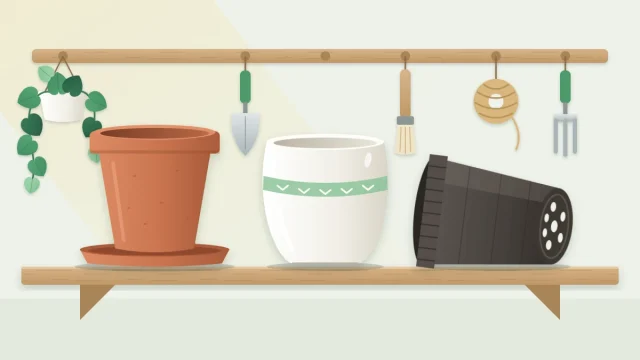
The simplest fix is to keep the plant in a plain nursery pot with holes and stand it inside the decorative pot, which then acts as a cachepot, or outer cover pot. Lift the inner pot out to water, let it drain, and return it. The article on plant pots and drainage covers the options in more detail.
Good to know
A drooping plant is not always a thirsty one. Roots damaged by mix that has stayed wet too long cannot take up water, so the leaves wilt in the same way. Check the soil before you add more, and see the guide to telling overwatering from underwatering if you are unsure.
A regular check, not a regular watering
None of this means giving up routine. Choosing a regular day to walk round your plants is a good habit, because it makes sure nothing is forgotten. The difference is in what the day is for.
On that day, you check. Some plants will need water, some will not, and the mix decides which. In a warm, bright spell you may find that a small pot needs attention between your usual checks. In winter the same pot may stay moist for much longer. Over a few months you will get a feel for each plant’s pace, and the checks become quick.
Frequently asked questions
How often should I water my houseplants?
There is no single interval that suits every plant. How fast the mix dries depends on the species, the light, the temperature, the pot and the season. Check the soil on a regular day instead, and water only the plants whose mix has dried to the point that suits them.
Is it better to water a little at a time or a lot at once?
For most houseplants in pots with drainage holes, a thorough watering is better. Pour until water runs from the bottom, let the pot drain and empty the saucer. Small sips tend to wet only the upper layer of mix, so the lower roots stay dry.
Can I use water straight from the tap?
Tap water at room temperature suits most common houseplants. Very cold water can be a shock to some tropical plants, so let it warm up first. A few plants are sensitive to minerals or additives in some supplies, so look up your plant by name if its leaf tips keep browning.