Bottom Watering Houseplants: When and How to Do It
What bottom watering is, the situations where it helps, its limits, and a step-by-step method that ends with draining the pot and emptying the tray.
At a glance
What you need
- Shallow tray, bowl or sink
- Room-temperature water
- Pot with drainage holes
- Rack or empty saucer for draining
- Timer as a reminder (optional)
Bottom watering houseplants means letting the pot take up water from below instead of pouring it onto the soil. It is a useful technique in a few specific situations, and an unnecessary extra step in many others.
Knowing when it helps, and where its limits are, lets you use it as one tool alongside ordinary watering from the top.
What bottom watering is
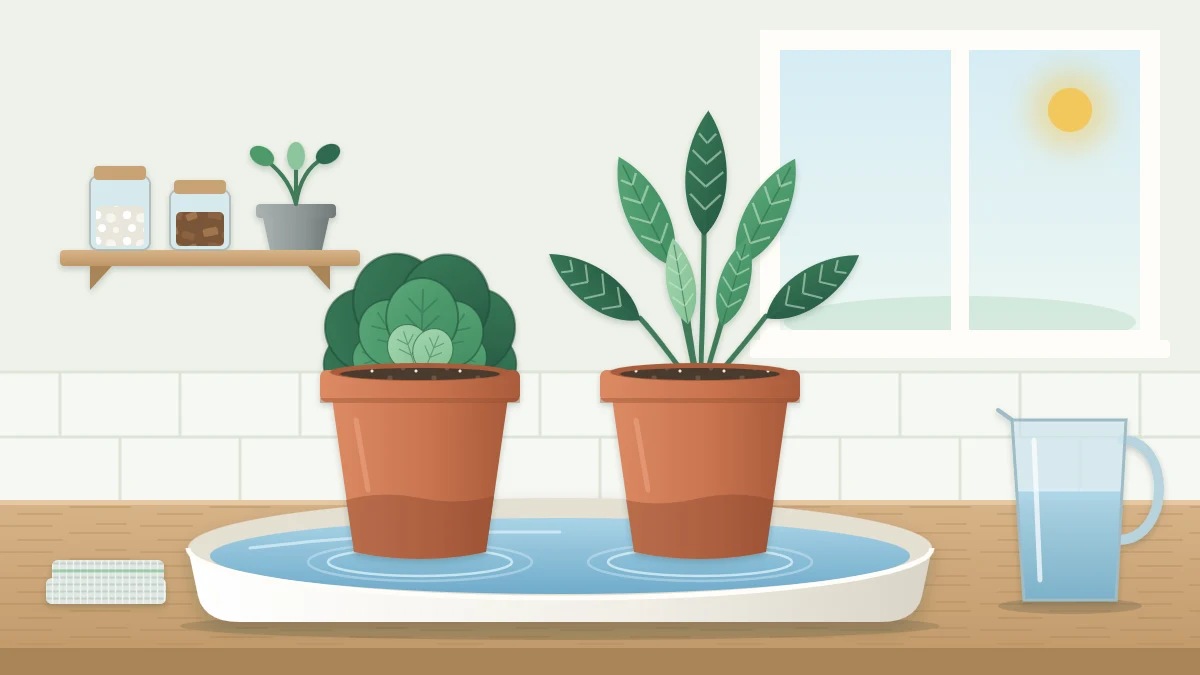
You stand a pot that has drainage holes in a shallow tray, bowl or sink holding a little water. The potting mix draws the water upward through the holes, in the same way a paper towel soaks up a spill. This is often called wicking. After a while the moisture reaches the surface, and you lift the pot out and let it drain.
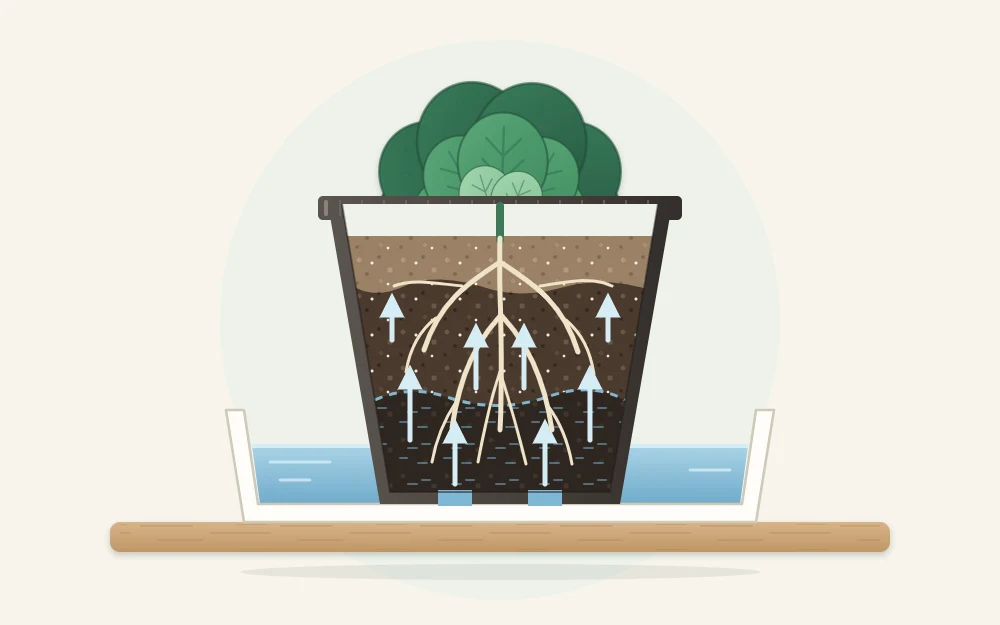
The plant ends up with the same thing either way: evenly moist mix. Bottom watering does not change how much water a plant needs or when it needs it. It only changes the direction the water arrives from.
When it helps
- Mix that has dried out and repels water. Very dry potting mix, especially a peaty one, can shed water. It runs down the gap at the edge of the pot and out of the bottom while the root ball stays dry. A soak from below gives the mix time to take water up again.
- Dense foliage that covers the soil. When leaves crowd the surface, it is hard to pour water onto the mix without wetting the center of the plant.
- Fuzzy leaves. Some plants with hairy leaves mark or spot when water sits on them. Watering from below keeps the foliage dry.
It also suits small pots, which are quick to lift and soak in a batch.
The limits
- It needs drainage holes. Without them the water has no way in. If you are unsure about your containers, the guide to plant pots and drainage explains what to look for.
- Large pots are impractical. A heavy floor plant is awkward to lift into a tray and out again, and a deep pot can take a long time to moisten to the top.
- Minerals are not flushed out. When you water from the top, the extra water that runs out of the bottom carries dissolved minerals and fertilizer salts with it. With bottom watering, water moves up and evaporates from the surface, so these can build up over time, sometimes as a pale crust on the mix.
- It is slower. You need to stay nearby and come back to lift the pots out.
Good to know
If you mostly water from below, water thoroughly from the top now and then, letting the extra run out of the drainage holes. This rinses built-up minerals out of the mix.
How to bottom water, step by step
- Check that the plant needs water. Bottom watering is a method, not a reason to water. Start with the usual check, described in the guide on how to check soil moisture.
- Fill a tray a little way up. Use room-temperature water. As a starting point, roughly 1 in (2.5 cm) of water suits small and medium pots. The depth depends on the size of the pot: the aim is water a little way up the side, well below the rim.
- Stand the pot in the water. Set it level so that all the drainage holes are covered. If the water is taken up quickly and the surface is still dry, add a little more.
- Wait until the surface feels moist. Touch the top of the mix from time to time. For a small pot this is often a matter of roughly 10 to 30 minutes, and it varies with the mix, the pot and how dry it was. Go by feel, not by the clock.
- Lift the pot out and let it drain. Rest it on a rack, in the sink or on an empty saucer until it stops dripping.
- Empty the tray. Pour away what is left before you put the plant back in its place.
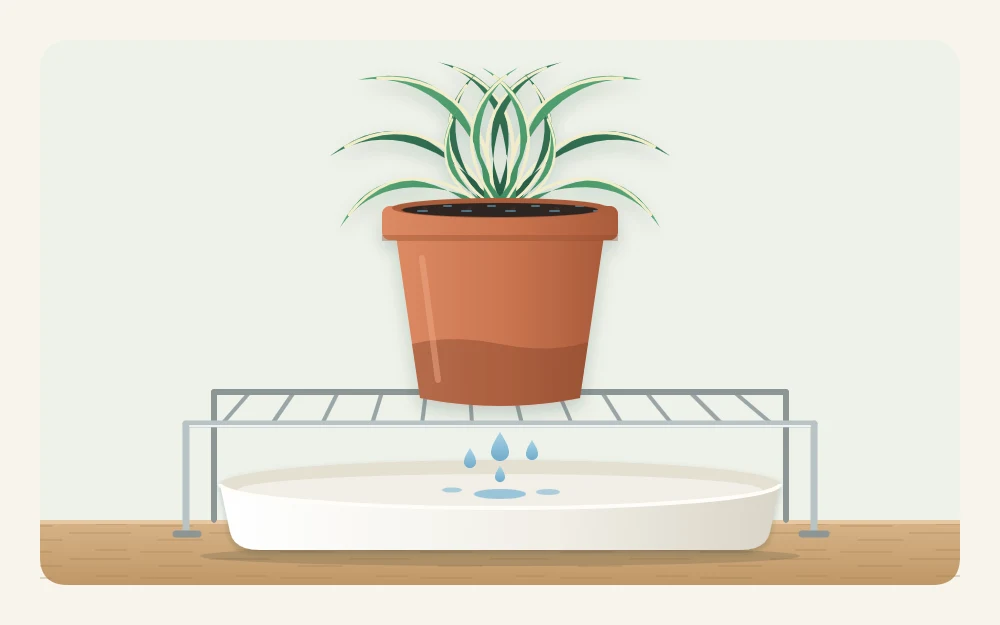
Do not leave pots standing in water
The soak should end when the mix is moist. A pot left in water for hours, or overnight, stays saturated from the bottom up, and the air spaces in the mix remain filled with water. Roots need that air as much as they need moisture.
If you tend to forget, set a timer for a first look, and treat it as a reminder to check the surface. For the same reason, a permanently filled tray under a plant is not a substitute for regular checking. This matters when you plan for a trip, too: the guide to preparing houseplants for a vacation covers methods that supply water slowly without leaving pots in deep water.
Tip
Lift the pot before and after the soak. A clear gain in weight confirms that the mix has taken up water, even before the surface darkens.
Bottom watering and fertilizer
Because minerals are not rinsed through, feeding needs a little thought if you water mainly from below. Fertilizer salts that the plant does not use stay in the pot, and a buildup can contribute to brown leaf tips on some plants.
Applying fertilizer during an occasional watering from the top, and following the product label for the amount, keeps things simple. The article on how to fertilize houseplants explains when feeding is useful and when to hold back.
Choosing between top and bottom watering
For most plants in most homes, watering from the top is quick and works well, provided you water thoroughly and empty the saucer. Bottom watering earns its place for dried-out mix, for plants whose leaves get in the way or dislike being wet, and for small pots that are easy to handle.
Many people settle on a mix of the two: from below when it suits the plant, and from the top often enough to rinse the mix. Neither method is better in itself. What matters is that the whole root ball gets moist, the extra water drains away, and the next watering waits until the plant and the soil call for it.
Frequently asked questions
How long should I leave a plant to bottom water?
Until the surface of the mix feels moist, which for small pots is often somewhere around 10 to 30 minutes. The time varies with the pot, the mix and how dry it was, so go by touch. Then lift the pot out, let it drain and empty the tray.
Is bottom watering better than top watering?
Neither is better in general. Bottom watering helps when mix has dried out and sheds water, or when leaves cover the soil or dislike being wet. Top watering is quicker and rinses minerals out of the mix. Many people use both, depending on the plant.
Can I bottom water every plant I own?
Only plants in pots with drainage holes, since the water has to enter from below. Large, heavy pots are awkward to lift and slow to moisten to the top, so watering from above usually makes more sense for them. Always start by checking that the plant needs water at all.