A Simple Houseplant Care Routine: Weekly and Monthly Checks
A low-effort habit for keeping houseplants healthy: a short walk-round to check each plant, a slower monthly look, and simple notes. The days are for looking, and the plant and soil decide what gets done.
A good houseplant care routine is a habit of looking, not a list of chores to carry out on set dates. You choose when to check. The plant and the soil decide what, if anything, needs doing.
The routine below has two parts: a short walk-round about once a week and a slightly longer look about once a month. Together they take little time, and they catch most problems while they are still small.
A routine of checking, not of watering
A regular day is useful because it stops plants from being forgotten for a month and then fussed over. The trouble starts only when the day turns into an instruction, such as watering everything because it is Sunday.
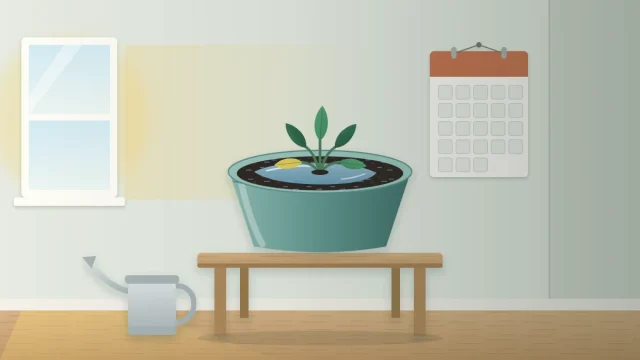
On any given check, some pots will be dry and others will still be moist. A small pot in a bright window and a large pot in a dim corner dry at very different rates, and both change with the season. So the day is fixed and the actions are not.
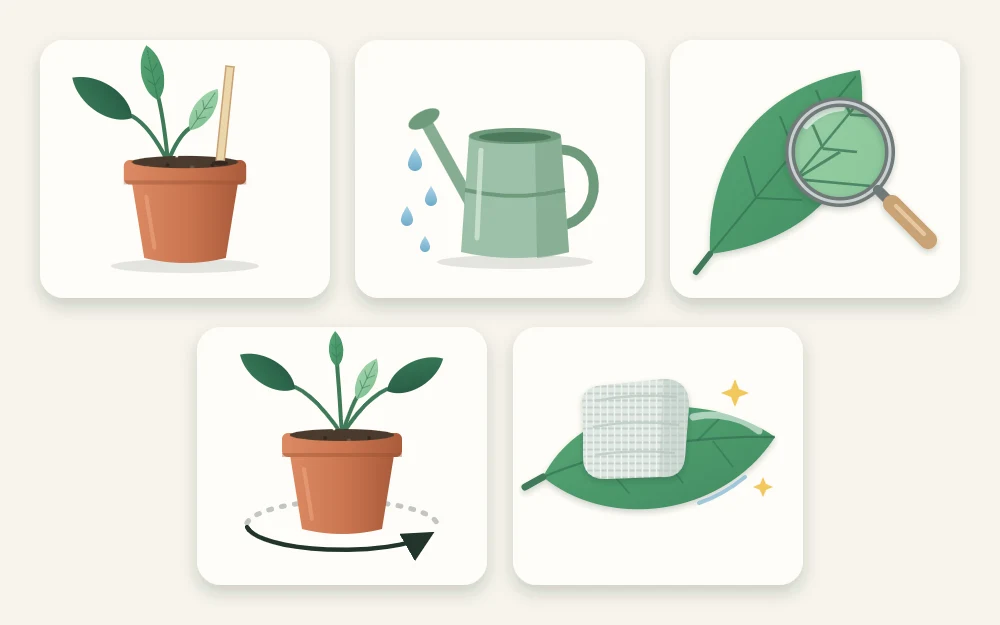
The walk-round: a few minutes about once a week
Go from plant to plant in the same order each time, so that none is skipped.
- Feel the mix or lift the pot. Find out how moist the potting mix is below the surface. The guide on how to check soil moisture explains the finger, skewer and weight checks.
- Water only the plants that need it. If the mix has dried to the point that suits that plant, water it thoroughly. If it has not, move on.
- Glance under a few leaves. Look at the undersides and at the points where leaves join the stems. You are looking for anything new: specks, webbing, sticky patches or distorted growth.
- Turn the pot. A quarter turn keeps growth even, because plants lean toward their light source.
- Remove dead leaves. Pick off leaves that are fully yellow or brown and come away easily, and clear any that have fallen onto the mix.
- Empty the saucers. A few minutes after watering, tip out whatever has collected in saucers and outer pots.
For a handful of plants this is a matter of minutes. Small pots in warm, bright spots may need an extra look between your usual rounds, especially in summer.
Tip
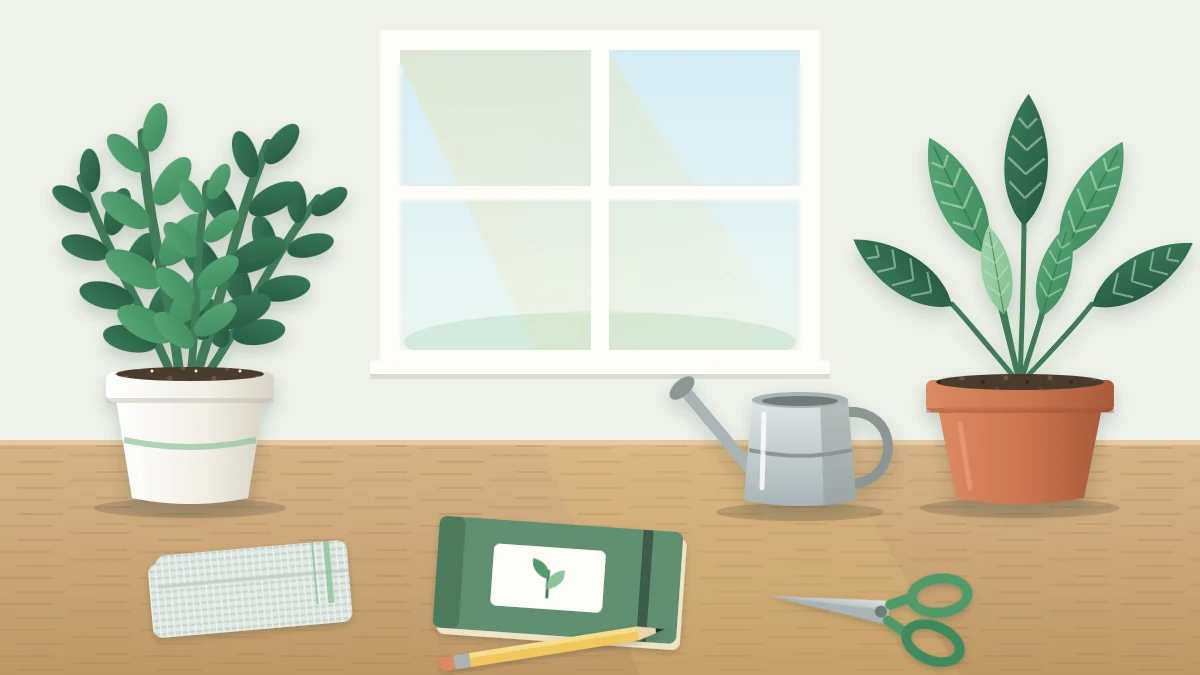
Keep a small kit together: a watering can, a wooden skewer, a soft cloth and a pair of scissors. If everything is in one place, the walk-round is easy to start.
The monthly look
About once a month, add a few slower checks to the walk-round.
- Dust the leaves. Dust blocks light and can hide early signs of pests. The guide on how to clean houseplant leaves covers the right method for smooth, fuzzy and spiny plants.
- Check the drainage holes. Lift each pot and look underneath. Roots growing out of the holes, or mix that dries much faster than it used to, suggest the plant may be running out of room.
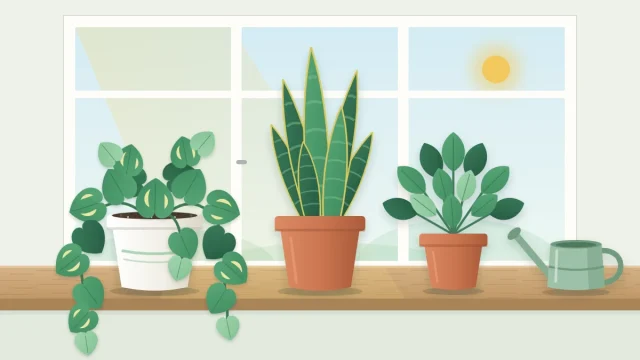
- Check whether the light has changed. The sun’s path shifts through the year, trees leaf out and drop their leaves, and a spot that was bright in one season can be dim or harsh in another. Move plants if their spot no longer suits them.
- Fertilize only in active growth. If a plant is putting out new leaves, a feed according to the product label can be useful. If growth has slowed, hold back. The article on how to fertilize houseplants explains when it helps.
- Look more closely for pests. Take a little longer over each plant than you do on the quick rounds. If you find something, the guide to houseplant pests sets out a calm sequence of steps, starting with moving the plant away from the others.
Adjusting through the seasons
The routine stays the same all year. What you find on your rounds does not.
During active growth, which for many plants is the brighter part of the year, the mix dries faster, new leaves appear and plants may need water at most checks. In winter, shorter days and weaker light slow many plants down. The mix stays moist longer, so more checks end with no watering at all. Heating can also dry the air and warm the spots near radiators and vents.
How strong these changes are depends on your climate and on conditions indoors. A plant under a grow light in a warm room may keep growing steadily, while one on a cool windowsill may almost stop. Let the checks show you which is happening.
Keep a simple note for each plant
A notebook or a note on your phone is enough. Record what is useful to look back on:
- The plant’s name, including the botanical name if you have it
- Where it stands and what kind of light it gets
- The dates you watered, fertilized or repotted
- Anything you noticed: a new leaf, a yellow one, a pest, a move to a different window
The watering dates are a record, not a plan. After a few months they show you each plant’s pace in your home. If a plant that used to dry within days now stays wet for weeks, or the reverse, the note makes that change obvious, and it gives you something concrete to go on when a problem appears.
Group plants with similar needs
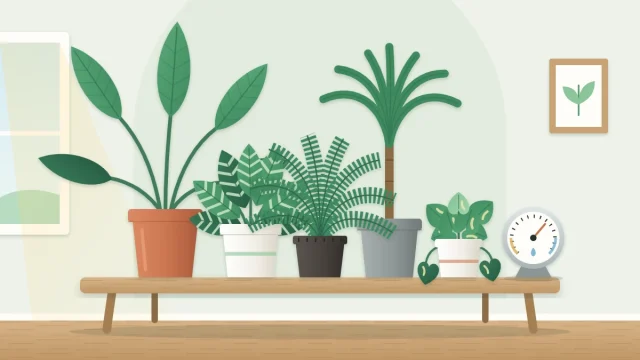
Standing plants with similar needs together makes the walk-round faster. Plants that like to dry out well can share a bright shelf, and those that prefer steadier moisture can sit together where you pass often.
Grouping also helps you avoid treating every pot the same way. When you reach the shelf of succulents, you already expect most of them to be left alone. Light comes first when you decide on groups: put each plant where the light suits it, then arrange neighbors around that.
Let the plant and the soil decide
Some weeks you will water half your plants. Other weeks you will water none, turn a few pots and pick off one leaf. Both count as a complete round.
If you miss a check, pick up where you left off. Do not make up for it by watering everything. Start with the soil, as you would on any other day, and act on what you find.
Good to know
How often a plant needs water, feeding or a bigger pot varies with the species, the pot, the potting mix and the room. Look up each plant by name, and adjust the routine to what you observe.
Frequently asked questions
Should I water all my houseplants on the same day?
Check them all on the same day if that suits you, but water only the ones that need it. Pots dry at different rates depending on the plant, the pot, the light and the season, so on most rounds some plants will be ready for water and others will not.
How long does a regular plant check take?
For a handful of plants, a few minutes is typical. You feel the mix or lift each pot, water the plants that are due, glance under some leaves, turn the pots and empty the saucers. A slower look about once a month adds dusting and a check of the drainage holes.
Is it worth keeping notes about my plants?
A short note for each plant helps more than most people expect. Record its name, its spot and the dates you watered or repotted, plus anything you noticed. Over a few months the notes show how fast each plant dries in your home, which makes changes easier to spot.