Winter Houseplant Care: Adjusting Light, Water and Warmth
What changes for indoor plants in winter and how to adjust light, watering checks, fertilizer and placement so your houseplants come through in good shape.
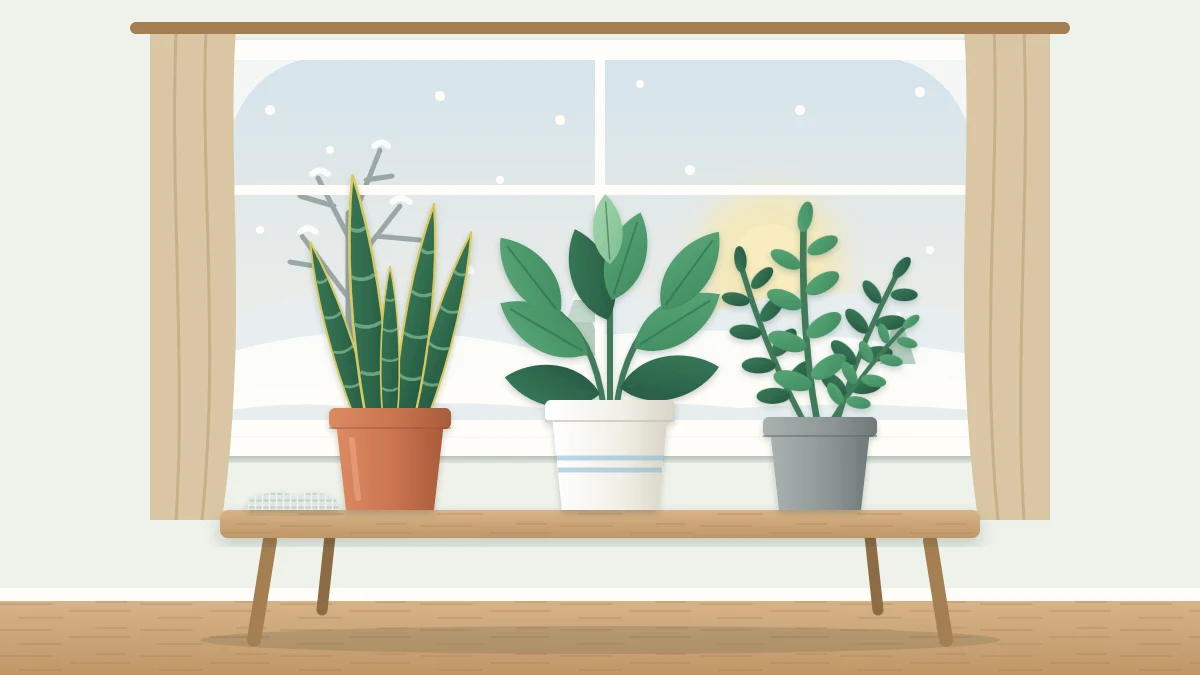
Houseplants live indoors, but they still notice winter. Between late fall and early spring the light coming through the windows drops, the heating comes on and the air dries out, and plants that looked settled in summer can begin to shed leaves or stall.
Good winter houseplant care is mostly a matter of adjusting what you already do. The plant is working with less light, so it grows less and uses less water, and care that suited July can become too much in January.
What changes indoors in winter
In temperate climates, four things shift at about the same time:
- Shorter days and weaker light. The sun is lower and above the horizon for fewer hours, and overcast weather is more common in many places.
- Slower growth. With less light to work with, many plants slow down or pause.
- Dry heated air. Heating lowers indoor humidity, sometimes sharply.
- Cold glass and drafts. The air right beside a window, an outside door or a poorly sealed frame can be far colder than the rest of the room.
Good to know
How much of this applies depends on your climate, your home and the species. In mild regions, in warm bright rooms or under grow lights, plants may keep growing all winter and need much the same care as in summer.
Give plants the best light you have
Light is the main thing in short supply, so start there.
- Move plants closer to your brightest windows. A spot that was too sunny in summer may be just right now. Keep leaves from touching the cold glass.
- Clean the glass. Winter grime on a window takes away light that plants cannot spare. Wiping dust from the leaves helps for the same reason.
- Open curtains and blinds fully during the day.
- Turn pots regularly so growth does not lean hard toward the window.
If your windows cannot supply enough, a simple grow light on a timer can make up part of the difference, especially for plants kept well away from the glass.
Check the mix and expect to water less often
A plant that is growing slowly in weak light takes up less water, and a cool room slows evaporation. As a result, potting mix often stays moist much longer in winter than in summer. Watering by summer habit is one of the most common ways plants run into trouble at this time of year.
The answer is not a new timetable. Keep checking, and let the result decide. Test the moisture below the surface with a finger or a wooden skewer, or lift the pot to feel its weight, and water only when the mix has dried as far as that type of plant prefers. When you do water, water thoroughly as usual, let the pot drain and empty the saucer.
There are exceptions. A plant on a shelf above a radiator, in a small terracotta pot or in a very warm room may dry out as fast as it did in summer, or faster. That is why checking each pot works better than a seasonal rule.
Use water at room temperature. Water straight from a very cold tap can chill roots.
Hold back fertilizer while growth is slow
Fertilizer supports growth that light makes possible. When a plant is barely growing, it takes up few nutrients, and what it does not use can build up in the mix. For most plants it makes sense to stop or reduce feeding until new growth picks up again. The basics of timing are covered in the guide on when and how to fertilize houseplants.
Winter is also a poor time for other big changes. Unless a plant has a real root problem, repotting and hard pruning generally go better once the plant is in active growth again.
Keep plants clear of heat sources and cold drafts
Most common houseplants are comfortable at ordinary room temperatures. What stresses them is sudden change and streams of very hot or very cold air.
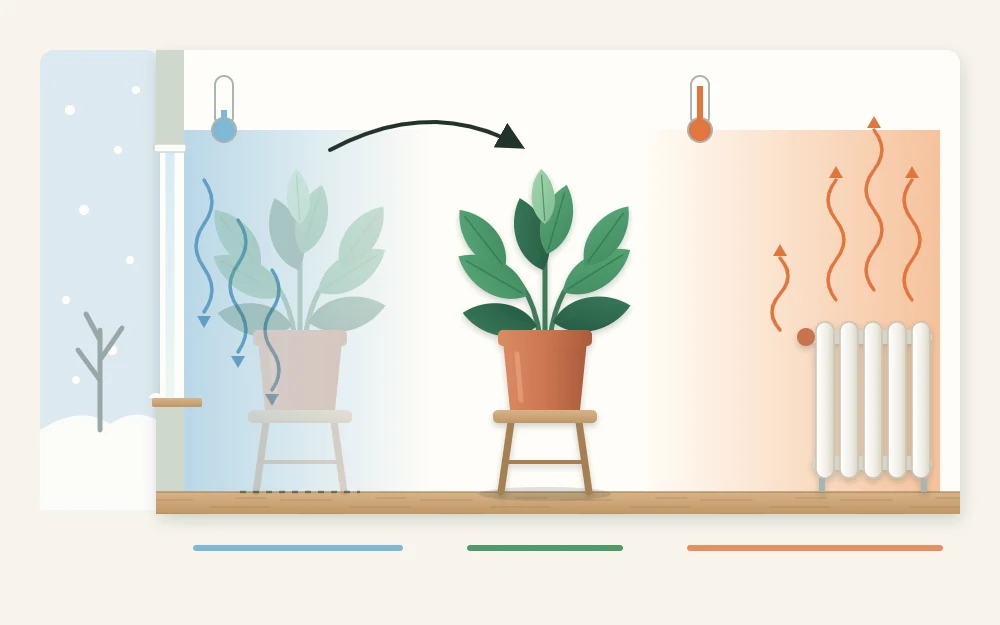
- Heat sources: move plants away from radiators, heating vents, space heaters and fireplaces. Hot, dry moving air can dry leaf edges and the mix quickly.
- Cold glass: pull plants a few inches (several centimeters) back from the pane, and do not shut them in the cold pocket between a window and a closed curtain overnight.
- Drafts: keep plants out of the path of outside doors and windows that are opened in freezing weather.
- Transport: if you buy or move a plant on a cold day, wrap it for the trip and do not leave it in an unheated car.
Dealing with dry air
Heated air is often drier than thin-leaved tropical plants would like. Many sturdier houseplants cope with it. Grouping plants and using a room humidifier are among the more effective responses, and the guide to humidity and temperature for indoor plants explains which measures help and which do little.
Dry indoor air can also favor certain pests, so look under the leaves and at the stem joints when you do your regular checks. A problem found early is far easier to manage.
What is normal in winter and what is not
Some leaf drop after the light changes is common. A plant may shed a few older leaves as it adjusts to supporting less foliage, particularly if it spent the summer in a bright position or outdoors. Little or no new growth for weeks is normal too.
These are worth a closer look:
- Leaves dropping quickly and in large numbers
- Soft or darkened stems
- Mix that stays wet for a very long time, or smells sour
- Drooping that does not improve after you have checked the moisture
Any of these can have several causes. Check the moisture and the roots, the temperature around the pot and the light before you decide what to change, and change one thing at a time.
Easing back into spring
As days lengthen, many plants begin to produce new leaves. Let that new growth be your cue, not the date. The mix will start to dry faster, so your checks will tell you to water more often, and you can resume fertilizing according to the product label.
Remember that the sun is also getting stronger. A plant you moved right up to a south or west window for the winter may need to go back a little, or behind a sheer curtain, before the summer sun reaches it. Those directions apply to the Northern Hemisphere.
Frequently asked questions
Should I water houseplants less in winter?
Often, but let the potting mix decide, not the season. Many plants grow slowly in weak winter light and use less water, so the mix stays moist longer. Check below the surface before watering. Plants near heat, in small pots or under grow lights may still dry out quickly.
Is it normal for houseplants to lose leaves in winter?
Some leaf drop is common as light levels fall, especially on plants that spent summer in a brighter spot. A few older leaves going is usually an adjustment. Fast, heavy leaf loss, soft stems or mix that stays wet deserve a closer look at moisture, roots, temperature and light.
Can I repot or fertilize houseplants in winter?
For most plants it is better to wait until growth picks up, because a slow-growing plant uses few nutrients and recovers slowly from root disturbance. Exceptions are a plant with a genuine root problem, which should not wait, and plants that keep growing actively in warm bright rooms or under grow lights.