Houseplants and Pets: How to Check Whether a Plant Is Toxic
How to check a houseplant yourself instead of trusting copied lists: find the botanical name, look it up in the ASPCA plant database, understand what the listing means, and arrange plants so pets cannot reach them.
Search for houseplants toxic to pets and you will find dozens of lists, many of which disagree with each other, leave out the plant you actually own, or use a name that could mean several different plants. A list copied from site to site is a weak basis for a decision about an animal you care for.
A more dependable habit is to check each plant yourself, by its proper name, against a source that specializes in animal poisoning. This guide explains how to do that, how to read the result, and how to arrange plants at home so that a curious pet has fewer chances to chew them. It is a how-to-check guide, not a list of plants to buy.
Start with the plant’s real name
Common names are unreliable. The same everyday name is sometimes used for unrelated plants, and one plant can be sold under several names depending on the shop. If you look up the wrong plant, the answer you get is about something else.
The botanical name, the two-part Latin name usually printed in italics on a label, identifies one plant. Pothos, for example, is Epipremnum aureum. Keep the label when you buy a plant, and note the botanical name somewhere you can find it again.
If a plant has no label, ask the seller for the botanical name before buying. For a plant you already own and cannot name, treat it as unknown and keep it out of reach until you can identify it with confidence.
How to use the ASPCA plant database
The ASPCA Animal Poison Control Center maintains a searchable database of toxic and non-toxic plants that covers dogs, cats and horses. To check a plant:
- Find the botanical name on the label or from the seller.
- Search the database for that name. If nothing comes up, try the common name, then confirm that the botanical name on the entry matches your plant.
- Read which animals the listing applies to. An entry states separately whether the plant is listed as toxic or non-toxic for dogs, for cats and for horses.
- For a plant listed as toxic, read the rest of the entry, which names the toxic principle and the clinical signs.
- Write the result next to the plant’s name in your notes.
If the plant does not appear in the database at all, that is not a result. A missing entry tells you nothing either way, so keep the plant out of reach and ask your veterinarian if you want a firm answer.
What “toxic” and “non-toxic” mean there
In the ASPCA database, “toxic” is a broad label. Severity varies widely from one plant to another, and the single word does not tell you how serious a particular plant is; the entry’s details and your veterinarian do. It is a reason to keep the plant away from the animal, and to call for advice if the animal eats some.
“Non-toxic” is narrower than it sounds. A non-toxic listing does not mean a pet can eat the plant without consequences: chewing any plant material can still lead to a stomach upset. It also says nothing about what may be on the plant or in the pot, such as fertilizer or a pest treatment.
Good to know
A listing describes the plant, not your animal. Age, size, health and the amount eaten all differ from one case to the next, which is why the next step after any worrying incident is a call to a professional, not a search.
Three examples from the database
Three plants that many beginners own show how the listings read. These are examples of how to use the source, not a shopping list.
| Plant | Botanical name | ASPCA listing for dogs and cats |
|---|---|---|
| Golden pothos | Epipremnum aureum | Listed by the ASPCA as toxic to dogs and cats |
| Snake plant | Dracaena trifasciata, formerly Sansevieria trifasciata | Listed by the ASPCA as toxic to dogs and cats |
| Spider plant | Chlorophytum comosum | Listed by the ASPCA as non-toxic to dogs and cats |
The snake plant row shows why names matter: the plant has two botanical names in circulation, and you may need to try both when searching. The plant guides for pothos and the spider plant link directly to their individual ASPCA entries.
Reduce the chances at home
Whatever a listing says, the practical aim is the same: fewer opportunities for a pet to chew a plant. That protects the animal and the plant.
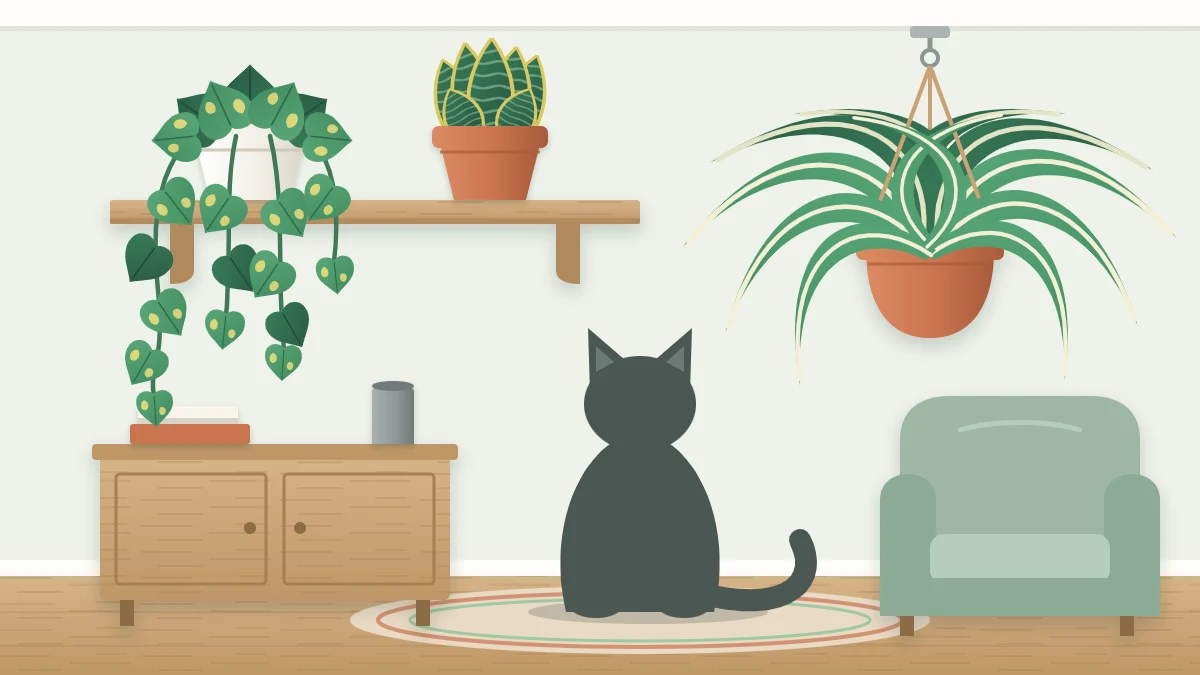
- Place plants out of reach. High shelves and wall-mounted shelves work for dogs. Cats climb and jump, so judge reach by what your own cat actually does.
- Use hanging planters. A planter hung away from furniture that could serve as a launch point keeps trailing plants clear. Trim vines before they hang within reach.
- Keep a plant-free room, or a pet-free one. A room with a door that stays closed is the most dependable barrier, in either direction.
- Pick up fallen leaves and trimmings. Dropped leaves and pruned pieces on the floor are easy for a pet to find. Clear them away promptly.
- Watch a new plant. Some pets ignore plants entirely and others investigate every new arrival. Observe for the first few days and move the plant if it draws attention.
The same placement habits apply in homes with small children, who explore with their hands and mouths.
If a pet or a person eats part of a plant
If your pet chews or swallows part of a plant and you are concerned, contact your veterinarian or an animal poison control service straight away.
If a person, especially a child, eats part of a plant, contact Poison Control. Its Poison Control guidance on plants is a useful place to read more.
In either case, have the plant’s name ready, botanical if possible, along with a rough idea of how much was eaten and when. If you do not know the name, keep the plant or a piece of it to hand so it can be identified.
Check before you buy
The easiest moment to deal with all of this is before a plant comes home. Make the lookup part of your shopping routine, alongside light and care needs, and do not rely on shop signs. The guide on how to choose a houseplant that suits your home covers the rest of that process, from judging your light to inspecting a plant in the shop.
Frequently asked questions
How do I find out whether my houseplant is toxic to my cat or dog?
Find the plant's botanical name on its label or from the seller, then search for it in the ASPCA Animal Poison Control plant database, which covers dogs, cats and horses. Read which animals the listing applies to. If the plant is not in the database, treat it as unknown and keep it out of reach.
Does a non-toxic listing mean my pet can eat the plant?
No. A non-toxic listing in the ASPCA database does not mean a pet can eat the plant without consequences, because chewing any plant material can still lead to a stomach upset. Placing plants out of reach remains sensible, and it protects the plant from damage as well.
What should I do if my pet eats part of a houseplant?
Contact your veterinarian or an animal poison control service straight away if you are concerned. Have the plant's name ready, botanical if possible, with a rough idea of how much was eaten and when. If a person eats part of a plant, contact Poison Control.