Pothos Care for Beginners: Light, Water and Common Problems
A beginner's guide to pothos: the light it adapts to, how to tell when it needs water, trimming and rooting cuttings, what to check when leaves yellow or droop, and what the ASPCA and NC State Extension list about its toxicity.
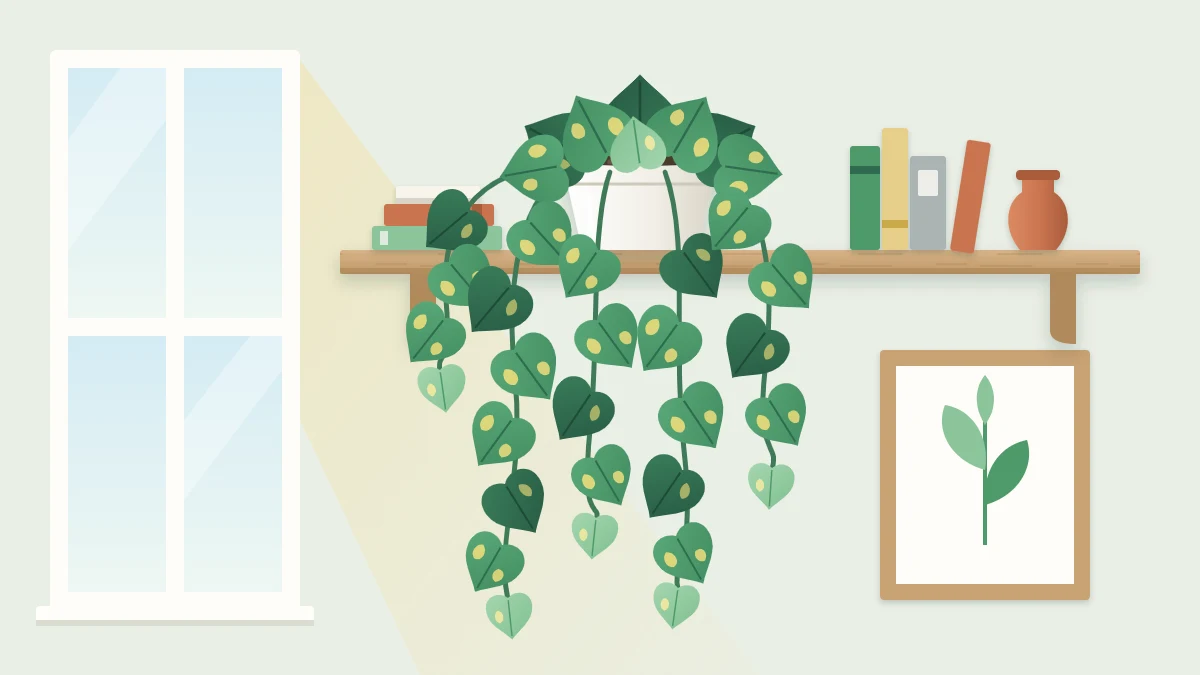
Pothos (Epipremnum aureum) is a trailing vine with heart-shaped leaves, often splashed with yellow or cream. It is one of the plants most often suggested to beginners because it adapts to a range of indoor conditions and shows fairly clearly when something is off.
Good pothos care still comes down to observation. How much light the plant gets, the size and material of its pot, the potting mix and the season all change how fast it grows and how quickly it uses water, so treat everything below as a starting point to adjust for your own room.
Pothos care at a glance
| Need | Starting point | What changes it |
|---|---|---|
| Light | Medium to bright indirect light | Variegated cultivars generally hold their pattern better with more light |
| Watering | Water thoroughly when the upper part of the mix has dried | Light, pot size and material, mix and season |
| Potting mix and pot | General-purpose indoor potting mix in a pot with drainage holes | Dense or old mix stays wet longer |
| Temperature | Normal room warmth | Cold drafts and hot air streams |
Light: medium to bright indirect
Pothos adapts to a range from medium to bright indirect light. In a bright spot where sunbeams do not land on the leaves, it usually grows faster and fuller. In dimmer spots it often survives but grows slowly, with longer gaps between leaves along the vine.
Variegated cultivars generally keep their pattern better with more light. If new leaves come in greener and plainer than the older ones, low light is one thing to consider. Harsh direct sun is the other extreme: it can scorch the leaves, leaving pale or dry patches on the side facing the glass.
If the terms on plant labels are unclear, the guide to direct, bright indirect and low light explains how to judge a spot in your own home.
Watering: check the mix first
Water a pothos when the upper part of the potting mix has dried, then water thoroughly until water runs from the drainage holes. Let the pot drain and empty the saucer after a few minutes. As a starting point, many growers wait until the top 1 to 2 in (2.5 to 5 cm) feels dry, but how deep to check depends on the size of the pot and the conditions around it, so a small pot needs a shallower check than a large one.
A fixed calendar does not work well because the plant’s water use changes. A pothos in bright light during active growth dries its pot much faster than the same plant in a dim corner in winter. If you are unsure how to read the mix, the guide on checking soil moisture before you water covers the finger test, the skewer test and lifting the pot.
Pothos leaves go limp when the plant is very dry, and they usually firm up again after watering. Treat that as a late cue, not a target. Limp leaves in mix that is still wet point to a different problem.
Potting mix, pot and room conditions
A general-purpose indoor potting mix suits most pothos. What matters more is that water can leave the pot: choose one with drainage holes, or keep the plant in its nursery pot (the plain plastic pot it was sold in) inside a cachepot, a decorative outer pot without a hole, and tip out any water that collects.
Normal room warmth is fine, roughly 65 to 85°F (18 to 29°C). Keep the plant away from cold drafts, cold window glass in winter and the hot air from heating vents.
Trimming vines and rooting cuttings
Left alone, pothos vines can grow long and sparse near the pot. Trimming a vine just above a leaf often encourages new growth further back, and it gives you material for a simple project: rooting cuttings in water.
- Find a node, the small bump on the stem where a leaf joins and roots emerge.
- With clean scissors, cut the vine into pieces that each have one or two leaves and at least one node.
- Stand the cuttings in a glass of room-temperature water with the node below the waterline and the leaves above it.
- Place the glass in bright indirect light and replace the water when it turns cloudy.
- When the roots are an inch or two long, plant the cuttings in a small pot of moist potting mix.
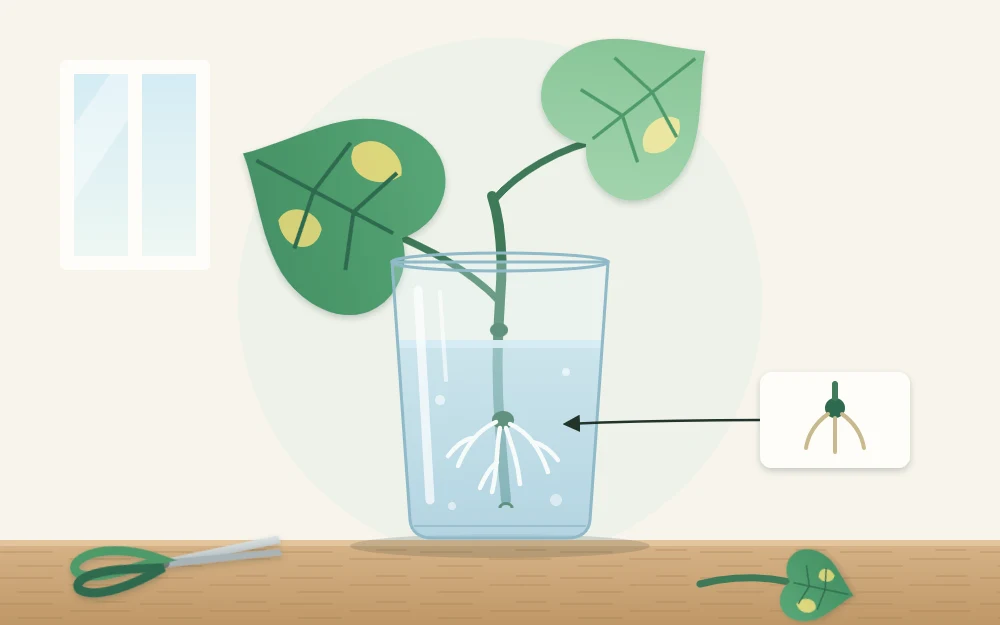
How long rooting takes varies with light, warmth and season. Several rooted cuttings planted back into the original pot make the plant look fuller. If you enjoy propagating, the spider plant is another beginner plant that produces ready-made plantlets.
Common problems and what to check
Most pothos symptoms have more than one possible cause, so check the pot before changing anything.
- Yellow leaves: an occasional old leaf yellowing is normal. If several yellow at once, check first how long the mix has stayed wet, then drainage, then light and any recent move.
- Limp leaves: feel the mix at depth. Dry mix suggests the plant needs water; wet mix with limp leaves may mean the roots are struggling, so slide the plant out and look.
- Brown tips or edges: these can follow long dry spells, mineral buildup in the mix or hot, dry air streams. Often more than one applies.
- Long bare vines and small leaves: often a sign of too little light. Move the plant closer to a window in stages and trim to encourage fuller growth.
Change one thing at a time and give the plant a few weeks to respond before trying something else.
Pothos, pets and children
Good to know
The ASPCA’s entry for golden pothos lists the plant as toxic to dogs and cats, names insoluble calcium oxalates as the toxic principle, and gives clinical signs that include oral irritation, drooling, vomiting and difficulty swallowing.
NC State Extension’s plant profile for Epipremnum aureum lists it as poisonous to humans, with a severity rating of medium.
For that reason, keep pothos out of reach of pets and children. A high shelf or a hanging planter works well for a trailing plant, as long as the vines are trimmed before they hang within reach, and fallen leaves and trimmings are picked up. If a pet or a person chews or swallows part of the plant, contact your veterinarian, an animal poison control service or Poison Control. The guide to checking whether a houseplant is toxic to pets explains how to look up any plant before you bring it home.
Frequently asked questions
How do I know when my pothos needs water?
Feel the potting mix instead of counting days. When the upper part has dried, water thoroughly until water runs from the drainage holes, then empty the saucer. How deep to check depends on the pot size, and the mix dries faster in bright light and active growth than in a dim spot in winter.
Can pothos grow in low light?
Pothos adapts to a range of light and often survives in dimmer spots, but it usually grows slowly there, with longer gaps between leaves. Medium to bright indirect light generally gives fuller growth, and variegated cultivars tend to keep their pattern better with more light. Harsh direct sun can scorch the leaves.
How do I make a pothos look fuller?
Trim long vines just above a leaf, which often encourages new growth further back. Root the trimmed pieces in water with a node below the waterline, then plant the rooted cuttings back into the same pot. Check that the plant has enough light too, since sparse growth is often linked to a dim spot.