How to Choose a Houseplant That Suits Your Home
Choose a houseplant by starting with the spot: assess the light, temperature, your routine and who can reach the plant, then shortlist plants that match and inspect them properly in the shop.
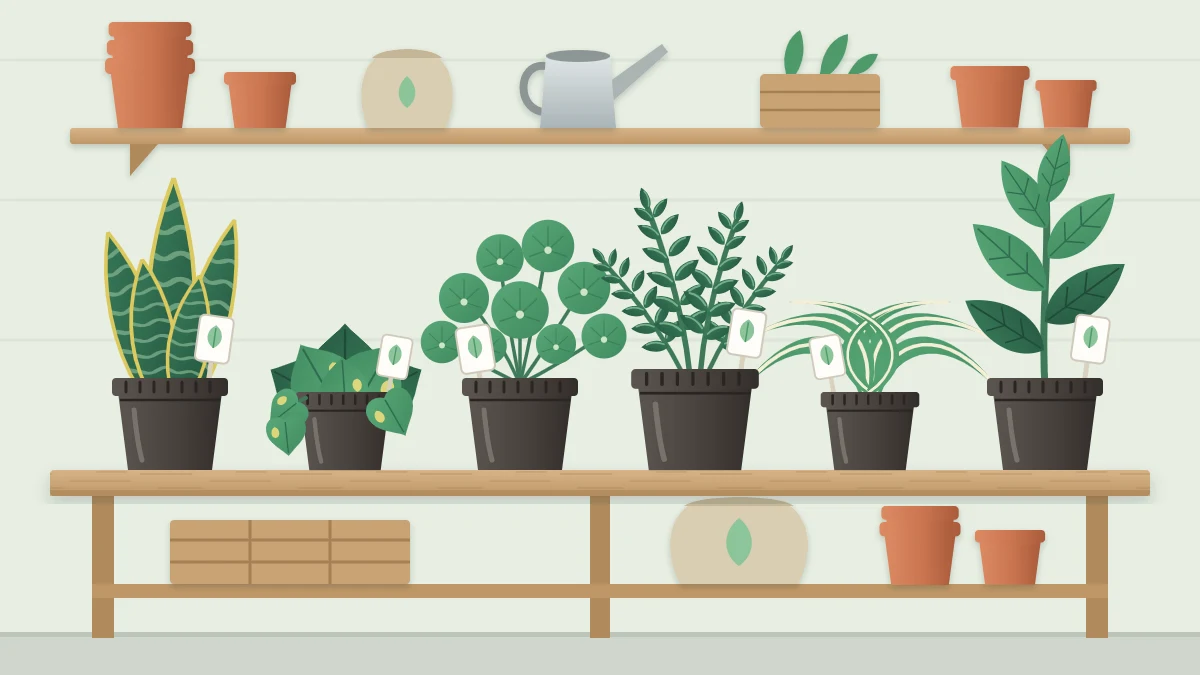
Most houseplants that fail were not badly cared for. They were bought for a spot that could never suit them: a sun-loving plant on a dim shelf, or a thirsty one in a home that stands empty for weeks at a time.
If you are wondering how to choose a houseplant that will last, reverse the usual order. Look at the conditions you have first, then find a plant whose needs match them. It takes a few minutes of honest observation before you go shopping, and it makes everything afterward easier.
Start with the spot, not the plant
Decide where the plant will live before you decide what it will be. A specific place, such as the left end of the bedroom windowsill or the bookshelf beside the sofa, has specific conditions that you can check. “Somewhere in the living room” does not.
For that spot, four questions matter most:
- How much light reaches it, and for how much of the day?
- Is the temperature steady, or are there drafts, vents or radiators nearby?
- How often will you be around to check on the plant?
- Can pets or small children reach it?
The answers narrow the field far more reliably than appearance does.
Assess the light honestly
Light is the condition that is hardest to change, so it comes first. It is also the one people most often overestimate. A room that feels bright to your eyes may give a plant only a small share of the light it would get beside the window, because light falls off quickly with distance from the glass.
Look at the spot at different times on a clear day. Do sunbeams land there, and for how long? Is it bright without direct sun? Or is it well back from the window, lit mostly by reflected light? Trees, neighboring buildings, overhangs and curtains all change the answer, and so does the season.
Put a name to what you find: direct sun, bright indirect light, medium light or low light. The guide to indoor plant light explains each term and a simple hand-shadow test for judging a spot. Plant labels use the same terms, so you can match one to the other.
Consider temperature, drafts and your routine
Most common houseplants cope with normal room temperatures. What they often dislike is sudden change: a door that lets in cold air, a windowsill above a radiator, the stream from an air conditioner or a heating vent. If the spot has one of these, look for a different spot or choose a plant known to be tolerant.
Then be realistic about yourself. If you travel often or tend to forget plants, choose something that stores water in thick leaves, stems or roots and tolerates dry spells. If you enjoy checking plants and are home most days, a plant that prefers evenly moist mix is a reasonable choice. Neither kind of owner is better; the mismatch is what causes trouble.
Check before you buy for a home with pets or children
If pets or small children can reach the spot, check the plant before you buy it. Look it up in the ASPCA’s database of toxic and non-toxic plants instead of relying on shop signs or a general impression. Search by botanical name where you can, because one common name is sometimes shared by unrelated plants.
Good to know
Shop signs and tags are not a reliable source for toxicity. Look the plant up yourself by its botanical name before you buy, and if you cannot find out what a plant is, leave it on the bench.
The guide to checking whether a houseplant is toxic to pets walks through the lookup and covers practical placement, such as high shelves and hanging planters.
Shortlist plants that match
With your conditions written down, make a shortlist of two or three plants whose needs fit them. Read a care guide for each before you shop, not after. You are looking for a match on light first, then on watering style, then on eventual size.
Two plants are suggested to beginners so often that they make useful reference points. Pothos is a trailing vine that adapts to a range from medium to bright indirect light. The snake plant is upright, tolerates lower light and needs its mix to dry out well between waterings. Each guide includes what the ASPCA lists for that plant, so read that section first if animals share your home.
If nothing on your shortlist suits the spot, it is better to change the spot, or add a grow light, than to hope the plant will adapt.
What to look for in the shop
Once you know what you want, choose a healthy individual.
- Growth: look for firm, upright growth and leaves with good color for that plant. Pass over plants that are limp, heavily yellowed or stretched and sparse.
- Pests: turn a few leaves over and look at the undersides and at the joints where leaves meet stems. Anything moving, sticky or webbed is a reason to pick another plant.
- Roots: lift the pot and look at the drainage holes. A few roots showing is normal; a thick mat bursting out suggests the plant has been in the pot too long.
- Potting mix: feel it. It should be neither bone dry and shrunken from the pot edge nor swampy and sour-smelling.
- Size: a smaller, compact plant often settles into a new home more easily than a large one, and costs less if things go wrong.
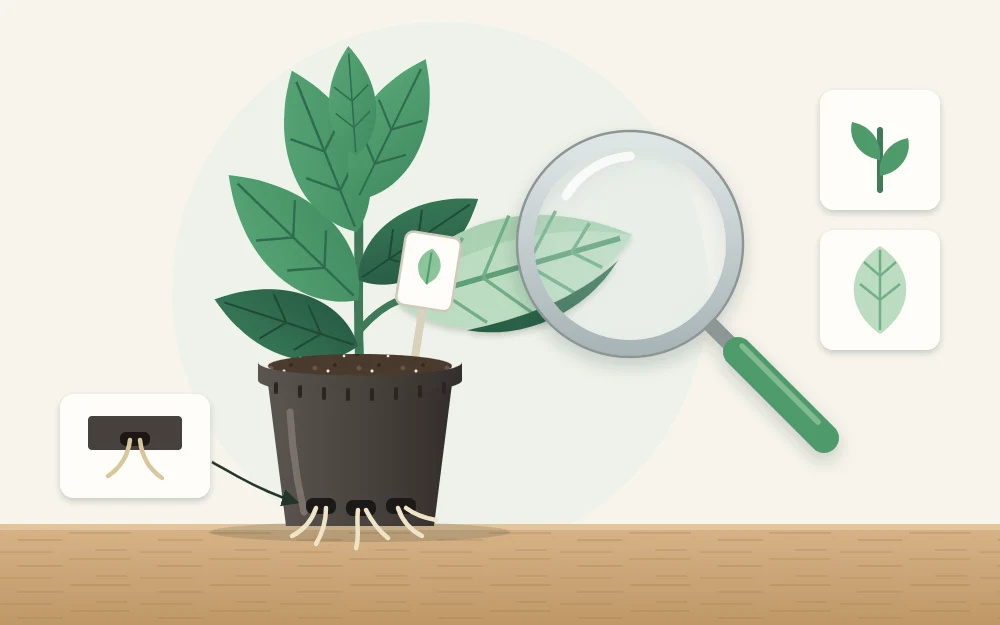
Keep the label, and note the botanical name if it is given. That name is what lets you look up accurate care later, since common names vary from shop to shop.
Start with one or two
It is tempting to bring home a cart full of plants at once. Starting with one or two lets you learn how fast the mix dries in your rooms, how the light shifts through the seasons, and what each plant looks like when it is content. Those observations carry over to every plant you add later.
At home, put the new plant in its chosen spot and leave it in its nursery pot (the plain plastic pot it was sold in) for now. Check the mix before watering, and expect a short adjustment period: a dropped leaf or two after a move is common and usually not a sign that you chose badly.
Frequently asked questions
What is the most important thing when choosing a houseplant?
Light in the exact spot where the plant will live. It is the condition that is hardest to change and the one most often overestimated. Judge the spot at different times of day, name it as direct sun, bright indirect, medium or low light, and choose a plant whose label matches.
How can I tell whether a plant in the shop is healthy?
Look for firm growth and good leaf color, then turn leaves over and check the undersides and stem joints for pests. Lift the pot to see whether roots are bursting from the drainage holes, and feel the potting mix, which should be neither bone dry nor swampy.
Should I buy a large plant or a small one?
For a first plant, a smaller one is often the easier choice. Compact plants tend to settle into new conditions more readily, cost less, and let you learn how the plant behaves in your home. Check how large it will eventually grow so it still fits the spot later.