How to Clean Houseplant Leaves and Rotate Your Plants
Dust blocks light and hides pests, and plants lean toward the window. Learn how to wipe, rinse or brush leaves with plain water and how a quarter turn keeps growth even.
At a glance
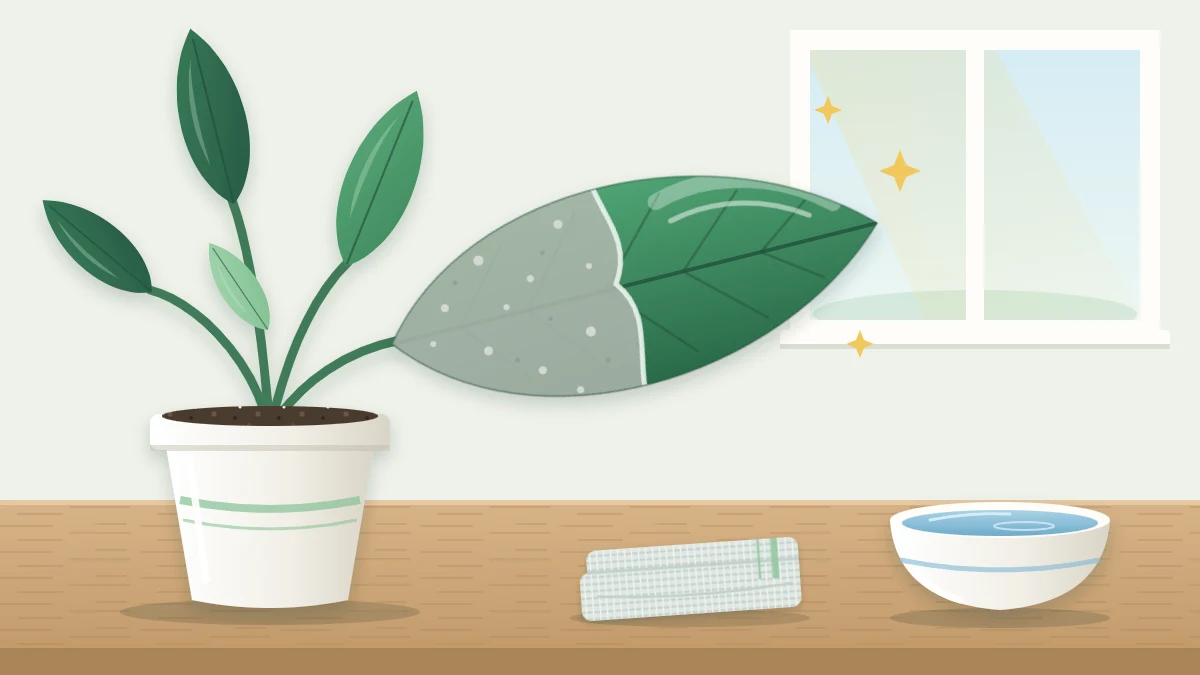
What you need
- Soft, clean cloth or sponge
- Bowl of plain lukewarm water
- Soft, dry brush for fuzzy leaves and cacti
- Clean scissors for dead leaves
- Sink, tub or shower for rinsing
Indoor plants collect dust in the same way shelves do, only less noticeably. Over a few months a gray film settles on the leaves, and at the same time the whole plant slowly tips toward the window. Both are easy to put right.
This guide explains how to clean houseplant leaves with nothing more than water and a soft cloth, how to handle plants that should not be wiped, and how a simple turning habit keeps growth even.
Why dust and leaning matter
Leaves make the plant’s energy from light. A layer of dust blocks part of that light before it reaches the leaf surface, which matters most indoors, where light is already limited. Dust also hides the early signs of pests, so a problem can go unnoticed for longer on a dirty plant.
Leaning has a different cause. Plants grow toward their light source, and indoors that light usually comes from one side. Left in one position, a plant gradually stretches and tilts toward the glass. The guide to indoor plant light explains how quickly light falls away from a window.
What you need
- A soft, clean cloth or sponge
- A bowl of plain lukewarm water
- A soft, dry brush, such as a clean paintbrush or makeup brush
- Clean scissors for dead leaves
- A sink, tub or shower for plants that can be rinsed
That is the whole list. Plain water is the only cleaning agent you need.
Wiping broad, smooth leaves
Wiping suits plants with large, smooth leaves, where you can reach each leaf individually.
- Dampen the cloth in the water and wring it out so that it is moist, not dripping.
- Support the leaf from below with your open hand. This stops the leaf from bending or tearing at its stalk.
- Wipe gently from the base of the leaf toward the tip, following the direction of the veins.
- Wipe the underside in the same way, and take a look at it while you are there.
- Rinse the cloth often so that you are lifting dust off instead of spreading it around.
Be gentle with young leaves, which are softer and tear more easily than mature ones. If a leaf resists, leave it.
Rinsing sturdy plants
Plants with many small leaves are tedious to wipe one leaf at a time. If the plant is sturdy and in a pot with drainage holes, a rinse is quicker.
- Stand the plant in a sink, tub or shower.
- Tilt the pot, or cover the surface of the potting mix with your hand, so that the mix does not wash out.
- Use a gentle spray of lukewarm water. Avoid a hard jet and avoid hot or very cold water.
- Rinse the tops and undersides of the leaves for a short time.
- Let the pot drain fully before it goes back on its saucer or into its cachepot (the decorative outer pot without a hole).
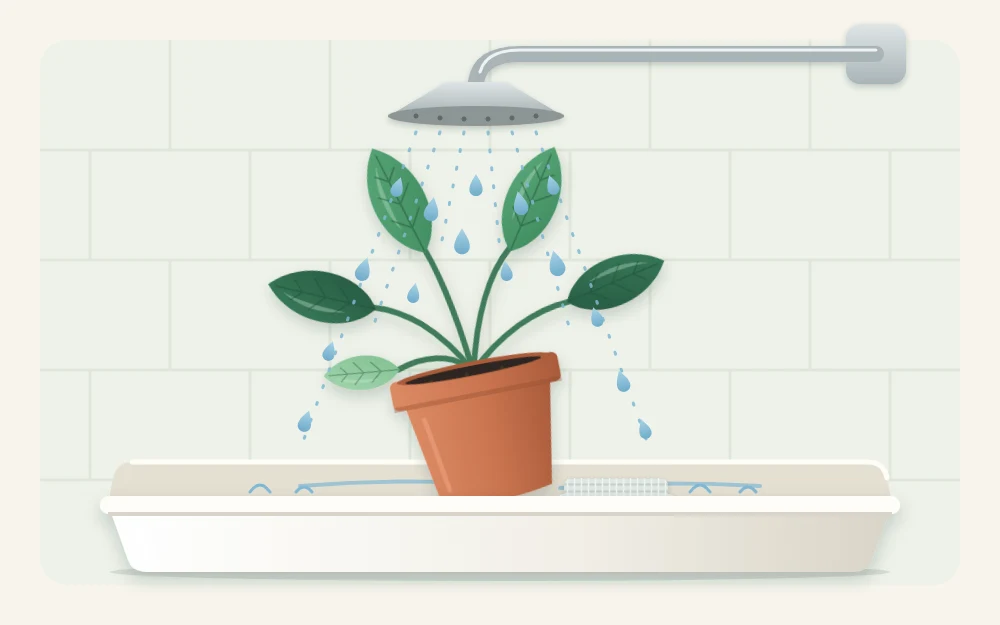
A rinse adds water to the pot, so it is best timed for when the plant is due for watering anyway. If the mix is still moist, wipe the leaves instead.
Fuzzy leaves, cacti and succulents
Some plants should stay dry. Leaves covered in fine hairs hold water on the surface, which can mark them, and a cloth tends to drag on the hairs. Cacti and many succulents have spines or a powdery coating that wiping would damage or rub off.
For these, use a soft, dry brush. Sweep lightly from the base of the leaf outward and let the dust fall away. On cacti, brush in the direction the spines point and keep your fingers clear.
Let the leaves dry, and what to skip
After wiping or rinsing, let the leaves dry somewhere out of direct sun. Water sitting on a leaf in strong sun, or in a cold draft, can leave marks. Shake off excess water gently, and tip out any that has collected in the center of plants that grow as a rosette.
Good to know
Skip leaf-shine products, oils and household cleaners. Coatings can leave a film that collects more dust, and cleaning products are not made for living leaves. A clean leaf has its own natural finish, which varies from glossy to matte depending on the plant.
For more on cleaning indoor plants, see Clemson Cooperative Extension’s factsheet on cleaning and caring for indoor plants.
Rotate the pot a quarter turn
To keep growth even, give the pot a quarter turn each time you check the plant. Always turn in the same direction, so that every side takes its turn facing the window. Small, regular turns work better than an occasional half turn, which can leave the plant leaning one way and then the other.
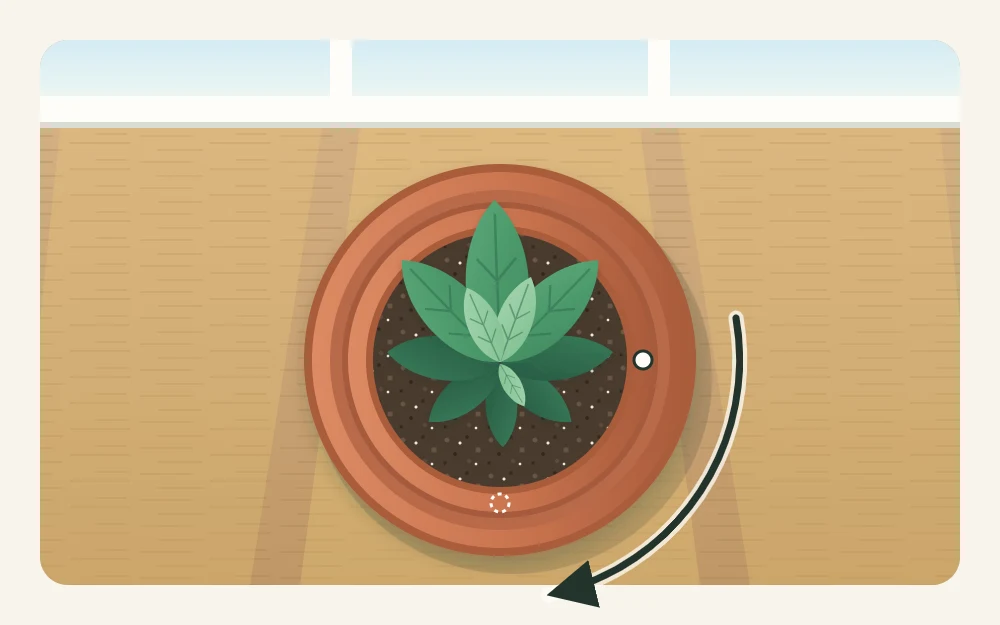
Rotation corrects a lean only so far. If a plant stretches hard toward the glass, with long gaps between leaves, it probably needs a brighter position, not just more turning. A few plants in bud are best left where they are until they have finished flowering, since some drop buds when moved.
Use the session to inspect and tidy
Cleaning puts every leaf in front of you, which makes it the best moment to look the plant over.
- Check leaf undersides and stem joints for anything that moves, fine webbing or sticky residue. If you find something, see the step-by-step approach to houseplant pests.
- Remove dead or fully yellow leaves, pulling gently or snipping them off with clean scissors.
- Clear fallen leaves from the surface of the mix.
- Wipe the pot and the saucer.
How often to clean
No fixed interval applies. Homes near busy roads, with pets or with open windows gather dust faster than others. Clean when you can see a film on the leaves or when a fingertip leaves a mark. Making a quick look for dust part of your regular houseplant care routine is usually enough to stay ahead of it.
Frequently asked questions
Can I use leaf shine on my houseplants?
It is better to skip it. Leaf-shine products and oils can leave a coating that attracts more dust, and household cleaners are not made for living leaves. Plain water on a soft cloth removes dust and leaves the natural finish of the leaf, which may be glossy or matte depending on the plant.
How do I clean fuzzy leaves?
Keep them dry. Leaves covered in fine hairs hold water on the surface and can be marked by it, and a cloth drags on the hairs. Use a soft, dry brush, such as a clean paintbrush, and sweep lightly from the base of the leaf outward so the dust falls away.
How often should I rotate my houseplants?
A quarter turn each time you check the plant works well for most. Turn in the same direction every time so that each side faces the light in turn. If the plant still stretches strongly toward the window, the spot is probably too dim, and a brighter position will help more than turning.