How to Fertilize Houseplants: The Basics
What fertilizer does and does not do, what the three numbers mean, which form to choose, and when to use it. The amount is simple: follow the product label, and never more.
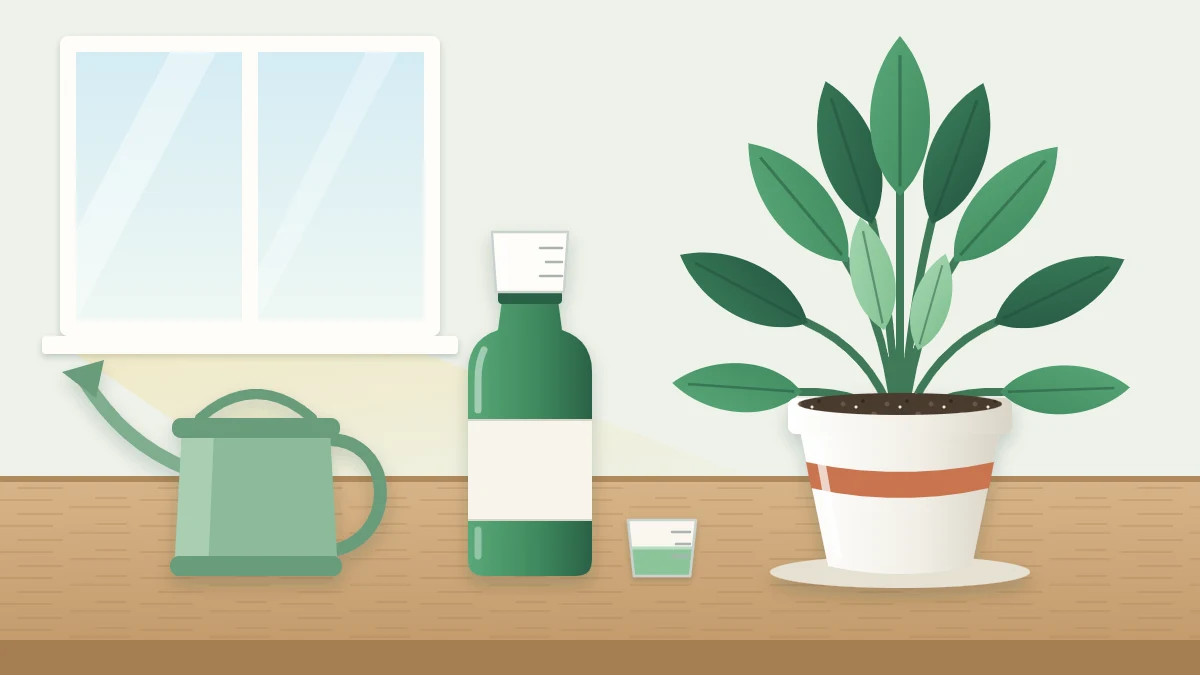
A bottle of plant food tends to sit in the cupboard for one of two reasons: nobody is sure when to use it, or nobody is sure how much. Learning how to fertilize houseplants is mostly a matter of answering those two questions, and both answers are simpler than the packaging suggests.
The short version: fertilize plants that are actively growing, use no more than the product label says, and leave struggling or resting plants alone. The rest of this guide explains why.
What fertilizer does, and what it does not
Fertilizer supplies mineral nutrients, which a plant uses as building materials. It is not food in the sense of energy, whatever the bottle is called. A plant’s energy comes from light, through photosynthesis.
That distinction matters in practice. A plant in a dim corner is short of energy, and no amount of fertilizer makes up for it. In the same way, fertilizer does not fix a plant that is suffering from soggy potting mix, damaged roots or drought. Sort out light and watering first; fertilizer is the last and smallest part of care.
Potted plants do need it eventually, though. The mix in a pot holds a limited supply of nutrients, and watering gradually carries some of them away.
The three numbers on the label
Fertilizer labels show three numbers separated by dashes. They give the proportions of nitrogen, phosphorus and potassium, always in that order, often written as N-P-K. Broadly, nitrogen supports leafy growth, phosphorus supports roots and flowering, and potassium supports the plant’s general functioning. A product described as balanced has three similar numbers. For most common foliage houseplants, a general-purpose houseplant fertilizer is a reasonable choice, and the exact ratio matters far less than using it sensibly.
Liquid, water-soluble or slow-release
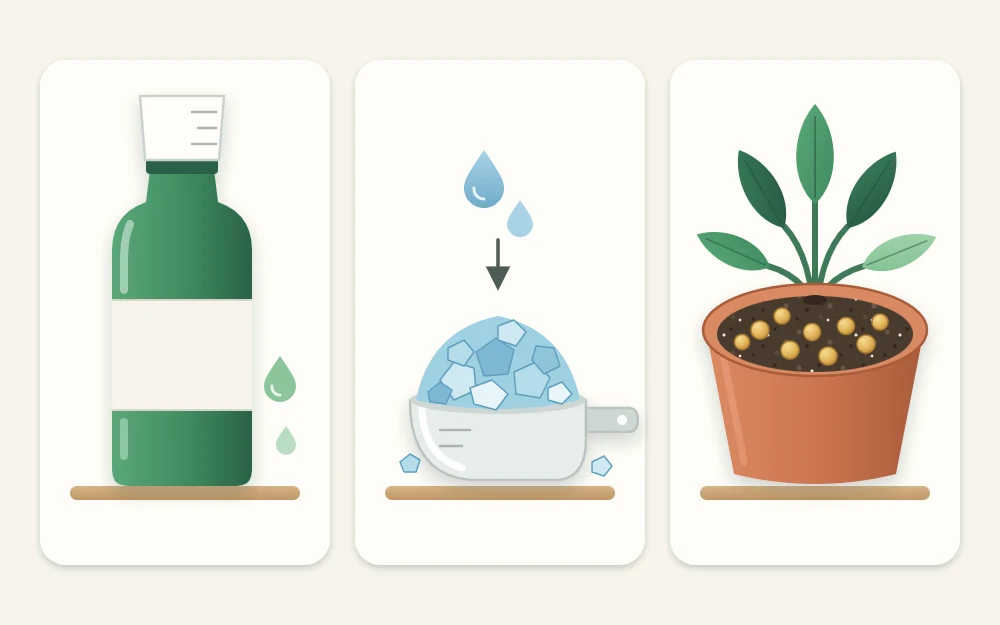
Houseplant fertilizers come in three main forms. None is better in every situation; choose the one you will use correctly.
| Form | How it is used | Worth knowing |
|---|---|---|
| Liquid houseplant fertilizer | Diluted in water as the label directs and applied when watering | Easy to adjust or stop; needs repeating through the growing period |
| Water-soluble powder or crystals | Dissolved in water as the label directs | Works like a liquid; keep the container dry and closed |
| Slow-release fertilizer | Granules or pellets placed on or in the mix, releasing nutrients over time | Convenient, but cannot easily be taken back once applied |
Use one form at a time. Combining a slow-release product with regular liquid feeding is an easy way to give too much without noticing.
When to fertilize
Fertilize during active growth, when the plant is visibly producing new leaves, stems or roots. For many homes that means spring and summer, but the timing depends on your climate and on conditions indoors, so let the plant tell you.
When growth slows, which often happens in the weaker light of winter, a plant uses fewer nutrients. Give less, or none, until growth picks up again. Plants under grow lights or in bright, warm rooms may keep growing and can be treated accordingly. The guide to winter houseplant care covers the other adjustments that go with the season.
How often to apply it during active growth is set by the product, not by a universal rule. Fitting it into the monthly look in your houseplant care routine is a simple way to remember, provided the label allows that frequency.
How much to use
Follow the product label. Products differ in strength, so an amount that suits one may be far too much of another, and the label is the only reliable guide to the product in your hand.
Good to know
Treat the label amount as an upper limit. Many indoor growers dilute liquid fertilizer further than the label suggests, because plants indoors grow more slowly than plants outdoors. Weaker is fine; stronger is not. More fertilizer does not mean more growth.
A plant in low light, a slow-growing plant or a succulent generally needs less than a fast-growing plant in a bright spot. When in doubt, give less. A slightly underfed plant grows a little more slowly; an overfed one can suffer root damage.
For more background on fertilizing indoor plants, see Clemson Cooperative Extension’s factsheet on indoor plant care.
When to hold off
There are several situations in which the right amount is none.
- The mix is bone dry. Fertilizer applied to dry mix can harm the roots. Water with plain water first, then fertilize once the mix is moist.
- You have just repotted. Many fresh potting mixes already contain fertilizer. Check the bag and wait until the plant has settled and resumed growing.
- The plant is struggling. Wilting, yellowing or leaf drop usually trace back to water, roots, light or pests. Find the cause before adding anything.
- The plant is resting. No new growth means little demand for nutrients.
- The plant is brand new. Growers generally fertilize before sale, so a new plant can usually wait.
Signs of too much, and what to do
Fertilizer the plant does not use stays in the mix as salts. A whitish or tan crust on the soil surface or around the pot rim can be a sign of buildup, although minerals in tap water leave similar deposits. Browning at the tips and edges of leaves is another possible sign, and it has other causes as well; the guide to brown leaf tips on houseplants lists what else to check.
If you suspect buildup, flush the pot with plain water:
- Take the plant to a sink or tub. It must be in a pot with drainage holes.
- Scrape away any loose crust from the surface of the mix.
- Pour room-temperature water slowly over the whole surface so that it runs freely out of the bottom.
- Let it drain, then repeat a few times.
- Let the pot drain fully before returning it to its saucer, and pause fertilizing for a while.
Flushing leaves the mix very wet, so do it when the plant is due for watering anyway, and check the moisture before you water again.
Frequently asked questions
Do houseplants need fertilizer in winter?
Often not. Many houseplants slow down in the weaker light of winter and use fewer nutrients, so give less or none until new growth appears. Plants that keep growing under grow lights or in warm, bright rooms are an exception. Timing depends on your climate and on conditions indoors.
How much fertilizer should I give a houseplant?
Follow the product label, because products differ in strength. Treat that amount as an upper limit. Many indoor growers dilute liquid fertilizer further, since plants indoors grow slowly. Giving more than the label says does not speed up growth and can damage the roots.
Can fertilizer revive a dying plant?
Rarely. Fertilizer supplies mineral nutrients, not energy, and it cannot correct low light, soggy potting mix, damaged roots or pests. Adding it to a stressed plant may make things worse. Work out what is wrong first, fix that, and fertilize only once the plant is growing again.