Overwatering vs Underwatering: How to Tell the Difference
Too wet and too dry can look the same from the leaves. Here is how to read the evidence in the pot, what overwatering really means, and the first steps for each case.
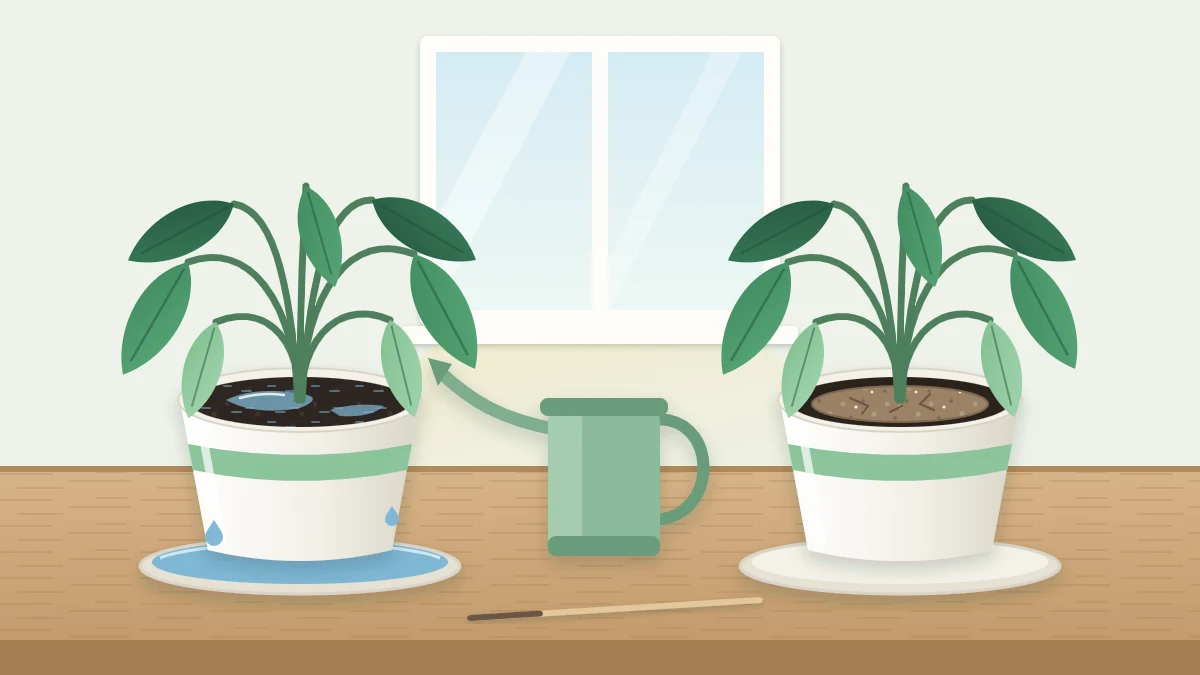
A drooping plant with yellowing leaves could be too wet or too dry, and the leaves alone will rarely tell you which. That is the whole difficulty of overwatering vs underwatering: two opposite problems that can look almost the same from across the room.
The answer is nearly always in the pot. A few minutes spent checking the mix, the weight and, if needed, the roots will tell you far more than studying the foliage.
Why the two look alike
Leaves wilt when they lose water faster than the roots can supply it. In a dry pot the reason is simple: there is no water to take up.
In a pot that stays wet, the reason is less obvious. Roots need air, and in saturated mix they begin to suffocate and die. Damaged roots cannot take up water, so the plant wilts while sitting in wet soil. Yellowing and leaf drop can follow in both cases.
This is why watering a wilted plant without checking first is risky. If the mix is already wet, more water makes things worse.
Check the pot, not the leaves
Work through these checks in order. Most of the time the first two settle it.
- Feel the mix at depth. Push a finger or a plain wooden skewer well down, not just into the surface, which dries first and can mislead. The guide on how to check soil moisture explains each method.
- Lift the pot. A pot that feels heavy for its size is holding plenty of water. One that feels surprisingly light is dry.
- Think back. Has the mix stayed wet for many days, or dried out very quickly? Has anything changed, such as less light, a cooler room or a bigger pot?
- Smell it. A sour, swampy smell suggests mix that has been waterlogged for some time.
- Look at the drainage. Check for water standing in the saucer or in the bottom of a cachepot, the decorative outer pot without a hole.
- Check the roots if you are still unsure. Slide the plant out and look at the root ball.
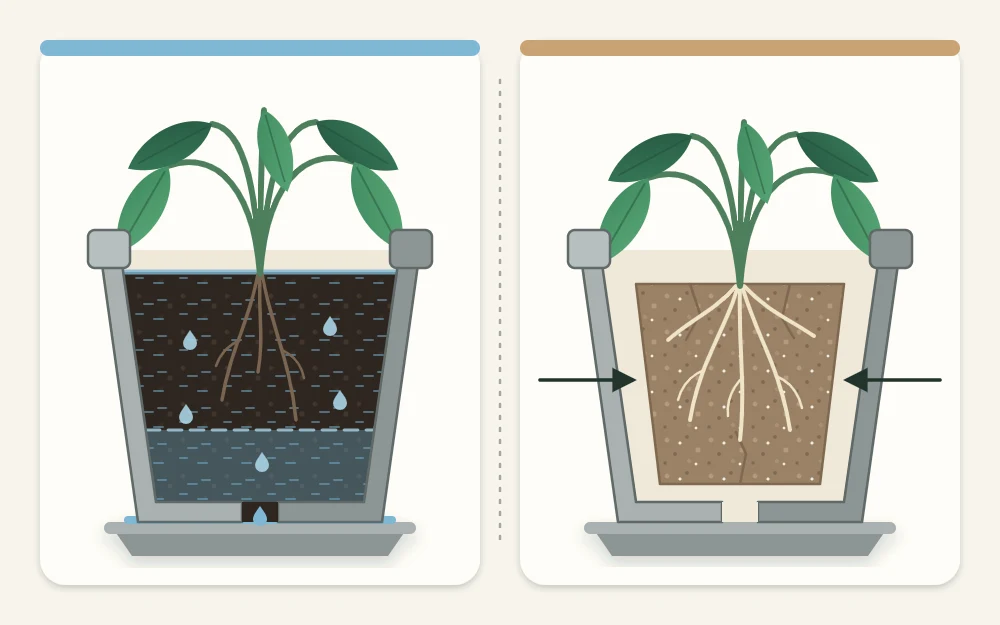
Indicators side by side
Use this table as a guide to what to look for, not as a diagnosis chart. No single row is decisive, and light, temperature, pests and root-bound pots can produce similar signs.
| What to check | Mix staying too wet | Mix too dry |
|---|---|---|
| Soil | Wet or soggy at depth, often days after watering; may have algae or mold on the surface | Dry all the way down; may be hard, pale or pulled away from the pot edge |
| Pot weight | Heavy for its size | Noticeably light |
| Leaves | Often yellowing and limp or soft; may drop while still green or yellow | Often limp, dull or curled, with dry, crisp edges; older leaves may brown and drop |
| Stems | May turn soft or dark at the base | Usually firm, though they may droop or shrivel |
| Smell | May be sour or musty | Usually no particular smell |
If the leaves are your main concern, the checklist in yellow leaves on houseplants covers the other causes worth ruling out.
What “overwatering” usually means
The word suggests pouring on too much water at once, but that is rarely the issue. In a pot with drainage holes, extra water from a thorough watering simply runs out of the bottom.
The problem is mix that stays wet for too long. That can come from watering again before the plant has used what it had, but also from things that have nothing to do with the watering can:
- a pot without drainage holes, or water left standing in the saucer or outer pot
- too little light, so the plant uses water slowly
- a pot much larger than the root ball
- dense or broken-down potting mix
- cool temperatures or slow winter growth
So the fix is often not “less water each time” but “wait longer, and change what keeps the pot wet”. The University of Maryland Extension’s page on overwatered indoor plants has more detail.
First steps if the mix is too wet
- Stop watering and empty the saucer or outer pot.
- Move the plant to brighter indirect light and a reasonably warm spot with some air movement, which helps the mix dry.
- Let the mix dry to the depth that suits the plant before watering again. How dry depends on the species, so look up your plant.
- If the mix smells sour, stays soggy, or the plant keeps wilting, slide it out and look at the roots. Soft, dark roots call for the steps in the guide to root rot in houseplants.
Do not add fertilizer to help it along. A plant with stressed roots cannot use it. Recovery depends on how many healthy roots remain, and a badly affected plant may not come back.
First steps if the mix is too dry
- Water thoroughly and slowly until water runs from the drainage holes, then let the pot drain.
- If water rushes down the gap at the pot edge without soaking in, the mix has become water-repellent. Stand the pot in a shallow tray of water for a short while so the mix wicks it up, then lift it out and let it drain.
- Check again over the following days. Many plants recover their firmness within a day or so, although crisp leaves and brown edges will not turn green again.
Then ask why it got so dry. A root-bound plant, a small pot in strong light or a warm room may simply need checking more often than you expected.
Tip
Lift each pot right after a thorough watering and again when it is dry. Once you know those two weights, a quick lift tells you a lot.
When the evidence is mixed
Sometimes the surface is dry and the bottom is wet, or a plant has been through both extremes. In that case go by the deeper mix and the roots. If the lower mix is wet, treat the plant as too wet, even if the top looks dusty.
Whichever case you find, change one thing at a time and give the plant a couple of weeks before judging the result.
Frequently asked questions
Why is my plant wilting when the soil is wet?
Roots need air, and in mix that stays saturated they can begin to die. Damaged roots cannot take up water, so the plant wilts even though the soil is wet. Do not add more water. Check drainage, let the mix dry appropriately, and look at the roots if it does not improve.
Is overwatering about giving too much water at once?
Usually not. In a pot with drainage holes, extra water from a thorough watering drains away. Overwatering generally means the mix stays wet too long, which can come from watering again too soon, poor drainage, low light, an oversized pot or dense old mix. Several of these often combine.
Can an overwatered plant recover?
It depends on the roots. If most are still firm, the plant often recovers once the mix is allowed to dry appropriately and the cause is corrected. If many roots have rotted, recovery is less likely, and a badly affected plant may not survive even with careful repotting.