Humidity and Temperature for Houseplants: What Actually Helps
Which houseplants notice dry air, how to find out what your rooms are really like, and which humidity and temperature measures help versus those that do little.
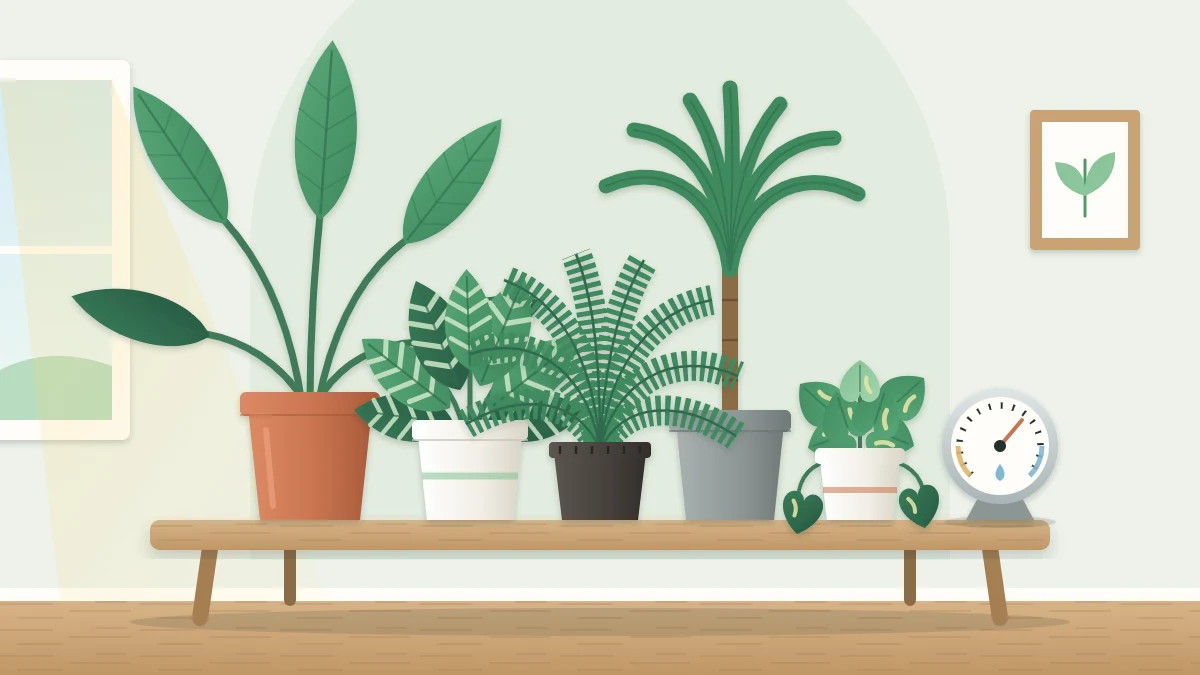
Advice about humidity for houseplants ranges from daily misting to dedicated plant cabinets, which can make it sound as if an ordinary living room is hostile territory. For most of the plants people actually grow, it is not.
Most common houseplants cope with normal home temperatures and normal indoor air. A smaller group, mainly thin-leaved tropical plants, does notice when the air gets dry. The useful questions are which of your plants care, what your rooms are really like, and which measures make a difference.
Which plants notice dry air
Plants with thick, waxy or leathery leaves, and those that store water in their leaves, stems or roots, generally shrug off dry indoor air. Cacti and succulents come from dry places to begin with.
Thin-leaved tropical plants, including many ferns and plants with large, soft or papery foliage, lose water through their leaves faster. In dry air they may show crisp edges or tips, or new leaves that have trouble unfurling. Look up each plant by name to see where it falls, since needs vary by species.
Dry air is usually a seasonal problem. Indoor humidity tends to be lowest when the heating runs, which is one reason it features in adjusting plant care for winter. Air conditioning can dry a room as well.
Find out what your room is really like
Guessing at humidity is unreliable. A simple hygrometer, an inexpensive instrument that shows relative humidity and usually temperature too, tells you what a room is doing. Place it near the plants, away from direct sun, and read it at different times of day and in different seasons.
You may find that the air is less dry than you feared, or that one room is consistently more humid than another. Either result saves effort. There is no single target that suits every plant, so use the readings to compare rooms and to see whether a change you made had any effect.
What helps in practice
- Grouping plants. Plants release moisture through their leaves, and damp potting mix adds a little more. A cluster of plants creates a slightly more humid pocket than a single plant on its own. Leave enough space for air to move between them.
- A room humidifier. This is the measure that can raise humidity across a room. Clean and maintain it exactly as its instructions say, and keep it from wetting walls, furniture or leaves directly.
- A naturally more humid room. Kitchens and bathrooms are often more humid than living rooms. They only work for plants if the spot also has enough light.
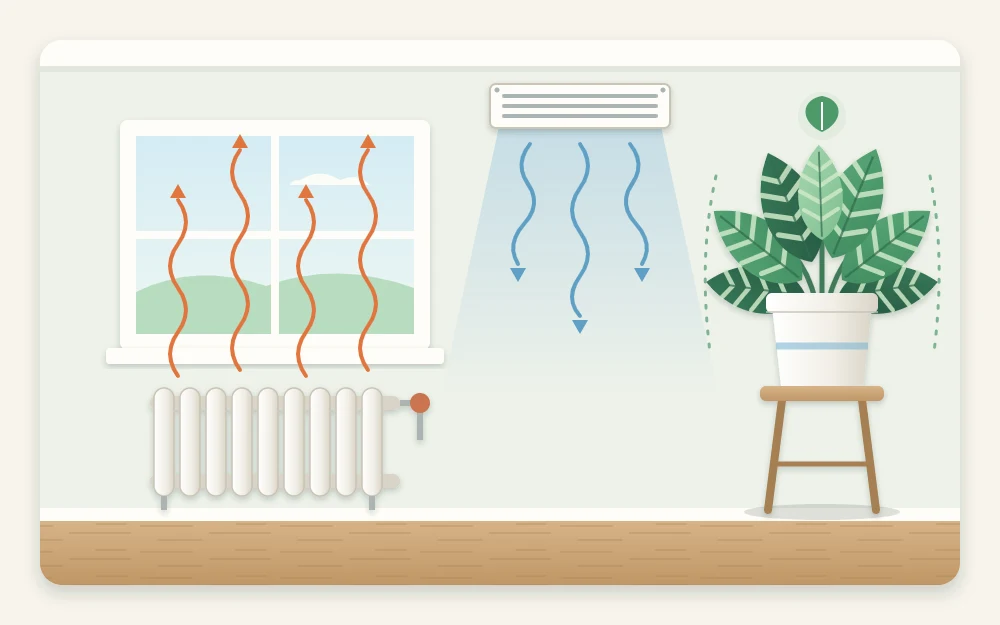
- Distance from moving air. Shift plants away from heating vents, radiators, air conditioners and cold drafts. Moving air strips moisture from leaves much faster than still air.
Good to know
More humidity is not always better. Air that is kept very damp can lead to condensation and mold on windows and walls. Aim for conditions that are comfortable for both the people and the plants in the room.
What helps only a little
Misting. A fine spray raises the humidity around the leaves for a few minutes, until the droplets evaporate. It does not change the air in the room, and foliage that stays wet for long periods can run into other problems. Fuzzy-leaved plants in particular are better left dry.
Pebble trays. A tray of pebbles and water under a pot adds a little moisture to the air just around it. The effect is small and local. If you use one, keep the base of the pot above the water line so that the mix does not soak it up through the drainage holes.
Neither does harm when done sensibly, but neither replaces a humidifier or a better location for a plant that needs humid air. For more on how indoor plants respond to these conditions, see the University of Maryland Extension’s page on temperature and humidity for indoor plants.
Temperature: steady beats perfect
If a room is comfortable for you in normal clothes, it is comfortable for most common houseplants. Many are content at roughly 60 to 80°F (roughly 16 to 27°C), and a slightly cooler night is normal. The exact range a plant prefers depends on the species.
What causes trouble is sudden swings and extremes close to the plant:
- Cold glass. Leaves touching a window in winter, or plants shut behind a curtain overnight, can be much colder than the room.
- Hot air streams. A spot directly above a radiator or in front of a heating vent is far warmer and drier than the thermostat suggests.
- Cold drafts. Outside doors, windows opened in freezing weather and the direct flow from an air conditioner can chill foliage quickly.
- Hot glass in summer. Sun through a closed window can overheat leaves that sit against it.
The temperature that matters is the one where the plant stands, not the one on the wall. Rest a hand on the windowsill or hold it in the air flow, or move the hygrometer there for a day.
Symptoms overlap with watering problems
Crisp edges, brown tips, curling, drooping and sudden leaf drop are often blamed on dry air or a draft. The same signs can come from uneven watering, root trouble, a buildup of fertilizer salts or too much sun. Often more than one factor is involved.
Check in a sensible order before you buy equipment:
- Feel the potting mix at depth and think about how wet or dry it has been lately.
- Look at where the plant stands in relation to vents, radiators, doors and glass.
- Read the hygrometer near the plant.
- Consider recent changes, such as the heating coming on or a move to a new spot.
If dry tips are the main complaint, the guide to why leaf tips turn brown and what to check goes through the likely contributors one by one.
Keep it in proportion
Humidity and temperature come after light, watering, drainage and a suitable potting mix. A plant with those four in order usually tolerates average indoor air. If you are still getting those right, start with the basics of looking after a first houseplant.
The simplest approach of all is to choose plants that suit the air you have. If your home is dry for much of the year and you would rather not run a humidifier, plants with thicker leaves are likely to be less work than delicate ferns.
Frequently asked questions
Does misting houseplants raise humidity?
Only briefly. The droplets evaporate within minutes and the air in the room is unchanged, so misting does little for a plant that needs humid air all day. Grouping plants, a well-maintained room humidifier or a more humid room with enough light have a more lasting effect.
Do I need a humidifier for my houseplants?
Many common houseplants manage without one. A humidifier is worth considering if you grow thin-leaved tropical plants, a hygrometer shows the air is dry for long stretches, and the plants show stress that watering and placement do not explain. Clean it as its instructions direct.
Can I keep a plant near a radiator or air vent?
It is better not to. Air moving from a radiator, heating vent or air conditioner is much hotter, colder or drier than the rest of the room, and it pulls moisture from leaves and potting mix quickly. Move the plant to the side, out of the direct air flow.