Common Houseplant Mistakes Beginners Make (and Easy Fixes)
Ten mistakes that cost beginners their plants, from watering by the calendar to oversized pots, with the reason behind each and a simple fix.
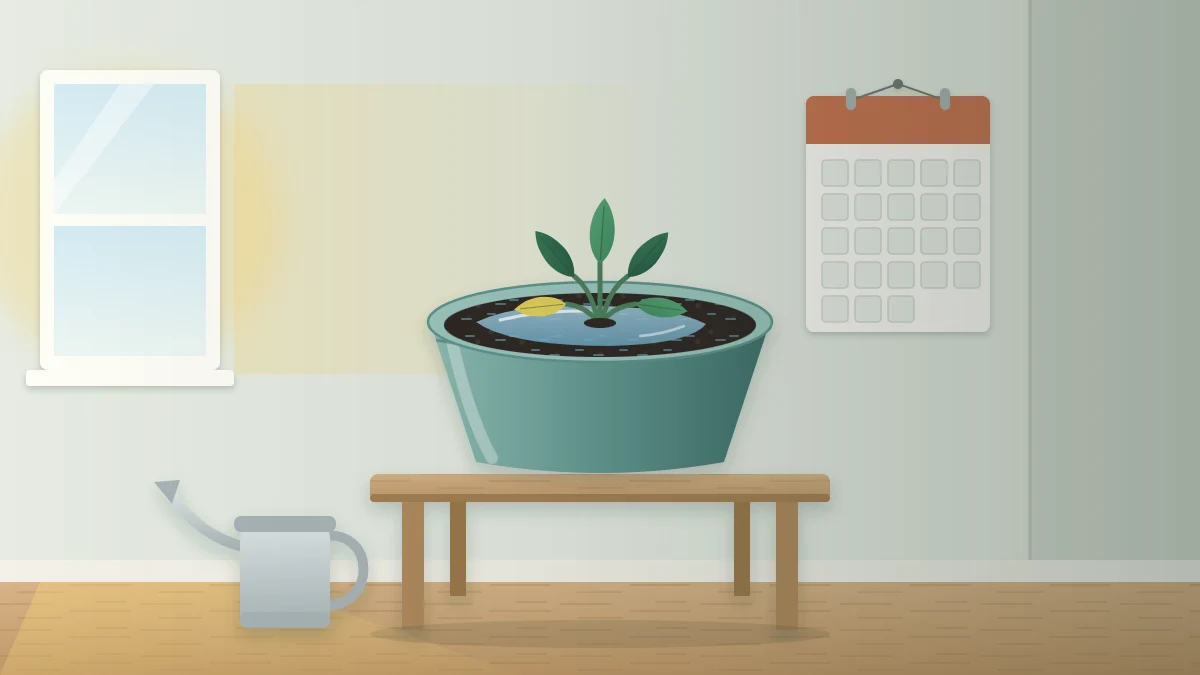
Almost everyone who keeps plants indoors has lost a few along the way. The most common houseplant mistakes are not signs of carelessness; they usually come from caring a little too hard, or from following a tidy rule that does not fit the plant in front of you.
Here are ten that come up again and again, with the reason each one causes trouble and a simple way to do it differently. None of them needs special equipment.
Watering mistakes
1. Watering by the calendar
A fixed watering day feels responsible, but a plant’s water use changes with light, temperature, season, pot size and potting mix. A routine that suits July in a sunny window can keep the same pot soggy in December.
Fix: keep the routine, but make it a routine of checking. Feel the mix an inch or two (2.5 to 5 cm) down, or lift the pot, and water only when the plant’s preferred level of dryness has been reached. That depth is a starting point; it depends on the pot size and the type of plant. If a plant already looks unhappy and you cannot tell which way you have erred, see how to tell overwatering from underwatering.
2. Using a pot with no drainage
In a pot without a hole, extra water collects at the bottom where you cannot see it. Roots sitting in it run short of air and can start to die.
Fix: grow the plant in a pot with drainage holes on a saucer. If you love a pot that has none, use it as a cachepot, a decorative outer pot, with the plain nursery pot inside, and tip out any water that gathers. There is more in the guide to plant pots and drainage.
Light mistakes
3. Too little light for the plant
Rooms look brighter to people than they are to plants, and light falls away quickly as you move back from a window. A plant in a dim spot grows slowly, uses little water and stays wet for longer, which sets up other problems.
Fix: find out what light your plant prefers and compare it honestly with the spot you have. Often the answer is simply moving it closer to a window. The signs of a mismatch are described in signs your houseplant needs more light (or less).
4. Moving a plant into strong sun suddenly
Leaves grown in shade are not prepared for direct sun. Shift a plant from a dim corner to a hot windowsill, or outdoors for the summer, in one step and the leaves can scorch within days.
Fix: move it in stages over a couple of weeks, a little closer or a little longer each time, and watch how the leaves respond.
Potting and feeding mistakes
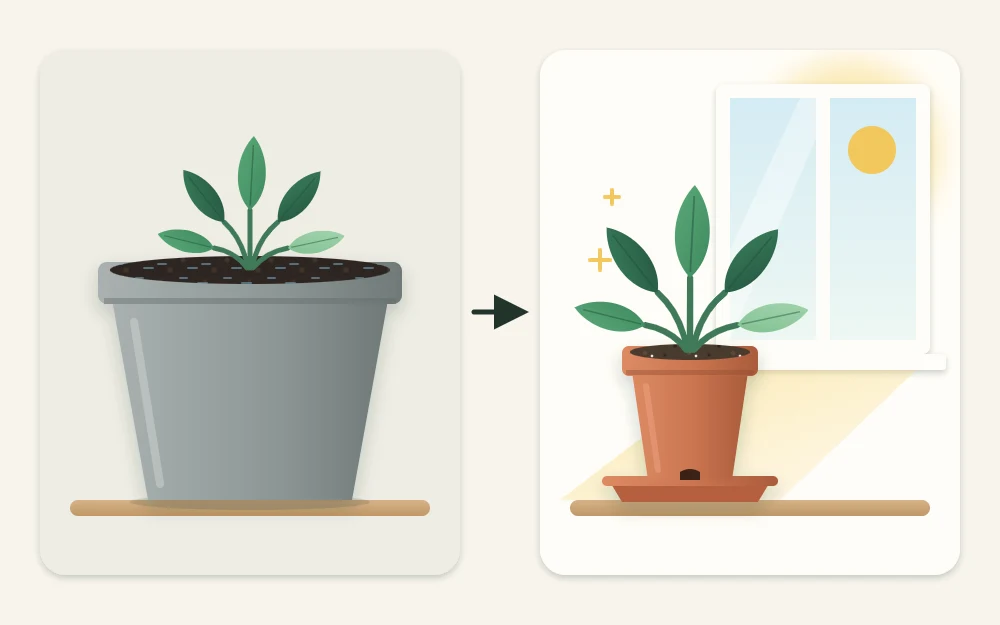
5. Repotting straight away, or into a far bigger pot
A new plant is already adjusting to your home, and repotting on day one adds root disturbance. A pot that is much too large makes it worse, because the extra mix holds water the roots cannot reach.
Fix: leave a new plant in its nursery pot for a few weeks unless it is clearly struggling. Repot when the plant shows it needs to, and go up only one size. The guide on when to repot houseplants lists the signs.
6. Fertilizing a struggling or resting plant
Fertilizer supplies nutrients for growth. It is not medicine. A plant that is wilting, dropping leaves or barely growing in dim winter light cannot use it, and unused fertilizer builds up in the mix and can damage roots.
Fix: find and correct the underlying problem first. Fertilize only during active growth, and follow the product label.
Attention mistakes
7. Not knowing the plant’s name
General advice only goes so far. A plant that stores water in thick leaves and one with thin tropical foliage want very different treatment, and you cannot look up either without a name.
Fix: keep the label, or note the botanical name when you buy. Then look up three things: the light it prefers, how dry it likes to get between waterings, and anything it is known to dislike.
8. Letting dust build up
Dust on leaves blocks some of the light the plant depends on, and a dusty plant is one nobody has looked at closely for a while.
Fix: wipe smooth leaves now and then with a soft cloth dampened with plain water, supporting each leaf from below. Use a soft dry brush on fuzzy leaves.
9. Overreacting to one yellow leaf
An occasional old lower leaf turning yellow and dropping is normal aging for many plants. Responding by moving, repotting, feeding and watering all at once stresses the plant and leaves you unable to tell what helped.
Fix: look at the pattern first. One old leaf is rarely a concern. If several leaves are affected or new growth looks wrong, check the soil moisture, the drainage and the light, then change one thing and give it a few weeks.
Tip
When a plant looks off, the most useful first move is to check, not to act. Feel the mix, lift the pot and look under a few leaves before changing anything.
10. Not checking new plants for pests
Pests most often arrive on a new plant and spread from there. They are much easier to deal with on one plant than on a whole shelf.
Fix: before buying, and again at home, look under the leaves and where the leaves join the stems. Keep a new plant apart from the others for a couple of weeks and look it over a few times before it joins them.
What these mistakes have in common
Most of them replace looking with a rule or a reflex: a set watering day, a bigger pot, a dose of fertilizer, a sudden move. Plants respond to the conditions they are actually in, and those shift with the species, the room and the season.
A short, regular look at each plant catches most problems while they are still small. Check the mix, the light and the leaves, and let what you find decide what happens next.
If you have already made a few
That is normal, and many plants are more forgiving than their reputation suggests. Pick the one mistake that seems most likely for your plant, correct it, and wait before changing anything else.
Frequently asked questions
Why do my houseplants keep dying?
There is rarely one answer, but the most frequent contributors are potting mix that stays wet too long, pots without drainage holes and too little light for the plant. Start by learning each plant's name and needs, then check the soil before watering and compare the light it gets with what it prefers.
What is the most common mistake with houseplants?
Watering on a set day without checking the soil is probably the most widespread. A plant's water use changes with light, temperature, season, pot and potting mix, so a fixed routine can leave the mix too wet or too dry. Checking regularly and watering only when needed avoids both.
Should I repot a new houseplant right away?
In most cases it is better to wait. A new plant is adjusting to different light and air, and it can usually stay in its nursery pot for a few weeks. Repot sooner only if the roots are tightly packed or the mix clearly is not draining, and move up just one pot size.