Brown Leaf Tips on Houseplants: Why They Happen
Brown tips mean the far end of the leaf dried out or was damaged, usually for more than one reason. Here is what to check for each likely contributor and how to respond.
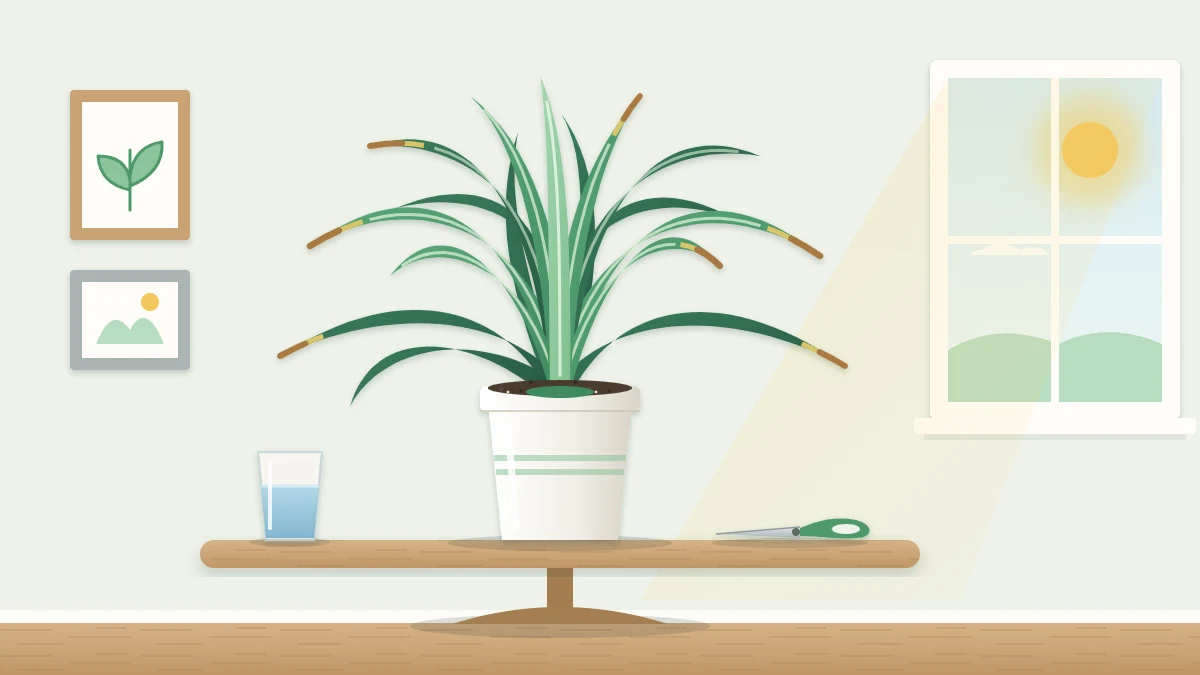
Crisp brown leaf tips are among the most common complaints about indoor plants, and among the least alarming. The plant is usually not dying. A small area of tissue at the far end of the leaf has dried out or been damaged, and it shows.
The harder part is working out why. Brown leaf tips rarely have one neat cause. Several ordinary conditions lead to the same result, and often two or three are acting together. Instead of guessing, check each likely contributor in turn and adjust what you find.
Why the tip goes first
The tip and the edges are the end of the line for water moving through a leaf. Whenever supply falls short of what the leaf is losing, the farthest tissue runs short first. That can happen because the potting mix was dry, because the roots are not working well, or because dry moving air is pulling moisture out of the leaf faster than usual.
Dissolved minerals and fertilizer salts travel with the water too, and they can build up where the water ends its journey. So a brown tip tells you that something interrupted the supply or damaged the tissue. It does not tell you which thing.
Check the watering pattern
Uneven watering is a frequent contributor. If the mix swings between soaked and bone dry, with long dry spells in between, the tips may brown after each dry spell even though the plant recovers its shape once watered.
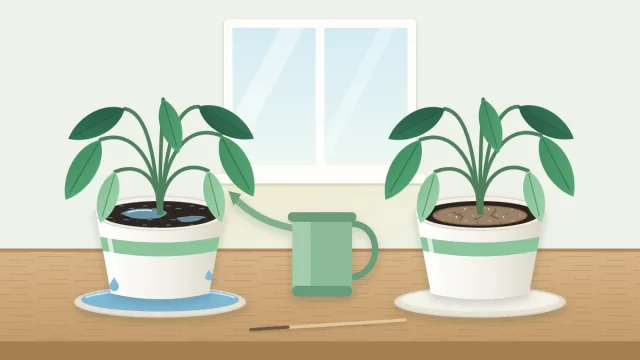
What to check: push a finger or a wooden skewer into the mix a couple of times between waterings, and notice how dry it gets and for how long. As a starting point, many leafy tropical plants do well when the top 1 to 2 in (2.5 to 5 cm) is allowed to dry, but the right depth depends on the pot size and the plant.
How to respond: aim for steadier moisture based on what the soil check tells you, not on the calendar. The guide on how to water houseplants without a fixed schedule covers the method in full.
Check the air around the plant
Low humidity can contribute to brown tips on thin-leaved tropical plants, particularly in rooms with heating or air conditioning running. Thick-leaved plants and succulents are much less likely to be bothered by it.
What to check: is the browning worse in the season when the heating is on? Is the plant a thin-leaved type? A simple hygrometer will show what the room is really like instead of leaving you to guess.
How to respond: grouping plants and choosing a brighter, naturally more humid room tend to help more than occasional misting. See what actually helps with humidity and temperature for the options and their limits.
Check for salts and minerals
Fertilizer salts, and minerals from some tap water, can accumulate in the mix over time. A whitish or tan crust on the soil surface or around the rim of the pot is a common sign, though buildup can be present without one.
What to check: think about how much fertilizer the plant has been given and how recently, and whether it is always watered in small sips or only from below, so that nothing ever drains out of the bottom.
How to respond:
- Every so often, water thoroughly from the top so that plenty of water runs out of the drainage holes, then empty the saucer. This carries some of the excess out of the pot.
- Ease off the fertilizer, and skip it altogether while the plant is not in active growth.
- Never exceed the amount on the product label. The basics are in the guide to fertilizing houseplants.
Good to know
How sensitive a plant is to minerals in water varies by species. If you suspect your tap water, look up your particular plant before changing anything, and change one thing at a time so that you can tell what made the difference.
Check the roots
Roots that are damaged, cramped or sitting in waterlogged mix cannot move enough water to the far end of the leaves, even when the pot is wet. Brown tips together with yellowing, limp growth or a sour smell from the mix make the roots worth a look.
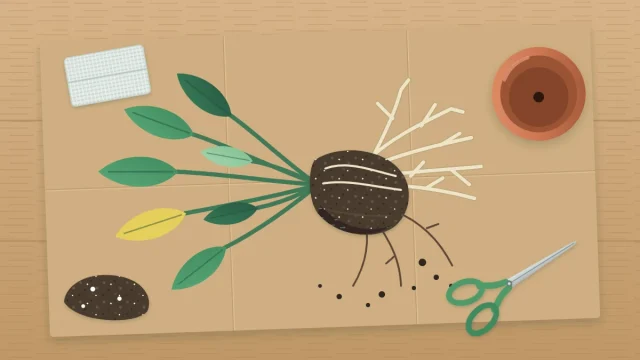
What to check: slide the plant out of its pot. Many healthy roots are firm and pale, although color varies by plant. Soft, dark roots, or a root ball so dense that water runs straight past it, both point to trouble below the surface.
How to respond: a tightly packed root ball may need a slightly larger pot and fresh potting mix. Wet, failing roots need drier conditions, a pot with drainage holes and closer attention before anything else.
Check for hot and cold air streams
A steady stream of air dries leaf tissue quickly. Heating vents, radiators, air conditioners, fans and drafty doors are the usual sources, and leaves resting against cold or sun-heated window glass can be damaged in a similar way.
What to check: hold your hand where the leaves are. If you can feel moving warm or cold air, so can the plant. Notice whether the browning is concentrated on the side facing the vent or the glass.
How to respond: move the plant out of the air stream, even by a short distance, and keep leaves from touching the window.
Trimming brown tips
Brown tips do not recover. The dry tissue stays dry, whatever you change. Trimming is purely cosmetic and entirely optional; it does not help or harm the plant’s health to any real degree.
If the look bothers you, use clean, sharp scissors and cut along the natural shape of the leaf, so that a pointed leaf still ends in a point. Many people leave a very thin sliver of brown at the edge of the cut, because cutting into green tissue can leave a fresh edge that browns again.
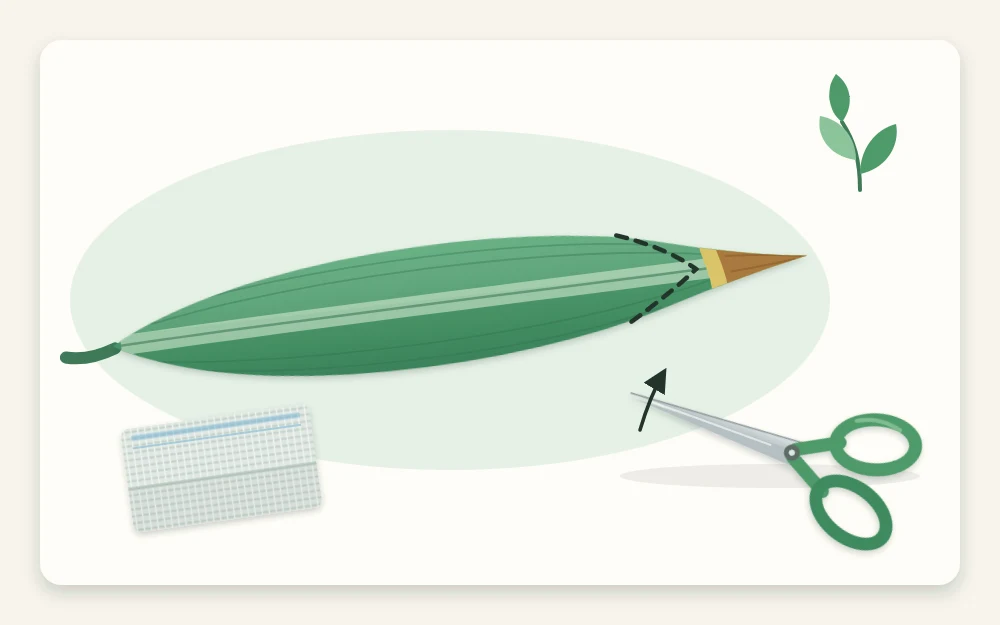
Where most of a leaf is brown, remove the whole leaf at its base instead.
How to tell whether your changes are working
Watch the new leaves, not the old ones. Existing tips will stay brown, and leaves that were already stressed may brown a little further before things settle. If the leaves that emerge over the following weeks stay green to the tip, your adjustments are working.
Frequently asked questions
Should I cut off brown leaf tips?
Only if you dislike how they look. Trimming is cosmetic and does not change the plant's health. Use clean, sharp scissors and follow the natural shape of the leaf. Leaving a very thin edge of brown avoids cutting into green tissue, which can brown again along the fresh cut.
Will brown tips go away once I fix the problem?
No. Tissue that has dried out stays brown. What changes is the new growth: if leaves that emerge over the following weeks stay green to the tip, the adjustment is working. Older leaves may brown slightly further before conditions settle, so judge progress by new leaves only.
Does misting stop brown leaf tips?
Usually not by itself. Misting raises humidity around the leaves only briefly, and dry air is just one of several possible contributors. Check the moisture pattern in the pot, fertilizer buildup, the roots and nearby vents as well. For thin-leaved plants in dry rooms, grouping plants or running a room humidifier tends to help more.