Houseplant Care for Beginners: Where to Start
An orientation guide for your first houseplant: the four things a potted plant depends on, why light comes first, and a calm plan for the first week at home.
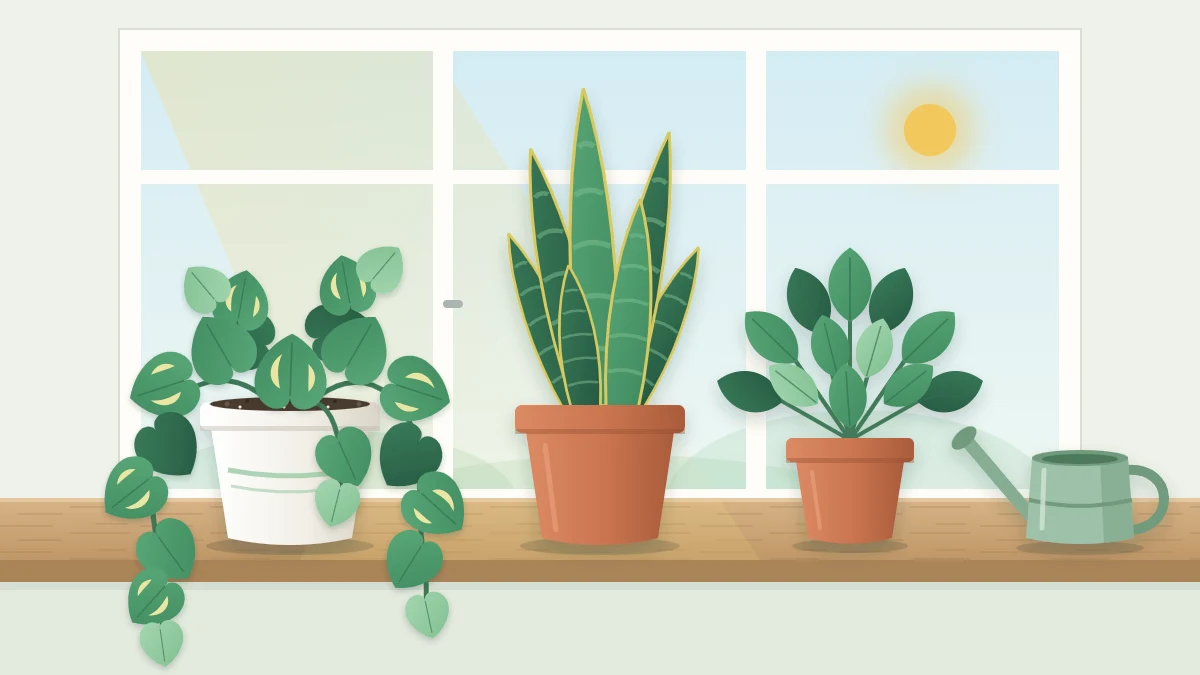
Most advice on houseplant care for beginners arrives as a list of rules: this much water, that often, in this kind of window. Rules like these are easy to remember and often wrong for your plant, because the plant on your shelf lives in your room, in your pot, in this season.
A better starting point is to understand the handful of things a potted plant depends on, and then get into the habit of looking before you act. That is less complicated than it sounds, and it works for nearly every common houseplant.
The four things a potted plant depends on
A plant in a pot cannot send roots farther to find what it lacks. Everything it gets comes from the spot you choose and the container you give it. Four things do most of the work:
- Light. The plant’s only source of energy.
- Water. Given when the plant and the soil call for it, not when the calendar says so.
- A pot that drains. Drainage holes let extra water leave, so the roots are not left sitting in it.
- A suitable potting mix. A loose mix that holds moisture and still lets air reach the roots.
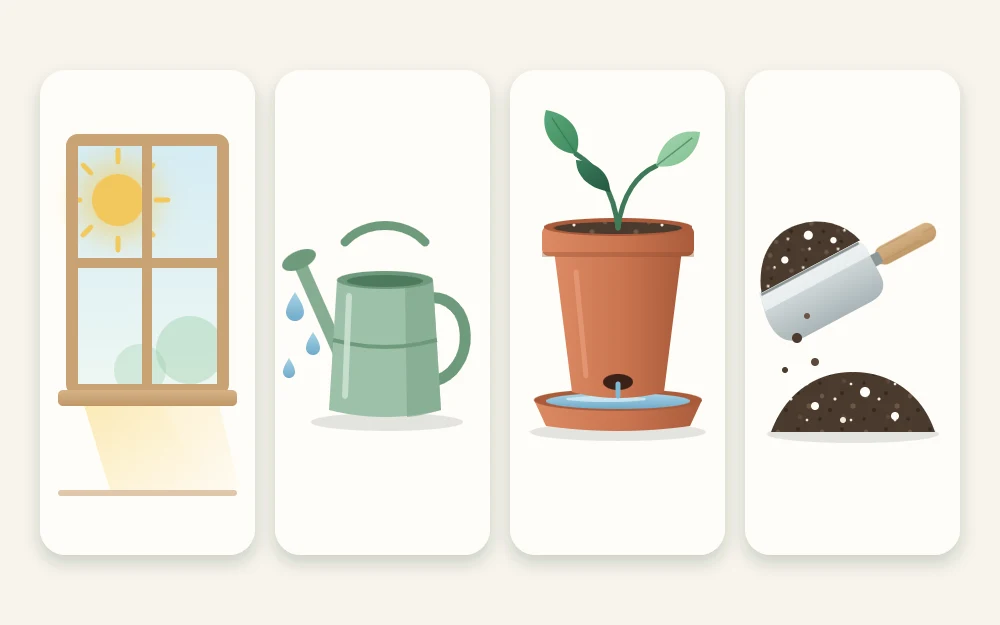
Humidity, fertilizer and repotting matter too, but they are refinements. When a plant struggles, the cause is far more often found among these four than anywhere else.
Why light comes first
Plants make their own energy from light. Water, potting mix and fertilizer supply raw materials, but none of them can stand in for light. A plant kept in a spot that is too dim for it grows slowly or not at all, however carefully you look after everything else.
Light also drives the other three. A plant in a bright spot uses water faster, so its mix dries sooner. The same plant in a dim corner drinks slowly, and the mix can stay wet for a long time. This is why watering advice that ignores light so often goes wrong.
Indoor light is also much weaker than it looks to your eyes, and it drops quickly as you move away from the window. Before you decide where a plant will live, it helps to learn what terms such as bright indirect light, direct sun and low light mean in a real room. The guide to indoor plant light explains them and shows simple ways to judge a spot.
Why observation beats a calendar
How much water and attention a plant needs depends on at least four things at once:
- The species. A thin-leaved tropical plant and a succulent with thick, water-storing leaves want very different treatment.
- The room. Light, warmth and air movement all change how fast the mix dries.
- The season. Many plants grow more slowly in the short, dim days of winter and use less water, though this depends on your climate and on conditions indoors.
- The pot. Small pots dry faster than large ones, and unglazed terracotta dries faster than plastic or glazed ceramic.
A fixed schedule cannot follow all of that. Your eyes and fingers can. Looking at the leaves, feeling the potting mix and noticing the weight of the pot tell you what is happening now, which no calendar is able to do.
Tip
Pick a regular day to look at your plants. The day is for checking. Whether anything gets watered depends on what you find.
A sensible first week with a new plant
A new plant has just moved from a greenhouse to a shop to your home, and each of those places had different light and temperature. The kindest thing you can do in the first week is keep things simple.
- Find its name. Keep the label, and note the botanical name if it is given. Common names are shared by unrelated plants, and the name is what lets you look up what this particular plant prefers.
- Pick a spot based on light. Choose the place that matches the plant’s needs, not the place where it looks best. Keep it away from heating vents, radiators and cold drafts.
- Check the soil before watering. Do not assume a new plant is thirsty, or that it is not. Push a finger into the mix and decide from what you feel. The guide on how to water houseplants without a fixed schedule covers the method step by step.
- Leave it in its nursery pot for now. The nursery pot is the plain plastic pot the plant was sold in. It has drainage holes, and the plant is used to it. Repotting adds stress at a moment when the plant is already adjusting, and it can usually wait.
- Watch, and change little. A dropped leaf or two after a move is common. Give the plant a few weeks before you conclude that something is wrong.
Start small and match the plant to the room
One or two plants are enough to begin with. With a small number you notice changes quickly, and you learn how fast the mix dries in your home before there are a dozen pots to keep track of.
It also helps to start with the conditions you have. A plant that suits your light will forgive a lot of beginner uncertainty, while a plant that needs more light than your room offers will decline slowly whatever you do. The guide on choosing a houseplant that suits your home walks through how to assess a spot and what to look for in the shop.
What to expect as you learn
Plants respond slowly. A change you make today may take weeks to show, so it is worth changing one thing at a time. If you move the plant, change the watering and repot it all at once, you will not know which of them helped or hurt.
Symptoms are also less specific than they seem. Yellow leaves, brown tips and drooping each have several possible causes, and the leaves alone rarely tell you which one applies. The useful questions are practical ones. How wet is the mix, and how long has it been that way? Does water run out of the bottom of the pot? How much light does this spot really get?
Losing a leaf, or even a plant, is part of learning and happens to almost everyone. Many early losses trace back to a short list of habits that are easy to change once you know them, and the article on common houseplant mistakes and their fixes goes through them one by one.
Frequently asked questions
What is the most important thing for a beginner to get right?
Light, in most cases. A plant makes its energy from light, and the amount it receives also sets how quickly it uses water. Choose the spot first and match the plant to it. After that, checking the potting mix before you water prevents many of the usual early problems.
Should I repot a new houseplant as soon as I bring it home?
Usually there is no need. The plant is already adjusting to new light and temperature, and its nursery pot has drainage holes. Leave it for a while and set the nursery pot inside a decorative outer pot if you prefer the look. Repot later, when the plant shows that it has outgrown the pot.
How do I know when my first plant needs water?
Check the potting mix instead of counting days. Push a finger into the mix and notice how heavy the pot feels. How dry the mix should get before you water depends on the plant, so look it up by name. Thin-leaved tropical plants generally want water sooner than succulents do.