Houseplant Pests: A Calm, Step-by-Step Approach
A sensible plan for pests on indoor plants: prevent, inspect, identify before acting, isolate, and start with rinsing, wiping and pruning before considering any product.
Finding insects, fine webbing or a sticky film on a favorite plant is unsettling, and the first impulse is often to spray something, anything, straight away. Most houseplant pests do not call for that. They build up over weeks, not hours, which gives you time to work out what you are dealing with.
The approach used here is integrated pest management, usually shortened to IPM: prevent problems where you can, check plants regularly, identify the pest before acting, and begin with the least risky measures. It is the same framework described in the US EPA’s overview of integrated pest management principles, scaled down to a windowsill.
Start with prevention
Many infestations arrive on a new plant. A few habits reduce the odds considerably.
- Inspect before you buy. Look under leaves and at stem joints in the shop. The guide on choosing a houseplant that suits your home lists what to look for.
- Keep new plants apart. Give every newcomer its own spot, away from your other plants, for a couple of weeks, and look it over a few times before it joins the group.
- Keep plants healthy. A plant in suitable light, in a pot that drains, with soil that is not constantly wet, generally copes better with pests than a stressed one.
- Keep foliage clean. Dust hides early signs. Regularly cleaning the leaves removes it and puts each leaf in front of your eyes.
Make inspection a habit
Pests are far easier to deal with when there are few of them. Build a quick look into your regular plant checks: turn over a few leaves, look where leaves join the stem, examine the newest growth and glance at the surface of the potting mix.
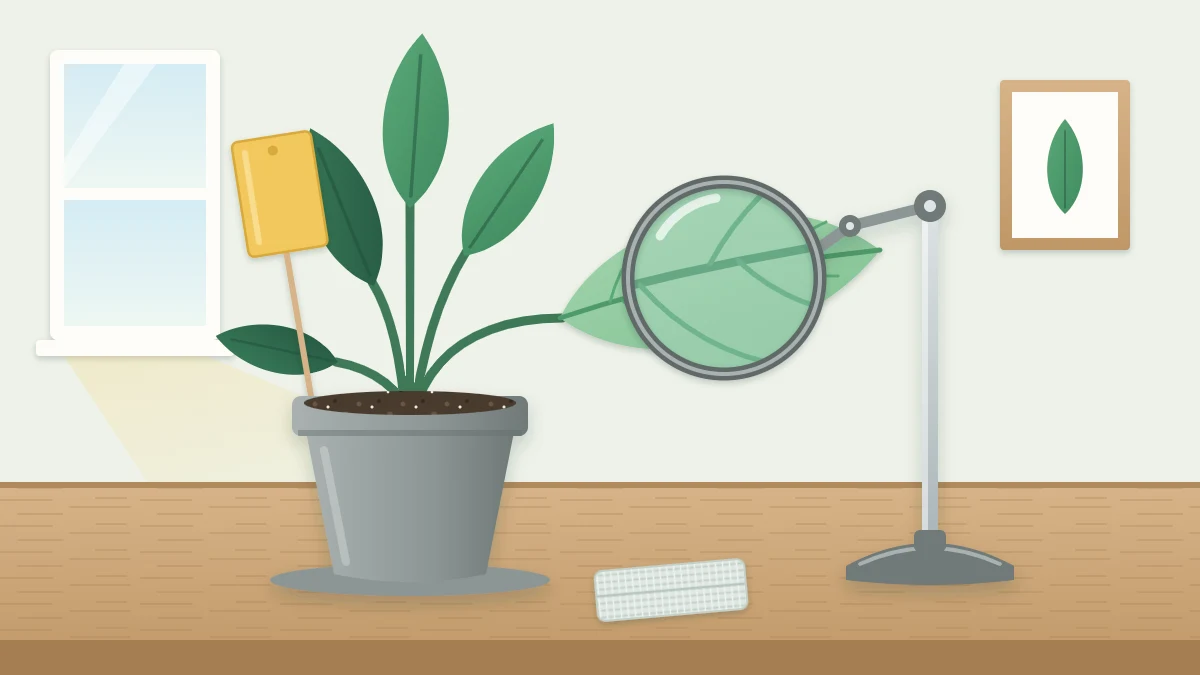
You are looking for anything that was not there before: specks that move, fine webbing, sticky or shiny patches, cottony tufts, pale stippling, distorted new leaves or small flies lifting off the soil when you water. A magnifying glass helps. Fitting this into a simple houseplant care routine takes only a minute or two per plant.
Identify before you act
What works depends on the pest, so identification comes before treatment. Guessing wastes effort and can lead to using a product that does nothing for the problem you actually have.
In broad terms, the pests people meet most often indoors fall into two groups: tiny sap-feeding insects and mites that live on leaves and stems, and small flies associated with potting mix that stays constantly wet. Within those groups the details matter. Use Clemson Cooperative Extension’s guide to common houseplant insects and related pests to work out which one you have, and compare what you see on the plant with its descriptions.
Keep in mind that not every mark on a leaf is a pest. Watering, light and dry air cause spots and discoloration too. If you cannot find a living culprit after careful looking, check the growing conditions before assuming an infestation.
Isolate the plant
As soon as you suspect pests, move the plant away from the others. Many pests spread by crawling between touching leaves, and some travel on hands, cloths and tools.
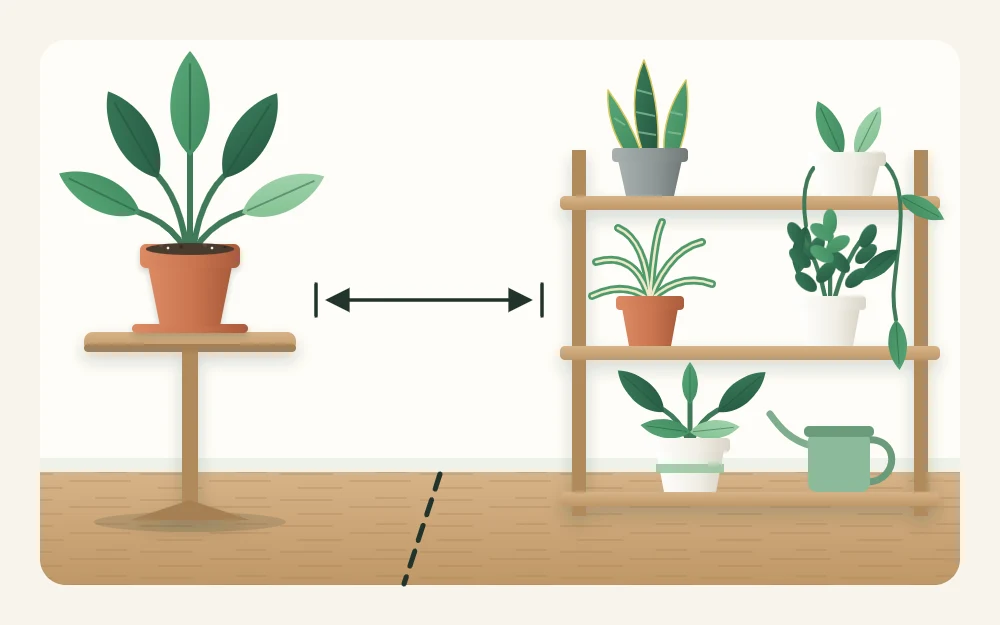
Then check the neighbors, since whatever you found may already have moved. Handle the affected plant last when you do your rounds, and wash your hands and wipe your tools afterward.
Begin with the least risky steps
Physical measures come first. They carry little risk to you or the plant and are often enough for a light infestation that is caught early.
- Rinse or wipe. Rinse sturdy plants under a gentle stream of lukewarm water, paying attention to leaf undersides and stem joints, with the pot tilted so the mix stays put. On plants that cannot be rinsed, wipe the leaves, top and bottom, with a soft cloth dampened with plain water.
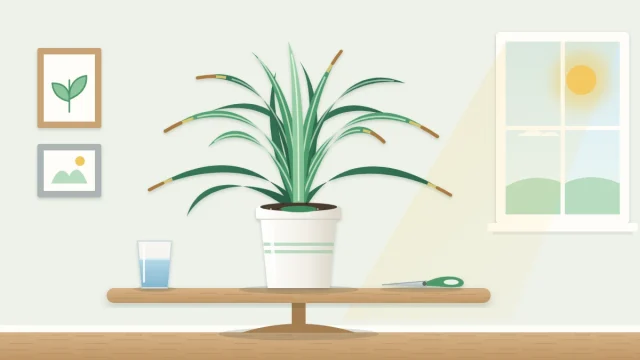
- Prune. Cut off badly affected leaves and stems with clean scissors, seal them in a bag and put them in the trash, not the compost.
- Adjust the watering. Where small flies around the soil are the issue, let the surface of the mix dry more between waterings, as far as that particular plant allows. Empty saucers and clear dead leaves from the soil surface.
- Use yellow sticky cards. Placed near the soil, these catch flying insects. Treat them mainly as a monitoring tool that shows whether numbers are rising or falling.
- Repeat. One rinse seldom ends a problem. Check again every few days and repeat the physical steps as often as needed.
If you consider a pesticide product
Sometimes physical steps are not enough, and you may decide a product is warranted. The guidance here is short and it does not vary.
Good to know
Choose only a product that is labeled for use on indoor houseplants and for the pest you have identified, and follow the label exactly, including where it may be used, how often and on which plants. The label is the instruction; nothing in this article replaces it.
That applies equally to product types often sold for indoor plants, such as insecticidal soap and horticultural oil: check that the label covers houseplants and your pest, and follow it exactly. Homemade mixtures are best avoided, because their effect on the pest and on the leaves is unpredictable.
Keep monitoring
Pest problems usually end gradually. Keep the plant isolated and continue inspecting it for several weeks after you last saw any sign of activity. New growth that emerges clean and undistorted is the most reassuring signal.
Make a short note of what you found and what you did. If the problem returns, you will know what helped and how long it took.
When to let a plant go
Some infestations are not worth fighting. If a plant is heavily affected, has been declining for a long time, or keeps relapsing despite repeated effort, discarding it may be the sensible choice, particularly when it sits close to plants you care about more.
That is a judgment about time and risk, not a failure. Bag the plant and its potting mix, put it in the trash, wash the pot thoroughly before reusing it, and keep a close eye on the plants that stood nearby.
Frequently asked questions
Should I spray a plant as soon as I see bugs?
No. Isolate the plant first, then work out which pest it is using an extension identification guide. Rinsing, wiping and pruning are the first steps. If you later choose a pesticide product, use only one labeled for indoor houseplants and for that pest, and follow the label exactly.
How long should I keep a new plant away from my other plants?
A couple of weeks is a reasonable starting point. During that time, look under the leaves, at the stem joints and at the soil surface several times. If you find anything suspicious, keep the plant apart for longer and deal with the problem before it joins the group.
Do yellow sticky cards get rid of pests?
They are mainly a monitoring tool. Sticky cards catch flying insects near the pot, which shows you whether numbers are rising or falling, but they do not reach anything living on the leaves or in the potting mix. Use them alongside inspection, isolation and adjusted growing conditions.