ZZ Plant Care for Beginners: Light, Water and Patience
A beginner's guide to the ZZ plant: the light it tolerates, how its water-storing rhizomes change the way you water, which warning signs matter, and what NC State Extension lists about its toxicity to people and pets.
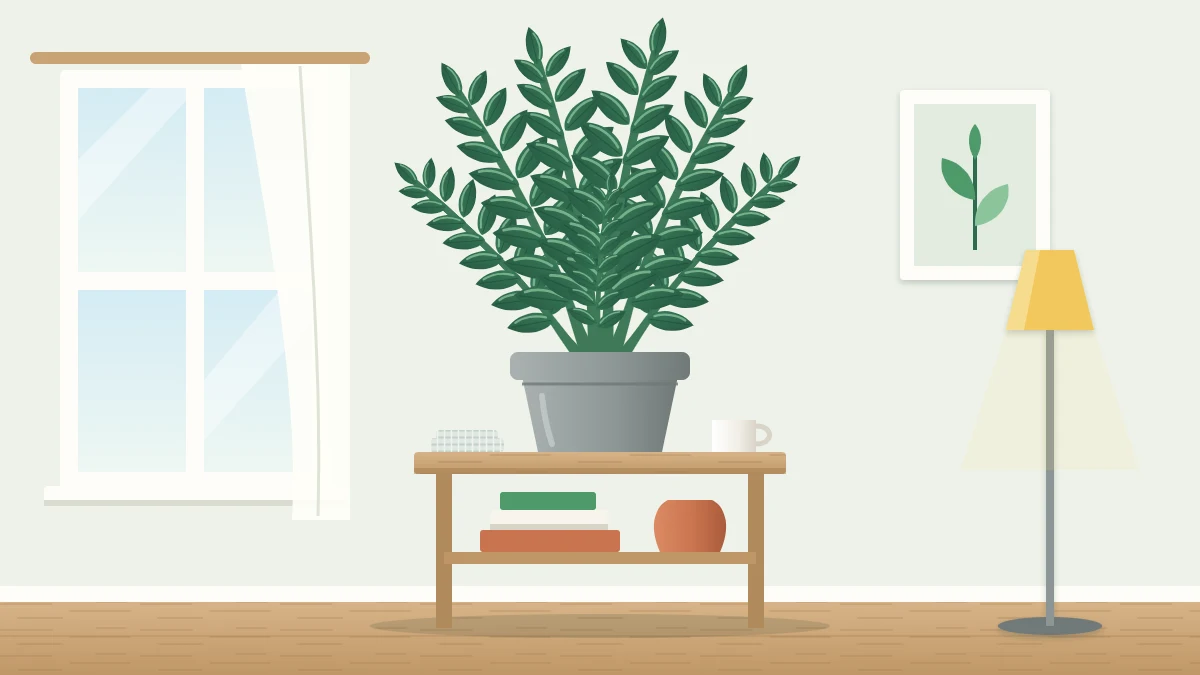
The ZZ plant (Zamioculcas zamiifolia) has upright, arching stems lined with glossy, dark green leaflets. It grows slowly, copes with dimmer rooms than many houseplants, and goes a long time between waterings, which is exactly what makes beginners unsure: how little water is too little?
ZZ plant care rewards patience more than attention. The plant stores water below the soil, so the main skill is checking the potting mix and waiting until it has dried. How long that takes depends on your light, pot, mix and season, so the points below are starting places, not fixed rules.
ZZ plant care at a glance
| Need | Starting point | What changes it |
|---|---|---|
| Light | Bright indirect light; tolerates lower light | Growth is faster in brighter spots; harsh direct sun can scorch |
| Watering | Water thoroughly once the mix has dried out well, deep into the pot | Light, season, pot size and material, mix |
| Potting mix and pot | Fast-draining mix in a pot with drainage holes | Dense mix or an oversized pot stays wet longer |
| Growth | Slow, with new shoots in flushes | Light and warmth |
Light: tolerates low, grows faster in bright indirect
A ZZ plant tolerates lower light, so it can live in spots where many plants would decline. Expect very little growth there. In bright indirect light it grows faster and produces more new stems.
Keep it out of harsh direct sun, which can scorch the leaflets. A position near a bright window where sunbeams do not land on the plant, or where they are filtered by a sheer curtain, usually works well. If you are not sure how to classify a spot, the guide to indoor plant light explains simple ways to judge it.
Watering: how little is too little?
Beneath the surface, each ZZ stem rises from a rhizome, a thick, rounded storage organ that looks a little like a small potato. The rhizomes hold water, and the fleshy stem bases hold some as well. That reserve carries the plant through dry periods.
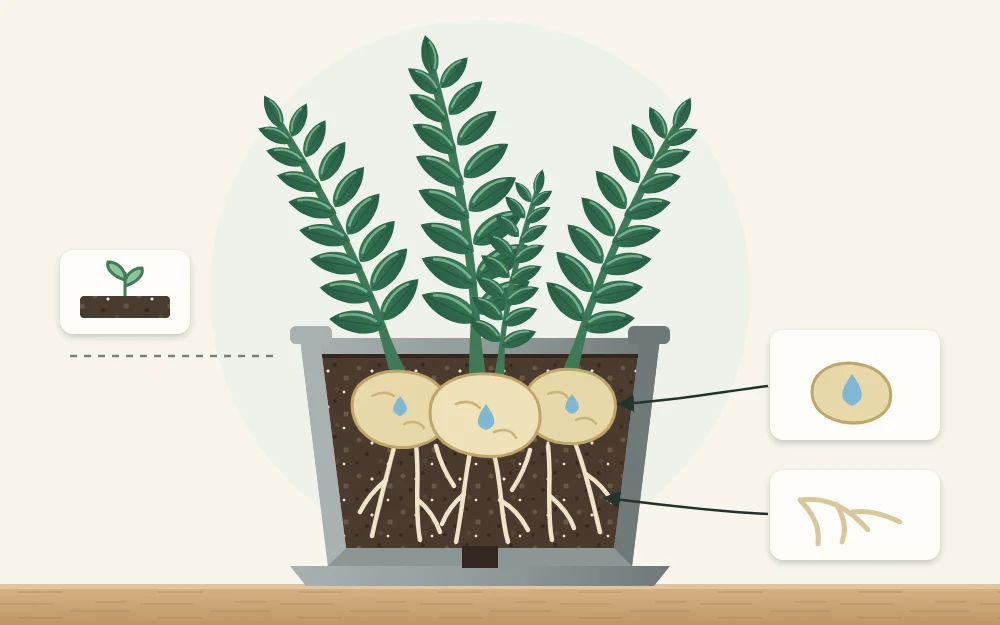
Because of that reserve, let the mix dry out well between thorough waterings. In practice:
- Check the mix deep in the pot with a finger or a plain wooden skewer, or lift the pot to judge its weight.
- If it is still damp lower down, wait and check again another day.
- When it has dried, water slowly until water runs from the drainage holes.
- Let the pot drain and empty the saucer after a few minutes.
Expect longer gaps in low light and in winter, when the plant uses little water and the mix can stay moist for a long time. How long depends on your climate and on conditions indoors. A plant in a warm, bright room dries out much sooner than one in a dim corner. The general method is covered in the guide on how to water houseplants without a fixed schedule.
So how little is too little? A ZZ plant left dry for a very long time may wrinkle slightly along the stems or drop leaflets. If you see that and the mix is dry all the way down, water thoroughly and check a little sooner next time. The more urgent signal runs the other way: soft, yellowing stems in wet mix are the warning sign to act on.
Potting mix and pot
Use a fast-draining potting mix, such as a cactus and succulent mix or a general-purpose indoor potting mix loosened with extra perlite or bark. The pot needs drainage holes. If you prefer a decorative container, keep the plant in its nursery pot (the plain plastic pot it was sold in) inside a cachepot, a decorative outer pot without a hole, and tip out any water that collects.
Keep the pot close to the size of the root ball. The rhizomes swell over time and can press against the pot or distort a thin plastic one, which is a sign to move up one size, ideally during active growth. A pot much larger than the roots holds wet mix for longer than this plant likes.
Slow growth, new shoots and clean leaves
A ZZ plant can go months without doing anything visible. New growth tends to arrive in flushes: several pale green shoots push up from the mix, lengthen, and unfurl their leaflets, which then darken. A long quiet spell is normal, especially in low light or winter, and is not a reason to water or fertilize more.
Normal room warmth suits it, roughly 60 to 85°F (16 to 29°C). Keep it away from cold drafts and cold window glass.
The glossy leaflets show dust clearly, and dust blocks some light. Wipe them now and then with a soft cloth dampened with plain water, supporting each stem with your other hand. Skip leaf-shine products; the natural gloss returns once the dust is gone.
Common problems and what to check
- Yellowing, soft stems: feel the mix at depth. If it is wet, stop watering, slide the plant out and look at the roots and rhizomes. Firm rhizomes can be repotted into fresh, fast-draining mix; cut away parts that are clearly soft.
- One old stem yellowing: an occasional older stem dying back can be normal aging. Check the mix anyway, then remove the stem at the base once it has faded.
- Leaning, stretched stems: often a response to low light. Move the plant somewhere brighter in stages and turn the pot when you check it.
- Wrinkled stems or dropping leaflets: may follow a long dry spell, but damaged roots can look the same, so check whether the mix is dry or wet before you respond.
ZZ plants, pets and people
Good to know
NC State Extension’s plant profile for Zamioculcas zamiifolia lists the plant as a problem for cats and dogs and as poisonous to humans with medium severity. It notes that the plant contains calcium oxalate and that vomiting and diarrhea can result if leaves are eaten in quantity.
Keep a ZZ plant out of reach of pets and children, and wash your hands after pruning or dividing it. If a pet or a person eats part of the plant, contact your veterinarian, an animal poison control service or Poison Control. To look up other plants before buying, see the guide to checking whether a houseplant is toxic to pets.
If the ZZ plant’s dry-between-waterings routine suits you, the snake plant is looked after in a very similar way.
Frequently asked questions
How do I know when a ZZ plant needs water?
Check deep in the pot with a finger or a wooden skewer, or lift the pot to feel its weight. Water thoroughly once the mix has dried out well, then let it drain. The rhizomes store water, so gaps are long, and longer still in low light and in winter.
Why is my ZZ plant not growing?
Slow growth is normal for a ZZ plant, and new shoots tend to arrive in flushes with long quiet spells between them. Low light and winter slow it further. If the stems are firm and green, be patient. A brighter spot with indirect light usually brings faster growth during the growing season.
What do yellow stems on a ZZ plant mean?
It depends on what else you find. An occasional old stem fading can be normal aging. Soft, yellowing stems in wet mix are the sign to act on: stop watering, slide the plant out and check the roots and rhizomes. Check the mix before deciding either way.