Snake Plant Care for Beginners: A Low-Fuss Guide
What a snake plant really needs: the light it tolerates and the light it prefers, how dry to let the mix get, the right pot and mix, how to divide a crowded plant, and what the ASPCA and NC State Extension list about its toxicity.
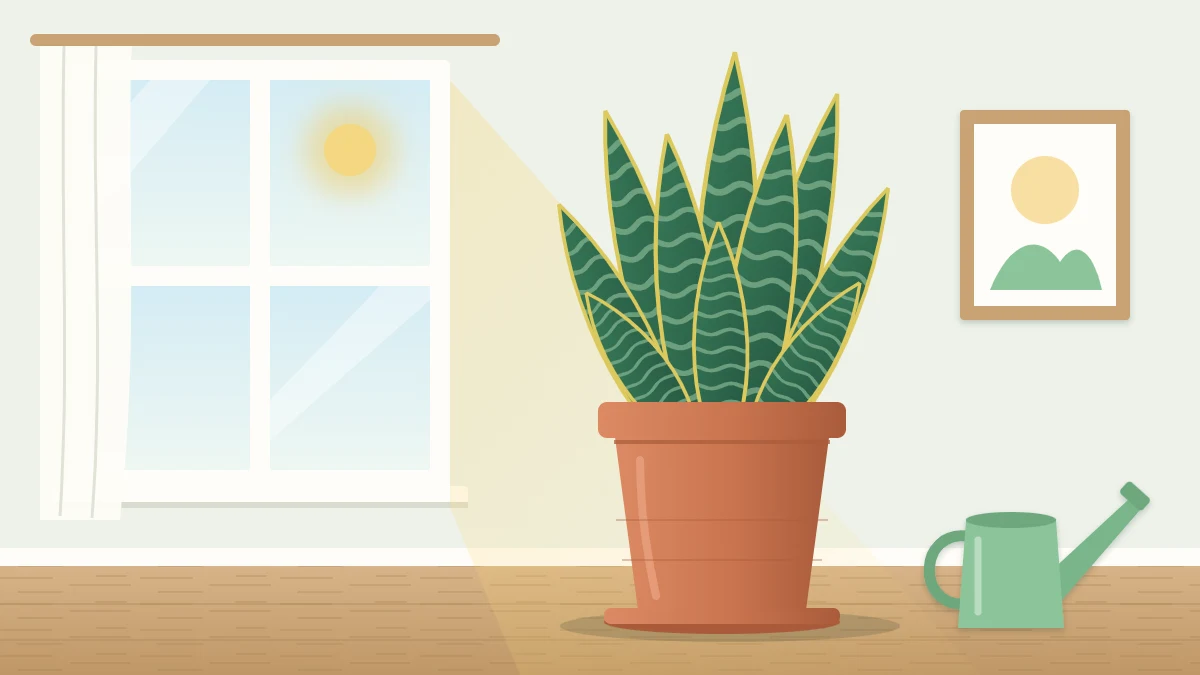
The snake plant has a reputation as the houseplant that survives anything. The real picture is more useful: it tolerates dim corners and missed waterings better than most common houseplants, but it has one clear weakness, and that is potting mix that stays wet.
Snake plant care is mostly a matter of restraint. This guide covers light, watering, pots, dividing and the problems beginners meet most often. Its botanical name is Dracaena trifasciata, formerly Sansevieria trifasciata, and both names still appear on labels and in reference sources. As with any plant, the details shift with light, pot, potting mix and season.
Snake plant care at a glance
| Need | Starting point | What changes it |
|---|---|---|
| Light | Bright indirect light; tolerates lower light | Growth slows as light drops |
| Watering | Water thoroughly once the mix has dried out well, most or all of the way down the pot | Light, season, pot size and material, mix |
| Potting mix | Fast-draining mix, such as a cactus and succulent mix | Dense mix holds water longer |
| Pot | Snug, heavy pot with drainage holes | An oversized pot stays wet longer |
Light: tolerates low, prefers bright
A snake plant tolerates lower light, which is why it is so often placed in corners and hallways. Tolerating is not the same as preferring, though. In low light it grows very slowly and uses little water, and no plant grows in the dark.
It grows better in bright indirect light and can take some direct sun if it is introduced gradually. Moving a plant from a dim room straight into strong sun can scorch the leaves, so shift it closer to the glass in stages over a couple of weeks. If you are deciding where to put it, the guide to window directions describes the kind of light each one typically gives.
Watering: let the mix dry out well
Snake plants store water in their thick leaves and in rhizomes, the fleshy stems that run just below the surface of the mix. That reserve is why the plant copes with dry spells, and also why it needs the mix to dry out well between waterings.
Check before you water. Push a finger or a plain wooden skewer deep into the pot, or lift the pot to feel its weight. If the mix is still damp lower down, wait and check again later. When it has dried, water thoroughly until water runs from the drainage holes, let the pot drain, and empty the saucer.
Expect to water less in low light and in winter, when growth slows and the mix stays moist far longer. Exactly how long depends on your climate and the conditions indoors. A plant in a bright, warm room may dry out several times faster than one in a cool, dim hallway, which is why a calendar is a poor guide.
Tip
If you are unsure whether a snake plant needs water yet, waiting a few more days and checking again is usually the lower-risk choice. Staying wet is the usual way to lose one.
Potting mix and pot
Use a fast-draining potting mix. A cactus and succulent mix works, as does a general-purpose indoor potting mix opened up with extra perlite or bark. The aim is a mix that lets water through quickly and holds air around the roots.
Choose a pot with drainage holes that is only a little wider than the root ball. Snake plants do well when snug, and a pot much larger than the roots holds wet mix that the plant cannot use. Tall leaves make the plant top-heavy, so a heavy pot such as terracotta or ceramic helps it stay upright. Unglazed terracotta also dries faster than plastic.
Slow growth and dividing a crowded pot
Growth is slow, especially in low light, and a snake plant can stay in the same pot for a long time. New leaves emerge from the rhizomes as tight spikes at the surface of the mix. Normal room warmth suits it, roughly 60 to 85°F (16 to 29°C); keep it away from cold drafts and cold window glass.
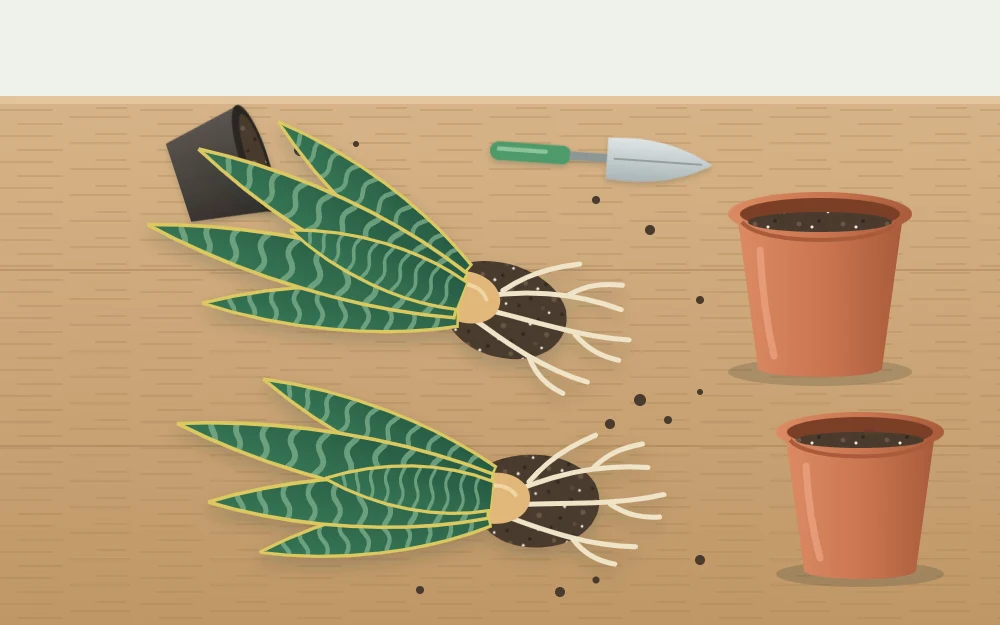
When the pot is packed with leaves and roots, or the plant is pushing against the sides, you can divide it. Active growth, often spring and summer, is generally the easier time.
- Slide the plant out of its pot and shake or tease away loose mix so you can see the rhizomes.
- Separate the clump into sections, each with its own leaves and roots. Cut through connecting rhizomes with a clean knife where they do not pull apart.
- Plant each section in a snug pot of fresh fast-draining mix, at the same depth as before.
- Water lightly, then let the mix dry out well before watering again.
Common problems and what to check
- Soft or mushy leaf bases: often linked to mix that has stayed wet too long. Feel the mix at depth, then slide the plant out and look at the roots and rhizomes. Remove soft leaves and let the pot dry.
- Leaning or flopping leaves: this can come from low light, a soft base, a pot that is too light for tall leaves, or simply long outer leaves. Check the base of the leaf and the mix first, then the light.
- Wrinkled or curling leaves: may follow a long dry spell, but damaged roots can cause the same look because they cannot take up water. Check whether the mix is dry or wet before deciding.
Because wet and dry problems can look alike above the soil, the guide to telling overwatering from underwatering explains what evidence to look for in the pot.
Snake plants, pets and people
Good to know
The ASPCA’s entry for snake plant lists it as toxic to dogs and cats, names saponins as the toxic principle, and gives the clinical signs as nausea, vomiting and diarrhea.
NC State Extension’s plant profile for Dracaena trifasciata rates it as low severity for humans and notes that the sap can irritate skin.
Place the plant where pets and small children cannot chew it. If a pet or a person eats part of it, contact your veterinarian, an animal poison control service or Poison Control. To look up other plants, see the guide to checking whether a houseplant is toxic to pets. If you like the snake plant’s tolerance of dry spells, the ZZ plant is cared for in a similar way.
Frequently asked questions
How do I know when to water a snake plant?
Check the potting mix at depth with a finger or a wooden skewer, or lift the pot to feel its weight. Water thoroughly once the mix has dried out well, then let it drain. In low light and in winter the mix stays moist much longer, so the gaps between waterings grow.
Can a snake plant live in a dark room?
A snake plant tolerates lower light better than many houseplants, but it grows very slowly there and uses little water, so the mix stays wet longer. It generally grows better in bright indirect light. No plant grows in the dark, so a windowless room needs a grow light.
Why are my snake plant's leaves falling over?
Leaning leaves have several possible causes. Check the base of the leaf first: if it is soft, the mix may have stayed wet too long, so look at the roots. If the base is firm, consider low light, a pot too light for tall leaves, or simply long outer leaves.